History & Heroes · The Story of Tulunadu
Under Mysore: Hyder Ali, Tipu Sultan and the Coast, 1763 to 1799
This is the hardest chapter in Tulunadu’s history to tell fairly. This page gives the facts the sources agree on, and says where historians do not.
Hyder Ali takes the coast
Hyder Ali, the ruler of the Kingdom of Mysore, conquered Mangaluru in 1763, as Wikipedia’s article on the city’s history puts it.¹ That ended the Keladi kingdom described on the previous page. Tipu Sultan, his son, took over the rule and held the coast until 1799.
The siege of Mangalore
Mangalore was a prize in the Second Anglo-Mysore War. Tipu Sultan besieged the fort from 20 May 1783. Its garrison, about 700 British and 2,000 Indian troops under Colonel John Campbell, was starved into surrender on 30 January 1784. Only about 850 of the 2,700 survived.²

The war ended with the Treaty of Mangalore, signed on 11 March 1784 by Tipu and three commissioners of the East India Company. It restored most captured territory and promised the release of prisoners within 30 days.³ It was a pause, not a peace. Wikipedia notes that the British, humiliated by the terms, were determined to defeat Tipu.³
The captivity of 1784
On 24 February 1784, Ash Wednesday, Tipu ordered the arrest of the Christians of Canara. The order was carried out across the province at once, at the hour of morning prayer.⁴ He accused them of helping the British army, including by lending it money.⁴ This was a few weeks after the garrison’s surrender, and about two weeks before the treaty.
How many. Estimates run from 30,000 to 80,000 people. The figure usually accepted is 60,000, which comes from Tipu’s own account.⁴
The march. About 20,000, around a third, are said to have died on the roughly 200-mile journey to Seringapatam from hunger, disease and ill treatment.⁴
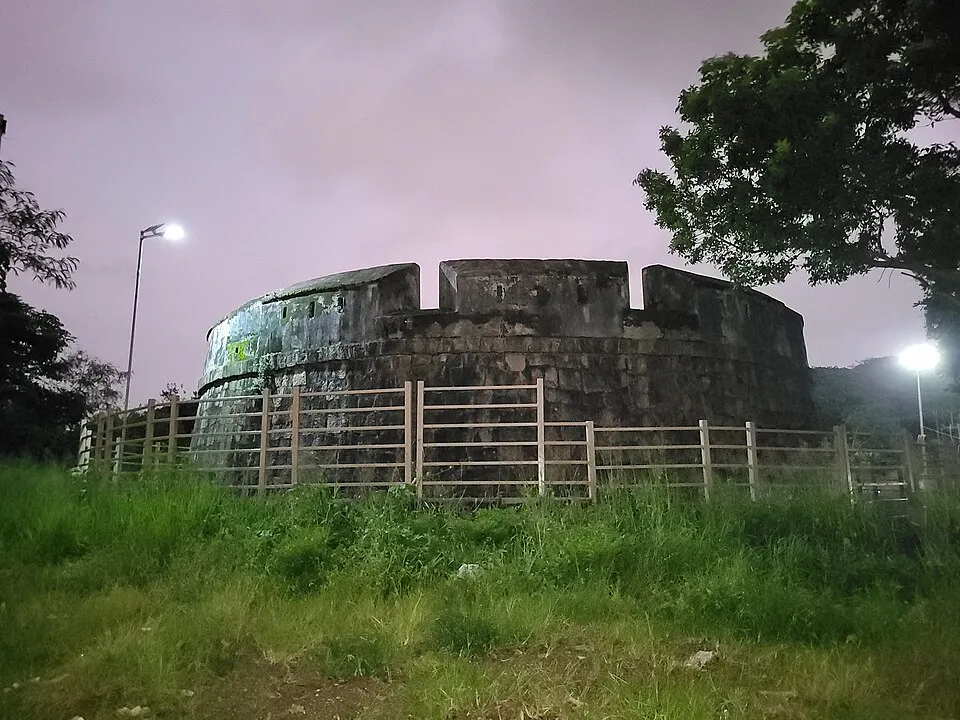
What followed. The captives were pressed to convert to Islam, and those who refused were punished. Many women were given in marriage to Muslim men, and young men were circumcised and drafted into a military corps. Only 15,000 to 20,000 are said to have both survived and kept their faith.⁴ All 27 churches in Canara were ordered destroyed, and their stones were used for fortifications such as the Sultan Battery.⁴
The end. The captivity ended on 4 May 1799, when Tipu died at the siege of Seringapatam. Arthur Wellesley, the future Duke of Wellington, helped about 10,000 return to Canara. In all, about 15,000 are said to have come back to Mangalore.⁴
How historians read it
The facts above are not the main dispute. The reason is.
Some writers, among them the British general Kirkpatrick, saw religious fanaticism.⁴ Other historians, among them Surendranath Sen, Mohibbul Hasan, N. K. Sinha and B. Sheik Ali, conclude that Tipu was not a religious bigot, and that the conversions served a political purpose: punishment for Christians he believed had backed the British.⁴ A third view, from the historian Alan Machado Prabhu, holds that the conspiracy itself was made up. He points out that a coordinated plot along about 300 km of forested coast would have been close to impossible, and calls the claim of a loan of Rs. 330,000 “an utter fabrication”.⁴
After Tipu
Tipu’s death in 1799 ended Mysore’s rule of Tulunadu. The British took the coast, and that story comes next.
Related
- Empire, Nayakas and Portuguese Guns, the period before this one
- The Alupas, where the dated history begins
Sources & further reading
The books and articles behind the numbered notes on this page.
- Wikipedia, “History of Mangalore” (accessed 7 October 2026): Hyder Ali’s conquest of Mangaluru in 1763.
- Wikipedia, “Siege of Mangalore” (accessed 7 October 2026): the dates, the garrison and the surrender.
- Wikipedia, “Treaty of Mangalore” (accessed 7 October 2026): the date, signatories and terms.
- Wikipedia, “Captivity of Mangalorean Catholics at Seringapatam” (accessed 7 October 2026): the order, the numbers, the march, the churches, the release and the historians’ views.
All of these are Wikipedia articles, written from other sources. The research notes behind this page also mention a governor named Latif Ali Baig, a British seizure of Mangalore in 1766, the Portuguese expelled in 1776, a Mysorean navy, and the fall and return of Bidnur; we could not confirm these in the sources we checked, so they are left out. The same goes for the idea that the captivity amounted to genocide, which the article we read does not say any source claims.
Themes
Spotted a mistake, or know more about this? Suggest a correction/addition.