History & Heroes · The Story of Tulunadu
The Alupas: A Local Dynasty That Outlasted Its Overlords
Tulunadu’s story on paper begins with one family. They were not an empire. They were local kings who stayed local, and who outlasted a long line of bigger powers.
An old family, a late paper trail
The Alupas’ own tradition puts their beginning around 200 CE. Nothing carved in stone confirms that. The earliest record that scholars point to is the Halmidi inscription, of about 450 CE, which Wikipedia’s article on the Alupas reads as naming a possible early ruler, Pashupathi of the Alapa (Alupa) gana, a word for a tribe or clan.¹ A separate Wikipedia article on the inscription does not mention the Alupas at all, and dates it anywhere from about 425 to 500 CE.² So the family is old, but the dated paper trail starts later than the family’s own memory, and even its starting point is open.
Where the name Alupa comes from is also unsettled. In Tulu, alupe means “one who rules”. The scholar B. A. Saletore instead suggested aluka, a name of the divine serpent Shesha, and Fleet saw a link to the Nagas and to the Jain goddess Padmavati.¹ None of these has won.
Three capitals


The Alupas had no single seat. Mangaluru was the first centre, and Udyavara, near Udupi, served later. In time the court moved to Barkur, which let it keep an eye on the wide stretch of coast it then held.¹ Their coins and inscriptions turn up in all of these places.
The best-known inscription is the Belmannu copper plate. It is a grant of King Aluvarasa II, from the early 8th century CE, and Wikipedia calls it the earliest known copper-plate inscription in Kannada. It carries the double-crested fish, the royal emblem of the Alupa kings.¹
Kings above the king
What is distinctive about the Alupas is not independence. It is staying power under other people’s rule. In a rough order, the sources name these overlords:
- The Kadambas of Banavasi. The Alupas became their feudatories, meaning local rulers who owed loyalty and tribute.¹
- The Chalukyas of Badami. The Mahakuta pillar inscription says the Chalukya king Kirttivarman I subdued the Alupas, who then became Chalukya feudatories. Scholars treat that inscription’s long list of conquests as an obvious poetic exaggeration, so it shows the Alupas were counted as subordinates more than it shows a war.³
- The Rashtrakutas. The Alupas also appear as feudatories to them.¹
- The Hoysalas of Dwarasamudra. The Alupas served them too, in the later centuries.⁴
- Vijayanagara. By 1345 the Vijayanagara rulers had brought the region under their control.⁴
The Alupas’ reach may have been wider than Tulunadu. An inscription of 1075 CE at Ezhimala, in north Kerala, in Old Malayalam, names a king called Kunda Alupa.¹
Rulers and queens worth knowing
Most Alupa kings are only names. A few stand out.
Kundavarma placed fine bronze images in the Kadri temple, and they carry inscriptions in his name dated 968 CE.¹ That is the same site as Kadri Manjunatha, where later layers of worship were built over the older one.
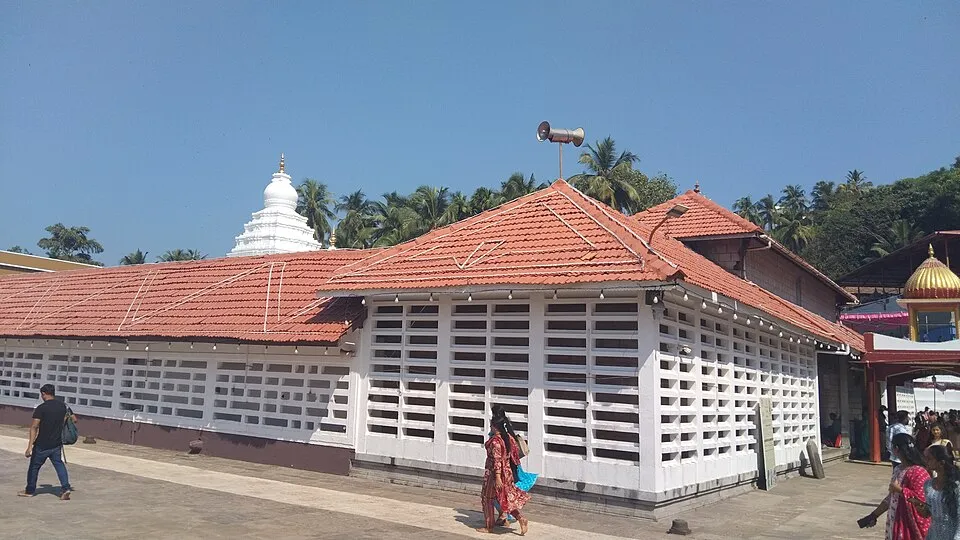

Queen Ballamahadevi took the throne in 1275 after her husband’s death, together with her young son, Nagadevarasa, and ruled until 1292. She did not simply hold the seat for him. She took royal titles in her own name, including Maharajadhiraja, and called herself “mistress of the Western Sea”.⁵
Chikkayi-Tayi is remembered as an Alupa princess married to the Hoysala king Ballala III. Wikipedia names her as the mother of a later Alupa king, Kulasekhara Bankideva.¹ A popular history site goes further and calls her the “architect” of the Vijayanagara Empire, saying she handed Harihara I the wealth and control of Barkur and Tulunadu in 1336.⁶ We have only that one non-academic source for the second claim, so take it as tradition, not settled history.
Both queens ruled generations before Rani Abbakka, who comes later in this story.
When did it end?
Here the sources disagree.
- The latest dated Alupa inscription is of 1444 CE, naming Kulasekharadeva Alupendradeva, and was found at the Jain basadi in Moodabidri.¹
- Wikipedia’s article on the history of Mangaluru says the Alupas ruled until the end of the 14th century, and also that by 1345 Vijayanagara had the region under control.⁴
One reasonable way to read both is that Alupa sovereignty faded into Vijayanagara’s administration, while a member of the family could still put his name on a temple wall a century later. That is our reading, not a claim in either source.
An outside witness stands right in this window. The Moroccan traveller Ibn Battuta, who passed through in 1342, called the town Manjarur and wrote that it stood on a large estuary and that Persian and Yemeni merchants landed there.⁴
Related
- Before the Alupas, the glimpses that come before the dated record
- Kadri Manjunatha, where Kundavarma’s bronzes stand
- Moodabidri, where the last Alupa inscription was found
Sources & further reading
The books and articles behind the numbered notes on this page.
- Wikipedia, “Alupas” (accessed 7 October 2026): Halmidi and Pashupathi, the name theories, the capitals, the Belmannu plate, overlords, Kundavarma, Ezhimala, Chikkayi-Tayi’s son, and the 1444 inscription.
- Wikipedia, “Halmidi inscription” (accessed 7 October 2026): the date range, and no mention of the Alupas.
- Wikipedia, “Kirttivarman I” (accessed 7 October 2026): the Mahakuta pillar inscription and the scholars’ note on its exaggeration.
- Wikipedia, “History of Mangalore” (accessed 7 October 2026): Hoysala feudatories, Vijayanagara control by 1345, the end of the 14th century, and Ibn Battuta.
- Wikipedia, “Ballamahadevi” (accessed 7 October 2026): her rule from 1275 to 1292, her son and her titles.
- Mangalorean.com, “Alupa Princess Chikkai Tayi and the Establishment of the Vijayanagara Empire” (accessed 7 October 2026): the Chikkai Tayi claims, from a popular site.
All but the last are Wikipedia articles, written from other sources. The research notes behind this page also mention a Pallava period, a Chola raid beaten back by an Alupa king, and Aluvarasa I as Pulakeshin II’s father-in-law; we could not find any of these in the sources we checked, so they are left out. The same goes for the 1325 end date and the dates given for Chikkayi-Tayi’s rule.
Themes
Spotted a mistake, or know more about this? Suggest a correction/addition.