Faith & Worship · Temples, Mathas & Basadis · Also in: Stories: Temples and Sacred Places
Bappanadu: The Goddess and the Merchant Who Built Her Temple
The village is named after a man. He was a trader, and according to the temple’s story he was a Muslim.
The goddess of the temple is called Ulladi in Tulu. The temple is often named as a sign of what the coast can share.
The goddess at Mulki
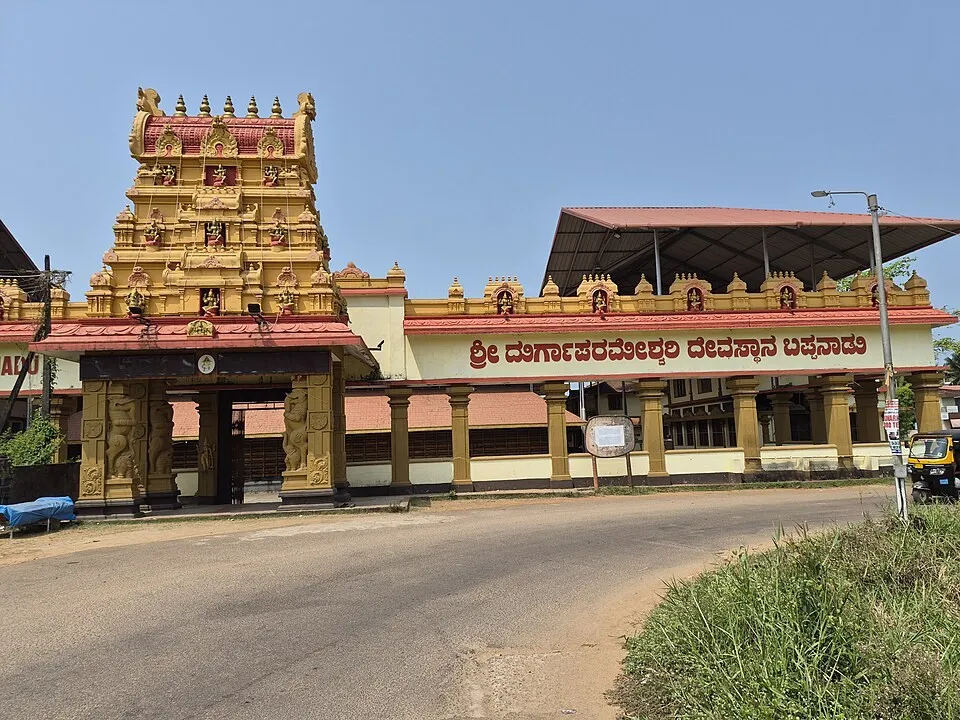

Mangalore Heritage says that the Bappanadu Sri Durgaparameshwari temple is on the bank of the Shambhavi river at Bappanadu village, Mulki, 29 km from Mangaluru on the road to Udupi. The main deity is Durgaparameshwari, whom the Tuluvas call Ulladi, and the annual festival, the Brahma Rathotsava, is held in April.¹
The goddess is worshipped in an unusual form. Five lingas are worshipped as Moola Durga, Agni Durga, Jala Durga, Vana Durga and Agra Durga on one pedestal, with an image of Durga in front.¹
The seven sisters
The page gives the goddess’s own story first. She killed the demon Darigasura, who had been powerful over the gods because of a boon from Brahma. When the demon was destroyed, the goddess and her sisters, together the Sapta Durgas, left heaven and settled near Mulki for the good of those on earth. The goddess is said to have appeared in symbolic form where the Shambhavi and Nandini rivers meet in Mulki.¹
Our notes tell a longer version of this part, with the sisters and the demon in detail. Their source is a temple blog that we could not open, so we do not repeat it.
The merchant’s boat
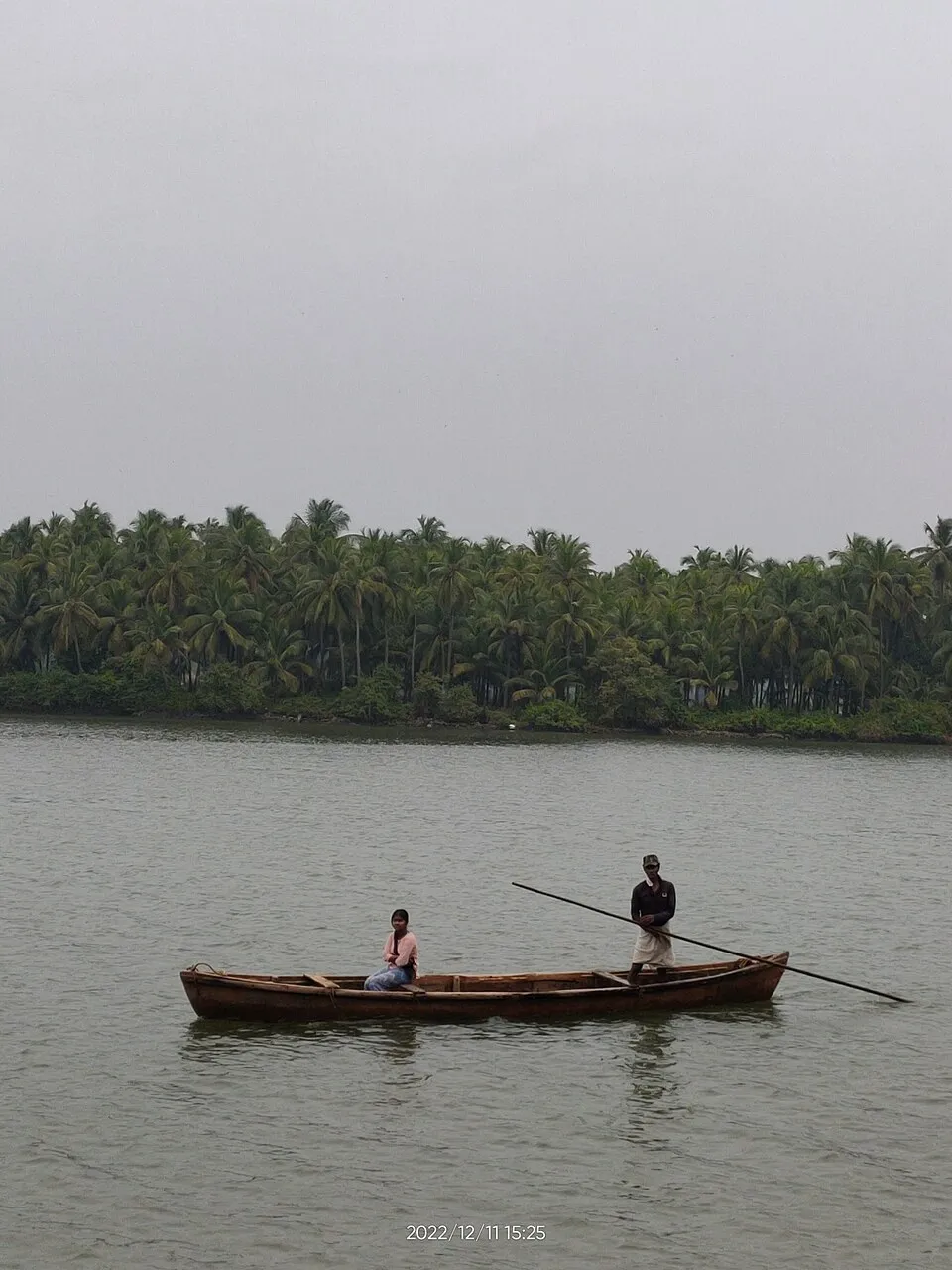

Some time later, the page says, Bappa Beary, a Muslim merchant from Kerala, was sailing up the Shambhavi to trade. At Mulki his boat stopped suddenly in midstream. It had hit something under the water: the five lingas and pedestals of the temple, which had recently collapsed in a flood. The river ran red. Bappa, a devout man, said his namaz straight away, and slept in the stranded boat.¹
The goddess came to him in a dream and asked him to build her a temple. With the help of the local Jain ruler Mulki Sawantha, he spent all his wealth on it, and the puja was done with the help of a priest, Baila Udupa. Bappa settled nearby and made Mulki his home, and the area was named Bappanadu, Bappa’s village, for him.¹
The News Minute tells the same story and dates it to the 12th century. In its account, the Jain rulers of the time gave the land.²
What is kept up
Mangalore Heritage describes a temple where the story is lived. The Muslim community of the area is known to hold special prayers at the temple for weddings in their families and other rites. On Fridays a community meal is served that people of all faiths attend, and Muslims take the prasada. Local Christians in the jasmine trade sell flowers only to the temple at festival time, even though they could get more elsewhere.¹
The News Minute adds that every year the first prasada of the annual fair is offered to Bappa Beary’s descendants, and that a doll chariot, the bombe ratha, taken in procession on festival nights, carries a Muslim figure in honour of Bappa Beary. It quotes the head of the temple committee, Dugganna Sawant, who is a descendant of the Jain rulers who gave the land, saying that Muslims come as a group to temple events such as the Brahmakalasha with offerings of rice and jasmine, and sit on the renovation committee.²
The temple is also known for its drum, the Bappanadu Dolu, which hangs at the entrance and is well known all over Tulunadu. A particular community has the right to beat it during the festival, and the temple pays them. Local people also believe that wayward youngsters become responsible by beating the drum at the temple.¹
On the stage
Mangalore Heritage says a Yakshagana, Bappanadu Kshetra Mahatme, about Bappa Beary and the building of the temple, has been staged by local troupes for the last forty years.¹ The News Minute says residents credit this play with making the story a household legend. Its two main characters are Bappa and his apprentice Usman. It quotes the film-maker Natesh Ullal and the critic Purushothama Bilimale, who say that in earlier years the character of Bappa was played with dignity, with some talk in Beary and Malayalam as well as Tulu and Kannada, and that in recent years it has often been played as a caricature, with comic mistakes in Tulu and Kannada.² Our page on Yakshagana describes the art itself.
What we could not find
- The inscriptions. Our notes cite temple inscriptions of 1141 and 1411 CE, and one of a Muslim merchants’ association, and a 1607 copper plate at a Jain basadi naming a Bappa. We found none of this in the sources we could read. The 12th-century date rests on the story itself.
- Who Bappa was. Our notes say some writers wonder whether “Bappa” was a Muslim, a Saraswat or a Jain name. The temple’s story, and the sources above, say a Muslim.
- The seven sisters and the demon in full. The story in our notes comes from a temple blog that did not open.
- Where each sister settled. Our notes say that the tellings differ.
- A scholarly study. We found none.
Related
- Kantabare and Budabare, the Twin Heroes of Mulki, whose fight with Koti and Chennaya is said to have been stopped by this goddess
- Mundkur Durgaparameshwari: The Goddess Who Was Turned to Face East, another temple where people of other faiths join the festival
- Yakshagana: The Coast’s Dusk-to-Dawn Dance-Drama, the art in which the Bappanadu story is played
Sources & further reading
The books and articles behind the numbered notes on this page.
- Mangalore Heritage, “Bappanadu Sri Durgaparameshwari Temple – Ulladi For Tuluvas” (blog; read 9 October 2026): the temple, the five lingas, the legend, the communal practices, the drum and the Yakshagana.
- Prajwal Bhat, “Yakshagana play on Muslim legend distorts history of a Karnataka temple”, The News Minute (18 April 2022; read 9 October 2026): the dating, the prasada, the bombe ratha and the Yakshagana.
The first is a blog and the second is a news report. We found no scholarly source.
Themes
Spotted a mistake, or know more about this? Suggest a correction/addition.