Festivals Through the Year · The Tulu Year, Month by Month
Pattanaje: The Day the Festival Season Ends
For months, Tulunadu is never quite quiet. Temple chariots roll through the streets, daivas dance at night, buffaloes race through flooded fields, and Yakshagana troupes play from dusk to dawn. Then, on one day in late May, it all stops.
That day is Pattanaje. It is not a festival in the usual sense, with feasting and colour. It is more like a closing bell, one that people across the region agree to heed together.
A deadline set by the calendar
Pattanaje falls on the tenth day of Beshya, the second solar month of the Tulu calendar, usually on 24 or 25 May. It is observed in Dakshina Kannada, Udupi and Kasaragod, and in parts of Madikeri district.
Mangalore Heritage puts it neatly: the people of Tulunadu have set their own religious and social deadlines for festivals, and Pattanaje is the one that closes the season. The annual chariot festivals at temples, nemotsava (the festivals in which a deity or daiva is carried out in procession), folk ritual dances, Kambala and Yakshagana, along with many other rituals, must be finished by this day. They begin again in Jarde, the month that falls around Deepavali.
Wikipedia adds that there are more than thirty folk traditions in Tulunadu, some kept by particular castes, and that they run through the months from Aati until Pattanaje.
What happens on the day
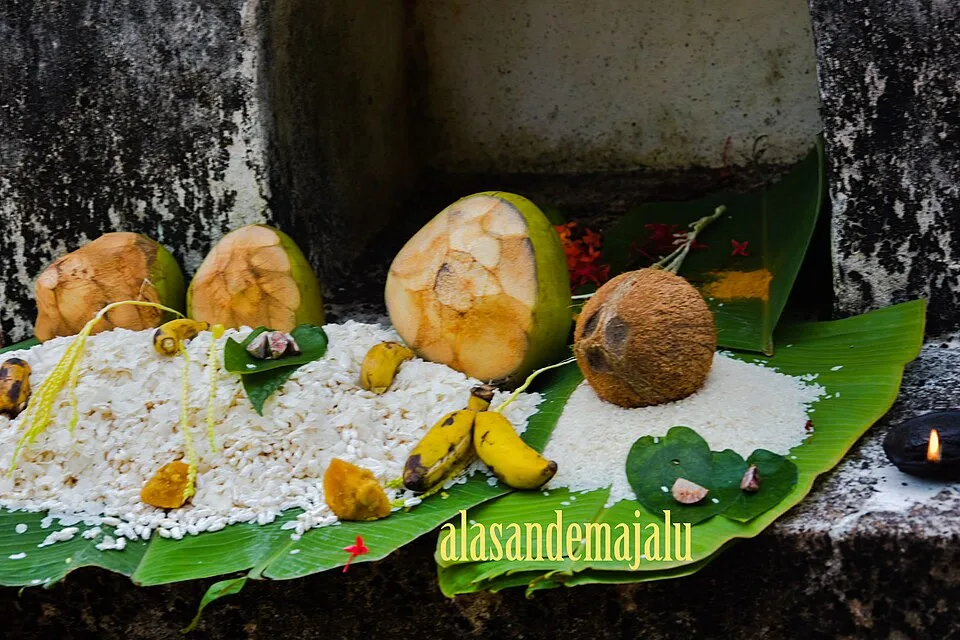

On the day of Pattanaje, most of the rituals are held outside the house. Families go to the daivasthana (the daiva’s shrine), the katte of Guliga or of Bairava, or simply to a spirit stone. There, a feast of rice and other local foods is served on plantain leaves, as an offering to appease the spirits. Once the ritual is done, the doors of the shrines are closed.
The special seasonal round stops there, but ordinary worship does not. Mangalore Heritage says that only regular worship goes on in the temples during the break. For more on the daiva whose katte is one of those shrines, see Guliga, the Hunger That Became a Guardian.
Putting away the anklets
Pattanaje is also the day the Yakshagana troupes end their season. Their touring and their performances stop, and each troupe takes off its costumes and keeps them safe until the next season begins. This is called Gejje Bicchapuna, which means putting away the gejje, the dancers’ ankle bells. Wikipedia says the troupes start again at Parbo, which usually means Deepavali.
The monsoon behind it
There is also a plain, practical reason for the date. Mangalore Heritage notes that in homes where food was cooked on firewood, Pattanaje was a milestone for the onset of the monsoon. It was the signal for farmers to collect firewood that would last five or six months. Heavy monsoon rain made outdoor activities impossible, and the whole round of festivals was planned around summer and the rains. Cooking gas has made the firewood custom outdated.
Mangalore Heritage describes the break as about six months. Both sources agree that the season restarts around Deepavali, in the month of Jarde, so the exact length depends on where you count from.
Related
- The Tulu Year, Month by Month, where Pattanaje sits among the twelve months
- Aati: Tulunadu’s Monsoon Pause, the monsoon month that follows
- Guliga, the Hunger That Became a Guardian, whose shrine is one of the places of worship on this day
Sources & further reading
The books and articles behind this page.
- Wikipedia, “Pattanaje”: the tenth day of Besha and its date, the regions where it is kept, the festivals that conclude, the thirty folk traditions running from Aati, and Gejje Bicchapuna with the Yakshagana troupes restarting at Parbo (marked “citation needed” on Wikipedia).
- Mangalore Heritage, “Pattanaje” (31 May 2020): the festival deadline and the restart in Jarde, the offerings at the daivasthana and kattes, the closing of the shrine doors, the firewood and monsoon custom, and Gejje Bicchapuna.
Both sources describe Pattanaje in very similar terms and may share a common origin. We did not find a scholarly study or an origin story for it. Treat the details as well attested but not deeply cross-checked.
Words on this page
What the Tulu and other Indian-language terms on this page mean.
- daivasthana
- The shrine of a daiva.
- Gejje Bicchapuna
- Putting away the ankle bells at the end of the Yakshagana season.
- kambala
- A buffalo race run through a flooded paddy field.
- katte
- A raised platform shrine.
- nemotsava
- A festival in which a deity or daiva is carried out in procession.
- Pattanaje
- The day the festival season closes.
Themes
Spotted a mistake, or know more about this? Suggest a correction/addition.