Stories: Beginnings, Festivals and Folk Tales · Also in: Festivals Through the Year
Tudar Parba: Calling King Bali Home
As dusk falls on a Deepavali evening, a woman walks out to the edge of her family’s paddy field. She carries a tall stem of wood, decorated with wild flowers from the hills, and she sets it upright and lights it. Then she calls out in Tulu to a king who has not ruled this land for ages: Bali, come to the kingdom that you ruled.
She calls three times, throwing grains of rice at the flame each time, and ends with a long cry: kooo. Across the coastal districts of Udupi and Dakshina Kannada, scenes like this have played out each year.¹
In most of India, Deepavali is told as the story of a god defeating a demon. Here, for many farmers, it is also the night they welcome a defeated king home. This is his story, and the story of how Tulunadu keeps the night.
The story
The story of Bali comes from the Puranas, the old Sanskrit texts, and it is told in many versions. This is the outline most people know.²
The generous king
Bali, also known as Mahabali, is a king of the daityas, a race of beings that the gods often fight against. He is the grandson of Prahlada, a famous devotee of Vishnu. Early Hindu texts describe him as a generous and fair king. He ruled without discrimination, and his people were honest, healthy and happy.²
But Bali was also powerful, and in the end he conquered both heaven and earth. The gods came to Vishnu and begged for help.²
Three steps
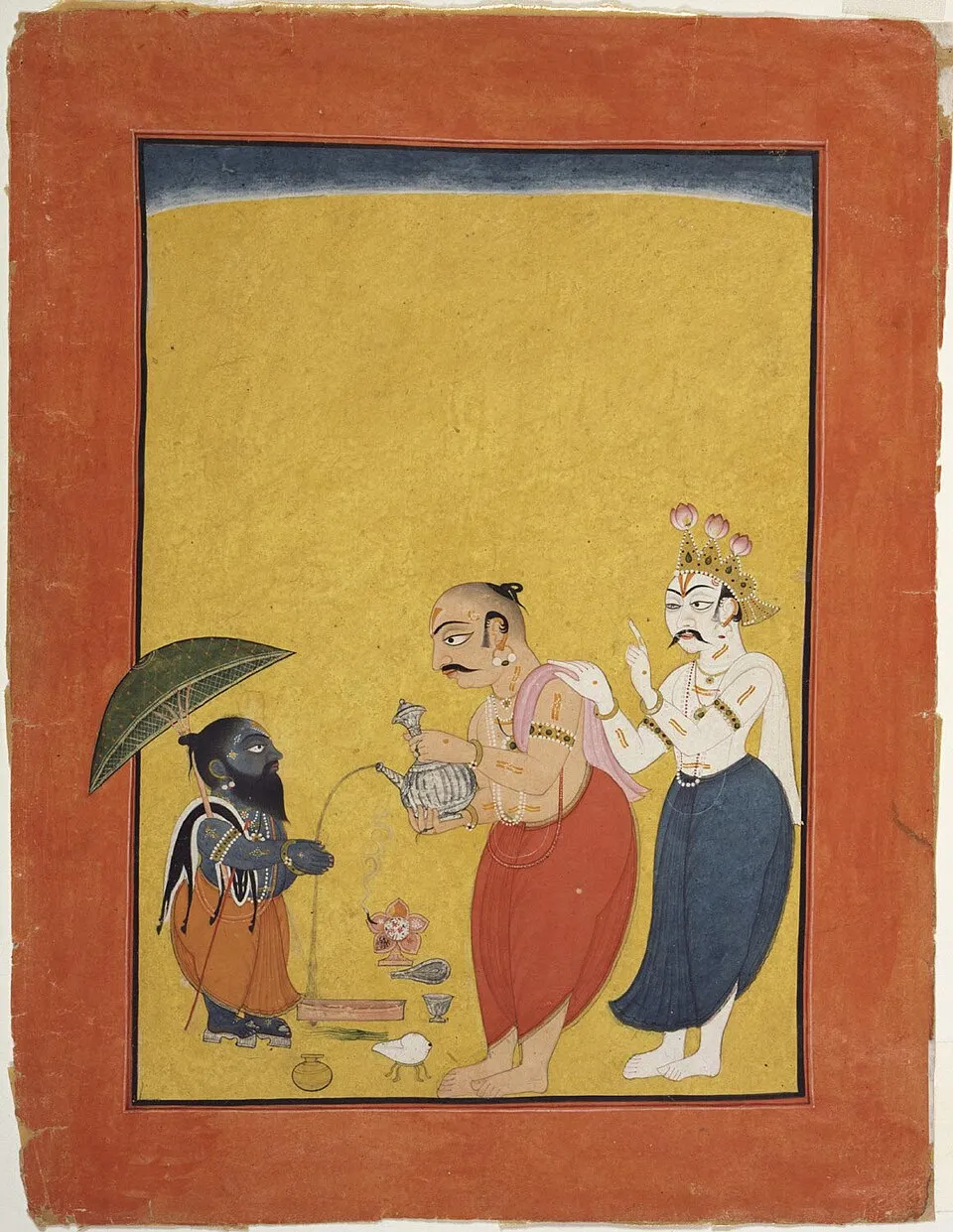

Vishnu would not fight Bali, who was good and who was his own devotee. Instead he came as Vamana, a dwarf Brahmin boy. While Bali was holding a great sacrifice and giving gifts to everyone, Vamana asked him for a small gift: as much land as he could cover in three steps.²
Shukra, Bali’s teacher, saw who the boy really was and warned the king. Bali gave the gift anyway. Vamana grew to a colossal size. His first step covered the heavens, and his second covered the earth. When he asked where he should put his third step, Bali accepted his fate, and offered his own head.²
Where Bali went
The texts do not agree about what happened to Bali next. Some say he was banished to patala, the underworld. Others say he was dragged there by the great bird Garuda, others that he entered heaven at Vishnu’s touch, and another version makes him immortal.²
All of them share one thing. Bali is remembered, and his return is celebrated. Wikipedia notes that the harvest festivals of Balipratipada and Onam are celebrated to mark Bali’s yearly homecoming.²
Calling Bali home in Tulunadu
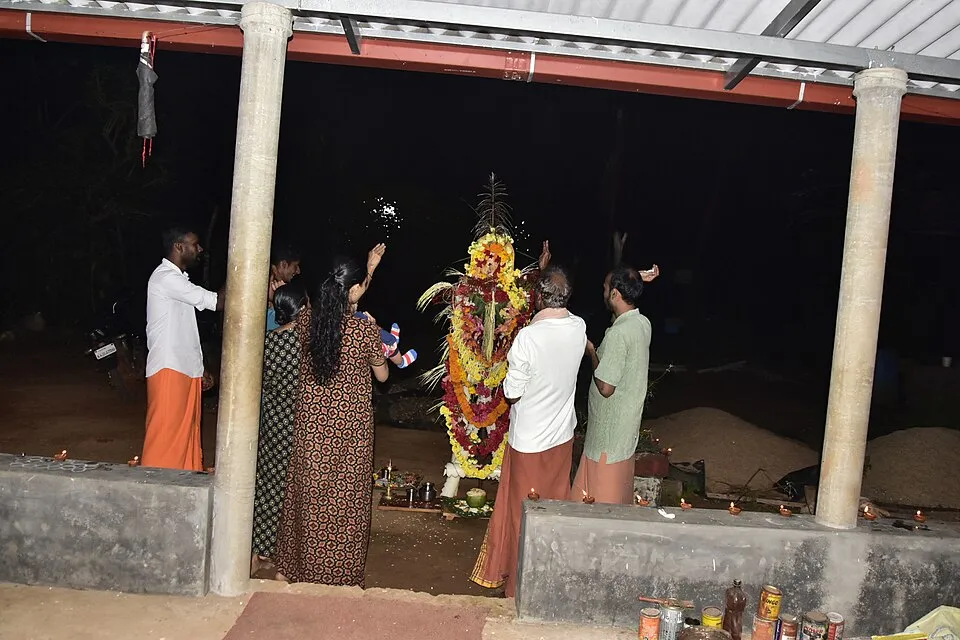

In Tulunadu, the festival is called Bali Padyami or Tudar Parba. It is kept by the communities who work the paddy, and Abhay Kumar of Mangalore University says that all of them celebrate it except Brahmins.¹
The torch in the field
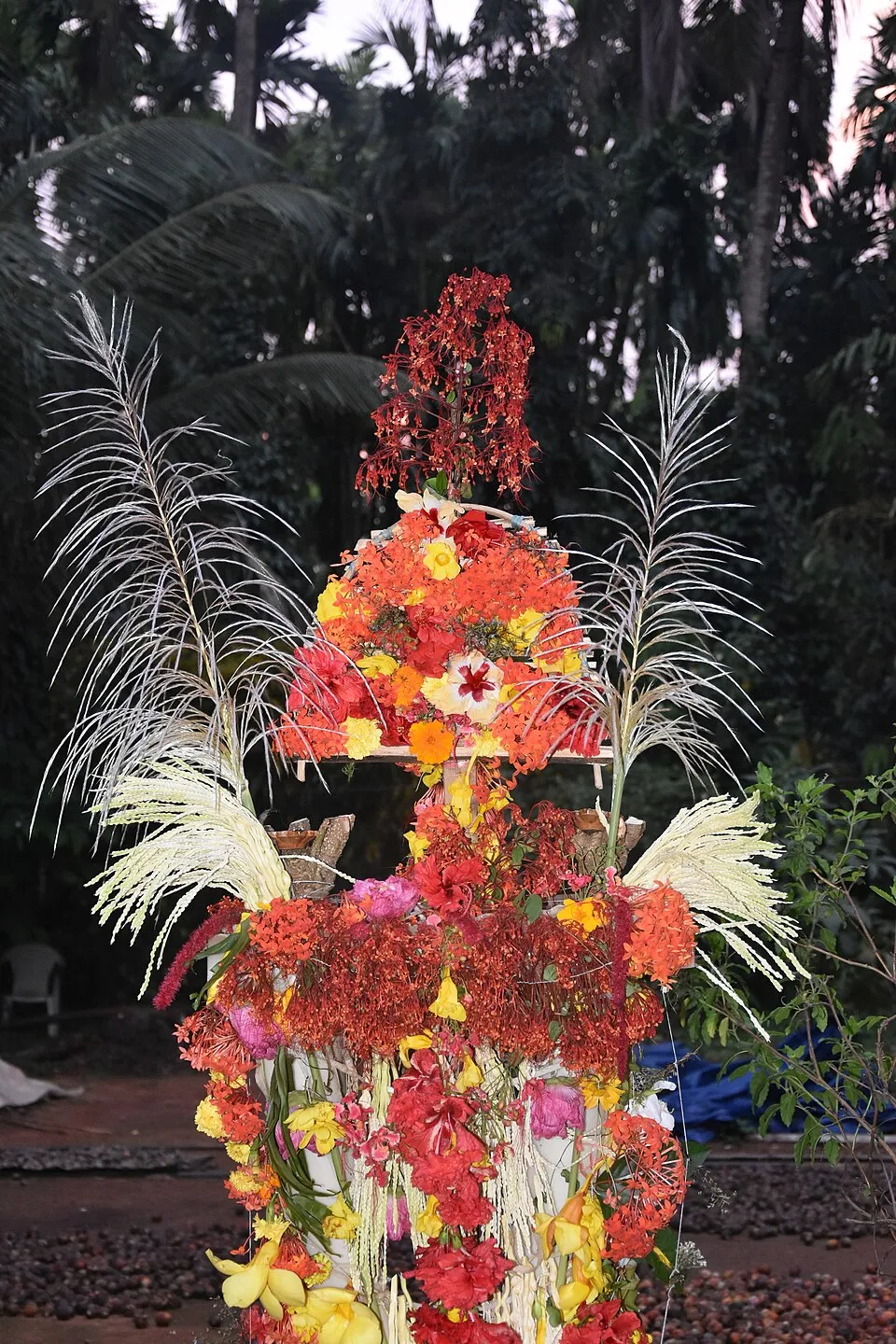
At dusk, the family puts up a thudar, a torch made from a tall stem, at a corner of the paddy field. It is decorated with kepula flowers, which grow in the surrounding hills.¹
The call
Standing in front of the torch, a family member calls to Bali in Tulu, three times, throwing rice at the flame each time and ending with the long cry of kooo.¹
The cattle shed
After calling Bali, people go to the cattle shed and ask the cattle to look at the lamps placed there. A farmer from Mukka, on the coast of Dakshina Kannada, explained to The News Minute that in the old days, wealth was of two kinds: crops and cattle.¹
Showing him plenty
The same farmer said that for three days the family invites Bali, and dresses well and eats well, so that the king can see that his people are prospering.¹ (The newspaper changed the names of the family at their request.)
How it used to be done

Abhay Kumar says that the festival used to be an elaborate village affair until about forty years before 2016, when land ceiling laws ended the zamindari system. In the past it was organised through the gutthu mane (the guttu, or big house, of a landholding family, which could be Bunt, Billava, Gowda or Jain). Everyone connected to the house took part.¹
A tree about twenty feet tall would be cut in the forest and planted in a corner of the field. A craftsman of the Vishwakarma community made a crown of twigs with seven points, and a Billava man fixed it on top of the tree and lit its seven tips as lamps. Two torches called koltiri, made of belakki wood and about six feet tall, stood on either side, and a mixture of food called agelu was laid at the foot of it all.¹
After sundown, everyone gathered. A short burst of music came first, from a conch, a brass plate and a drum, and then the head of the house called out to Bali.¹
Today’s versions are, in Abhay Kumar’s words, diluted forms of this, and they differ in scale from family to family.¹ Around Kundapura, most farming families have a meke-kamba, a type of pillar, with a three-pronged torch tied to it.¹
Whose king?
Many people on the coast think of Bali as one of their own. Sheenappa, the farmer from Mukka, calls him “our benevolent Dravidian king”.¹
Some scholars read the story as a memory of an old struggle. Jayaprakash Shetty, a lecturer in Udupi district, points out that the three-pronged torch and the meke-kamba look like the linga, a symbol of Shiva. He reads the story of Vamana pushing Bali down to the underworld as a struggle between the worship of Vishnu and the worship of Shiva.¹ This is a modern reading, and not part of the ritual itself. The ritual has no single written text, and the words that are called, the shape of the torch and the night itself can all differ from one family to the next.
Related
- The Tulu Year, Month by Month, where Tudar Parba falls in the farming year
- Kural Parba: Welcoming the First Harvest Home, the harvest festival that comes before it
- Parashurama and the Making of the Coast, another story of the coast told through the Puranas
Sources & further reading
The books and articles behind the numbered notes on this page.
- Anisha Sheth, “In coastal Karnataka, Deepavali is the return of beloved king Baliyendra, banished by Vamana”, The News Minute (1 November 2016): the field ritual, the torch and the call, the cattle, the old guttu-mane version, the Kundapura variant, and the views of Abhay Kumar, Jayaprakash Shetty and the farmers quoted.
- Wikipedia, “Mahabali”: Bali as Prahlada’s grandson and a generous king, Vamana and the three steps, the different accounts of what happened to him, and the festivals of Balipratipada and Onam marking his yearly homecoming.
This page rests on one news report for the Tulu ritual and one encyclopaedia article for the myth, so treat the details as well attested but not deeply cross-checked. The research also cites two posts by Ravindra Mundkur on the Tulu Research & Studies blog, “The legend of Bali” and “Poli Poli”, which we could not open. For that reason we have left out the chant “Poli, poli, Baliyendra” that the research mentions.
Words on this page
What the Tulu and other Indian-language terms on this page mean.
- agelu
- A food offering made to a daiva.
- guttu
- The ancestral headquarters house of a landed family.
- kepula
- A red wild flower used to decorate offerings and torches.
- koltiri
- A torch of belakki wood used in the old Bali ritual.
- meke-kamba
- A pillar to which a three-pronged torch is tied.
- thudar
- The torch lit in the paddy field to call King Bali.
- Tudar Parba
- The night farmers call King Bali home.
Themes
Spotted a mistake, or know more about this? Suggest a correction/addition.