Faith & Worship · Temples, Mathas & Basadis · Also in: Stories: Temples and Sacred Places
Kudroli Gokarnanatha: The Temple the Billavas Built
In 1908 a businessman from Mangaluru took a delegation of Billava elders to meet a famous teacher from Kerala. They were asking him for a favour. They wanted help to build a temple of their own.
The temple that came of it stands at Kudroli, and it is now one of the largest in the city. This page tells how it began, who looks after it, and why the procession of Mangaluru Dasara ends at its lake.
A temple for a community kept out
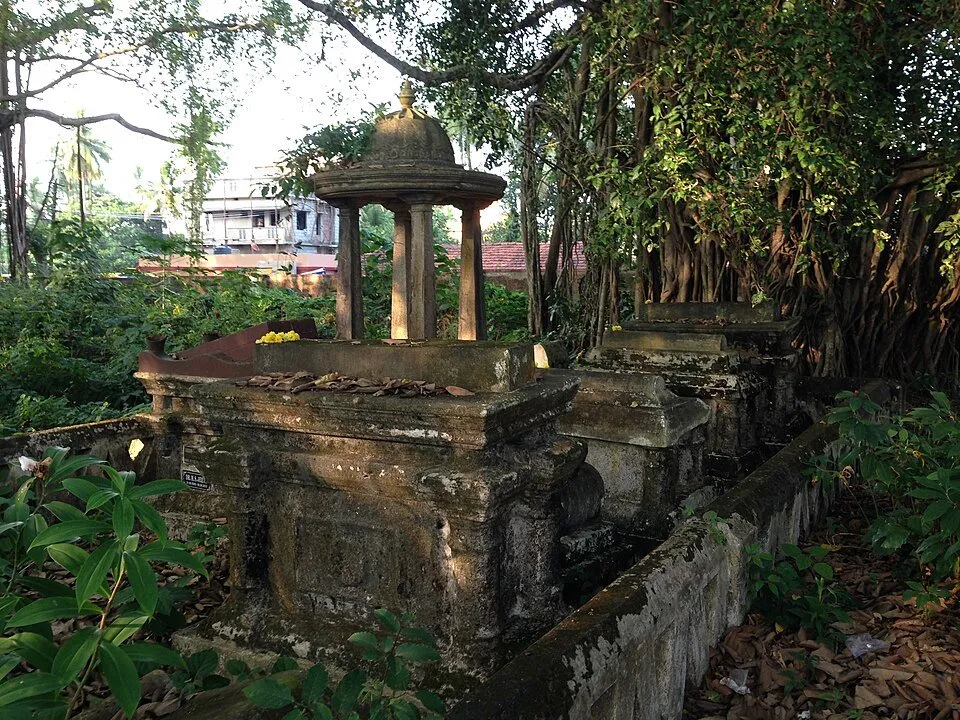

Gokarnanatha at Kudroli is dedicated to Gokarnanatha, a form of Shiva. It is also called Kudroli Sri Gokarnanatha Kshetra, a kshetra being a holy place. It was built in 1912 by Adhyaksha Hoige Bazar Koragappa, and was consecrated by Narayana Guru.¹
Wikipedia’s account is that the Billava community wanted to give its worship of Shiva a form of its own, in line with Billava tradition, and so went looking for a guru. Koragappa, a leader of the community, was a well-known businessman with a large tile factory, and traded in tiles, copra, spices and other goods with places as far apart as the Middle East and Myanmar.¹ He led a delegation of Billava elders to Narayana Guru in 1908 and invited him to guide the community in building a temple.¹
Narayana Guru (1856–1928) was a philosopher and social reformer from Kerala who led a movement against caste injustice. A saying of his that sums it up is “one caste, one religion, and one god for all human beings”.²
Choosing the site
When Narayana Guru arrived, Koragappa gave him a horse carriage to find a place. The Guru looked at two places, Mulihithilu and Kudroli, and chose Kudroli. Koragappa gave the land and the money, the temple was built in 1912, and the Shiva linga, the stone symbol of Shiva, was brought by Narayana Guru himself. The Koragappa family still keeps the chair he sat on in their house.¹
B. R. Karkera and the open door
After Koragappa, the temple was led by B. R. Karkera. Wikipedia says that under his leadership “Harijans”, the term then used for people of the castes treated as untouchable, were allowed to enter temples.¹ It also credits him with starting Mangaluru’s Dasara festival. It says he gave money for the temple’s first concrete structure and for the jewellery of the goddess Annapoorneshwari, and gave the land now used for parking.¹
That is all the article says on the point, and it gives no date for either decision. We found no second source for them.
Dasara at Kudroli
The Dasara celebration here is popularly called Mangalore Dasara, according to Wikipedia. Along with images of Sharada Matha and Maha Ganapati, life-size images of the Nava Durgas, the nine forms of Durga, are set up in the temple for the nine days of Navaratri. On the tenth day the images are taken in a procession through the city. The procession comes back to the temple the next morning, and the images are immersed in the lake in the temple grounds.¹
Wikipedia credits Karkera with starting the festival. Another account, on The Coast in India’s Freedom Struggle, has the public Sharada worship begin in Mangaluru around 1922, on the lines of Tilak’s Ganeshotsav, and says nothing of Kudroli, so the two do not yet agree.
From Kerala style to Chola style
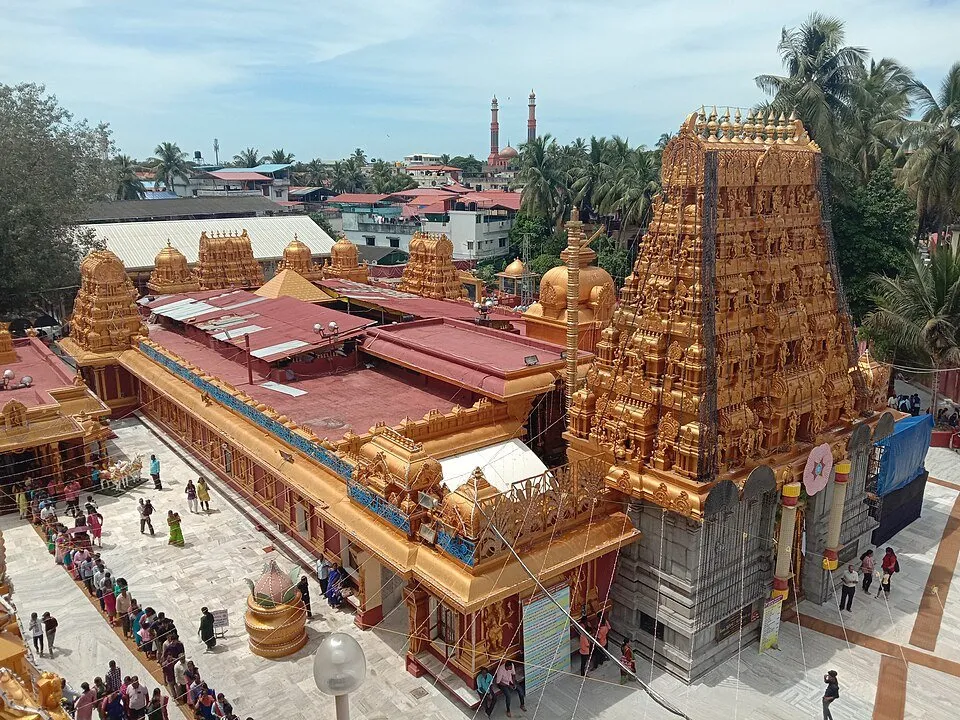

The temple was first built in the style of Kerala. It was rebuilt in the Chola style by the architect Sthapati K. Dakshinamoorthy, during the time of Koragappa’s son H. Somasunder as president, with a 60-foot gateway tower, or gopuram, covered in murals of scenes from the Hindu epics and of the gods. The renovation is estimated to have cost Rs 1 crore. It was opened in 1991 by the former Prime Minister Rajiv Gandhi.¹
A marble statue of Narayana Guru was put up at the entrance in 1966, and a shrine to Hanuman was built at the entrance in 2007.¹
The temple today
Koragappa’s grandson H. S. Sairam is the temple’s president today, which makes four generations of the family.¹ The temple has branches at Mulki, Udupi and Katpady. It marks Maha Shivaratri, Krishnashtami, Ganesh Chaturthi, Nagara Panchami, Deepavali, Navaratri and Narayana Jayanthi. Devotees are fed daily, and the temple holds community pujas, free mass marriages and gives scholarships. Wikipedia says it draws devotees of all religions and communities.¹
What we could not find
- A second source. Nearly everything here comes from the Wikipedia article on the temple, which is mostly unreferenced and in places reads like the temple’s own account. We have not found a history, a news report or a scholarly study to check it against.
- Dates for Karkera. The article gives no date for his leadership, for the entry of “Harijans”, or for the first Dasara procession.
- The distance from the city. The article says 2 km from the centre in one place and 5 km in another, so we give none.
- Narayana Guru’s other temples. Our notes say he built reform temples across South India, and name Mangaluru among them. The Wikipedia article on him, which we read, does not mention Kudroli.
- The Dasara story in full. How the Mangaluru Dasara grew into a civic festival is a separate subject, and we have not covered it here.
Related
- Kadri Manjunatha: The Hill of Many Faiths, another Mangaluru temple with an older story
- Mangaladevi and Sharavu: Two Temples, One King, two Mangaluru temples with Navaratri and festival traditions of their own
- Pili Vesha: The Tiger Dancers of Dasara, the tiger dancers who join the Dasara processions
- The Coast in India’s Freedom Struggle, which tells of Mangaluru’s Sharada worship in the years before independence
Sources & further reading
The books and articles behind the numbered notes on this page.
- Wikipedia, “Gokarnanatheshwara Temple” (checked 9 October 2026; also at “Kudroli temple”): the founding, Koragappa, the 1908 delegation, the choice of Kudroli, Karkera, Dasara, the rebuilding, the leadership and the festivals.
- Wikipedia, “Narayana Guru” (checked 9 October 2026): his life and the “one caste, one religion, one god” saying.
This page rests on Wikipedia. The temple article is thinly sourced, and we found no other account.
Words on this page
What the Tulu and other Indian-language terms on this page mean.
- kshetra
- A holy place or pilgrim centre, usually a temple and the town around it.
- linga
- The rounded stone form in which Shiva is worshipped.
Themes
Spotted a mistake, or know more about this? Suggest a correction/addition.