Faith & Worship · Temples, Mathas & Basadis · Also in: Stories: Temples and Sacred Places
Kudupu Ananthapadmanabha: One Shrine, Two Stories
A temple is usually said to have one beginning. This one has two, and they do not fit together.
One is about a king who built a temple in a night. The other is about a man who wanted a child.
The temple and its name
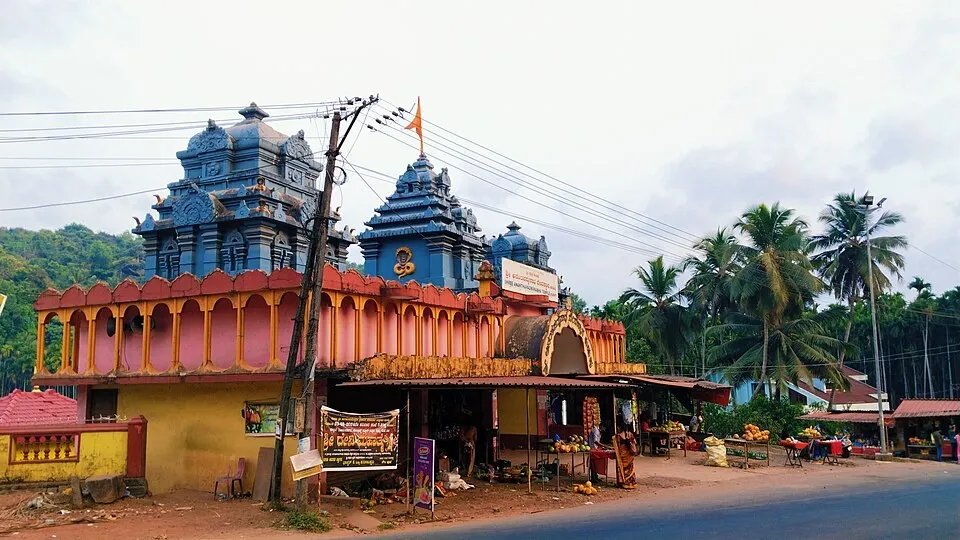

Wikipedia says that Kudupu, also called Kudpi, is a town about 10 km from the centre of Mangaluru, on the Mangaluru–Moodabidri–Karkala road. The name is the Tulu word kudupu, a basket made of a dried forest creeper, used to drain the water after boiling rice.¹
The article calls Kudupu well known for its serpent temple, the Sri Ananta Padmanabha Temple, “one of the prominent naga-kshetras in the region”. The main deities are Vishnu as Ananthapadmanabha, Subrahmanya and the serpent god Vasuki Nagaraja, and the temple is worshipped by the Madhva followers.¹
Inside the temple
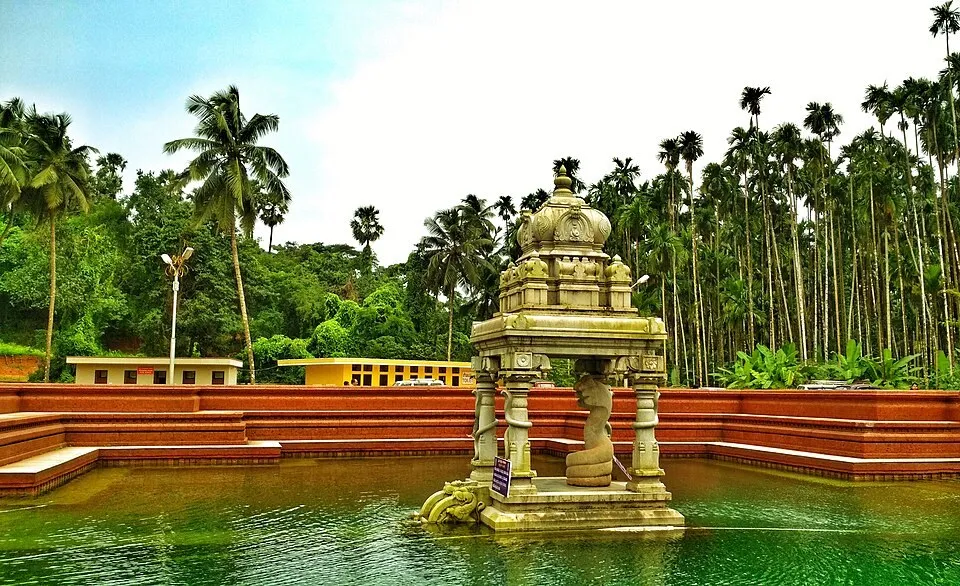

Wikipedia describes the layout. The main image of Ananthapadmanabha faces west, and so does the Naga Bana, the place of the serpent god, on the east side of the temple. It holds more than three hundred serpent images. The holy pond, Bhadra Saraswathi Thirtha, is to the left of the temple. A small shrine of the sub-deity Jarandaya stands in front. A holy anthill is inside the temple, with a stone image of Subrahmanya beside it, and there are shrines for Shree Devi and Mahaganapati, and stone guardians, Jaya and Vijaya, at the sanctum.¹
Our page on Jarandaya tells the story of that sub-deity.
The king who lost his hands
Mangalore Heritage tells the temple’s story of King Shurasena. He did a sin, and it troubled him so much that he lost his peace of mind. The Vedic scholars he asked said that, as his hands were the cause of the sin, he should cut them off himself and worship Mahavishnu. He did, and wore two golden arms in their place, but he still grieved.²
One day, hunting in the wild with his army, he came to the quiet spot of Bhadra Saraswathi Thirtha, the holy pond, and was struck by its peace and by the remains of puja he found near it. He remembered the scholars’ advice, settled there and worshipped Mahavishnu. Vishnu appeared, asked what he wanted, and the king asked for his arms back. Vishnu told him to build a temple within one day, and his arms would be restored as soon as it was finished.²
The king set the sculptors and builders to work, and they worked on through the night. By dawn the temple was almost finished, all but the ornamental top of the sanctum, when a divine voice from the sky told them to stop where they were. The king looked at his shoulders, and his arms had come back. He stayed there and worshipped Mahavishnu for the rest of his life.²
The page says the temple still has no muguli, the ornamental top of a sanctum, and that historians have long discussed this, since a muguli is part of any temple.²
The Brahmin who wanted a child
The temple’s own website opens a second story. It begins with a Brahmin and Vedic scholar called Kedar, who was orthodox, kind and devout but deeply worried because he had no child. He believed that a saint’s blessing was the last resort, and went from place to place looking for one.³ That is as far as we could read it.
Our research notes carry the story on, and we give it here with a warning about where it comes from.⁴ In the notes, Kedar does penance near a sacred spring, the Bhadra Saraswathi Tirtha, and the god Subrahmanya blesses him. His wife then bears three mystical eggs, said to be forms of Mahavishnu, of the serpent Mahashesha and of Subrahmanya himself. Kedar puts them in a kudupu, the basket used to drain rice, and an anthill grows over the spot. The anthill makes the place holy, and the story says that the basket gives the village its name.⁴
About this account. The notes credit Wikipedia for this version, but Wikipedia’s article on Kudupu does not contain it. It says only that the village is named after the basket, and that a holy anthill stands inside the temple beside the image of Subrahmanya.¹ The temple’s site starts a story about Kedar, and the rest of the account may come from there, but we could not read the rest of it. So the part after the opening lines is unchecked.
The notes also say that the two origin stories, the king’s and the Brahmin’s, do not fit into one account. We found no source that tries to join them.
Worship and festivals
Wikipedia lists the temple’s main festivals: Subrahmanya Shashthi, known as Champa Shashthi, in November or December; Kiru Shashthi in December or January; and the annual festival, from Margashira Shuddha Padya to Margashira Shuddha Shashti, in December or January. It also lists Nagara Panchami, Gokulashtami and Anantha Chaturdashi, and three daiva rituals, the Jarandaya nema, the Dompada Bali nema and the Beshada Bandi nema.¹
Ashlesha Bali is one of the temple’s important services. Mangalore Heritage says it can be done on every day except Ekadashi and the annual festival, from 5 pm to 6:30 pm. On Ashlesha Nakshatra days, when it is very crowded, it continues until 11 pm, and a meal is offered to the devotees.² Wikipedia’s list of services includes Naga Tambila, Sarpa Samskara and Naga Pratishte.¹
The temple was under renovation from 2016 until February 2018. A Brahmakalashotsava, the festival that marks the completion of a renovation, was held from 18 to 25 February 2018, and Wikipedia calls it the “festival of the century” in the temple’s history, since a temple is renovated once in many hundred years.¹
What we could not find
- The Kedar story in full. Only its opening lines are on the temple’s home page that we could read, and Wikipedia does not have the story. The eggs, the basket and the anthill come from our notes, whose source we could not trace.
- How the two stories fit. The sources give no date for either, and do not mention each other. Our notes say they do not combine into one account.
- A history of the temple. We found no inscription, trust or administrative record, and the 2018 festival is the only dated event.
- A link to Ananthapura. The Ananthapura Lake Temple at Kumbla has the same god, and we found no source linking the two temples.
- A scholarly study. We found none.
Related
- Kukke Subramanya: The Temple of the Serpent’s Refuge, the best-known serpent temple of the region
- Nagaradhane: The Serpent in the Sacred Grove, serpent worship in the groves and homes of the coast
- Jarandaya, the Prince Who Could Not Swallow an Insult, the daiva with a shrine in front of this temple
Sources & further reading
The books and articles behind the numbered notes on this page.
- Wikipedia, “Kudupu” (checked 9 October 2026): the town, the name, the temple, its layout, the festivals, the services and the renovation.
- Mangalore Heritage, “Kudupu Sri Anantha Padmanabha – Famous For Serpent Worship” (blog; read 9 October 2026): the legend of Shurasena and the Ashlesha Bali.
- Kudupu Shree Ananthapadmanabha Temple, temple website (home page; read 9 October 2026): the opening of the story of Kedar. Its history page did not open.
- Our research notes on Kudupu (Tuluva Stories, Notion): the rest of the Kedar story. The notes cite Wikipedia and the temple’s site, but we could not find the story in Wikipedia and could not read the temple’s page for it, so it is unchecked.
Wikipedia’s article is thinly referenced, the second and third are a blog and the temple’s own site, and the fourth is not a published source. We found no scholarly source.
Themes
Spotted a mistake, or know more about this? Suggest a correction/addition.