Rani Abbakka: The Queen of Ullal Who Would Not Pay
Of all the figures of the coast, Abbakka is the one most firmly tied to the written record, and she is still the heroine of songs, plays and rituals.
The record is thin and the legend is thick, and this page tries to keep them apart.
The queen of Ullal
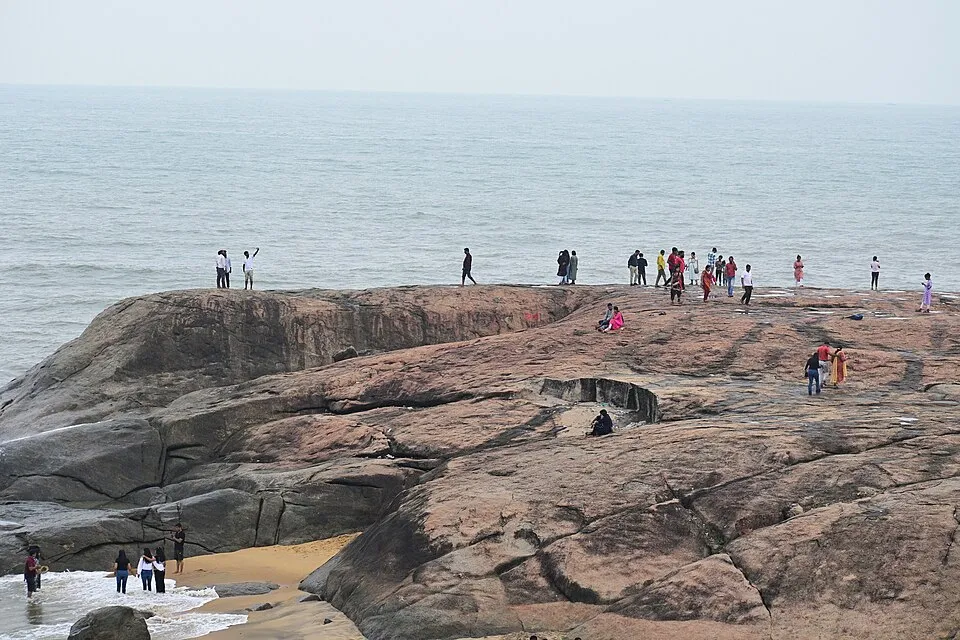

Wikipedia calls Abbakka Chowta a Jain queen of Ullal, of the Chowta dynasty, a Tuluva ruling house whose capital was at Puttige. It gives her reign as 1525 to 1570, with a source, and notes that the Chowtas followed aliyasantana, in which the heir comes through the mother’s line.¹
Its longer account says that her uncle, Tirumala Raya, crowned her queen, trained her in war, and arranged her marriage to Lakshmappa Arasa, ruler of the neighbouring Banga principality at Mangaluru. The marriage was short, and she went back to Ullal.¹ Our page on the Chowta dynasty tells of the family.
Ullal, the article says, was a rich port in the spice trade with Arabia and the west, and her court and army had Jains, Hindus and Muslims in them, with Beary men serving as seamen. She made alliances with the Zamorin of Calicut, and it says she also won the support of Venkatappa Nayaka of Bidnur.¹
The story as it is usually told
Wikipedia gives this sequence, which comes mainly from a 2002 article for the Indira Gandhi National Centre for the Arts.¹
- The refusal. The Portuguese demanded tribute, and she refused. In 1555 they sent Admiral Dom Álvaro da Silveira, and she drove the attack back.
- 1557. The Portuguese plundered and laid waste to Mangaluru.
- 1568. A Portuguese general, João Peixoto, took Ullal and entered the royal court. Abbakka escaped and took refuge in a mosque. That night she gathered about 200 soldiers and struck back. Peixoto was killed, 70 Portuguese were taken prisoner, and many retreated. In later fighting her side is said to have killed Admiral Mascarenhas and forced the Portuguese out of the Mangaluru fort.
- The turn. The Portuguese retook the Mangaluru fort and took Basrur, and with the help of her estranged husband attacked Ullal again. In 1570 she allied with the Sultan of Ahmednagar, whom the article calls the Bijapur sultan, and with the Zamorin. The Zamorin’s general, Kutty Pokar Markar, destroyed the Portuguese fort at Mangaluru but was killed on his way home.
- The end. Worn down by these losses and her husband’s treachery, she was arrested and sent to jail. The article says that even in prison she revolted, and died fighting.¹
A night of fire
Jyotsna Kamat, a historian, tells a different night battle. In her account the Portuguese were waiting with a fleet off Ullal in 1618, after the Keladi ruler had taken the Banga capital. At midnight on a moonless night, a band of fishermen, called Mogers, and Moplah soldiers went out in country boats on the queen’s orders and threw hundreds of burning coconut torches at the ships. The sails caught fire, and the Portuguese who jumped into the sea were killed by her soldiers. She writes that, by Portuguese sources, two hundred soldiers were killed and two warships sank.²
This is not the Wikipedia story, and the two do not sit together. Wikipedia says the queen was crowned in 1525, and Kamat gives her dates as about 1540 to 1625. Wikipedia adds that legend says she was the last person to use the fire-arrow against the Portuguese.¹
The traveller who met her
The Italian traveller Pietro Della Valle toured the west coast between 1621 and 1624. Kamat says he went to Ullal to meet the queen, who was by then famous, after hearing Shah Abbas of Persia praise her. She was away at the nearby village of Manel, supervising irrigation work, and he met her on the road: a dark-skinned woman walking barefoot, in a plain cotton sari, with a servant holding a palm-leaf umbrella over her. He wrote that she looked more like a kitchen-woman or a laundress than a noble queen.²
She asked what there was to see in such a wilderness after the great rulers he had visited. He said that he had come only to see her. She had him looked after, but she never gave him an audience, and her teenage son entertained him instead. Kamat says that he also wrote down the custom of inheritance through the mother’s line, and that he described her as a ruler who loved her subjects and settled disputes in the evenings.²
One Abbakka, or several?
Our research notes say that several historians think “Abbakka” was a title for a line of Ullal queens, because a queen was met in 1623, long after the date traditionally given for the heroine’s death. We could not find a source for that argument. Wikipedia gives 1570 as the end of the reign, and Kamat’s own dates run to 1625, so the two sources do not agree.¹ ²
Kamat also names a husband, Lakkarasa, and says that she took custody of their three children under the mother’s-line custom.² Wikipedia mentions none of this. We have not tried to join the accounts.
Remembered in song and ritual

According to Wikipedia, her story has been told through folk songs and Yakshagana, and in bhuta kola the person in trance recounts her deeds. She is described there as dark and good-looking, always dressed in plain clothes like a commoner, and as a caring queen who dispensed justice late into the night. Some accounts give her two valiant daughters who fought beside her.¹ Our pages on Yakshagana and Bhuta Kola describe the two arts.
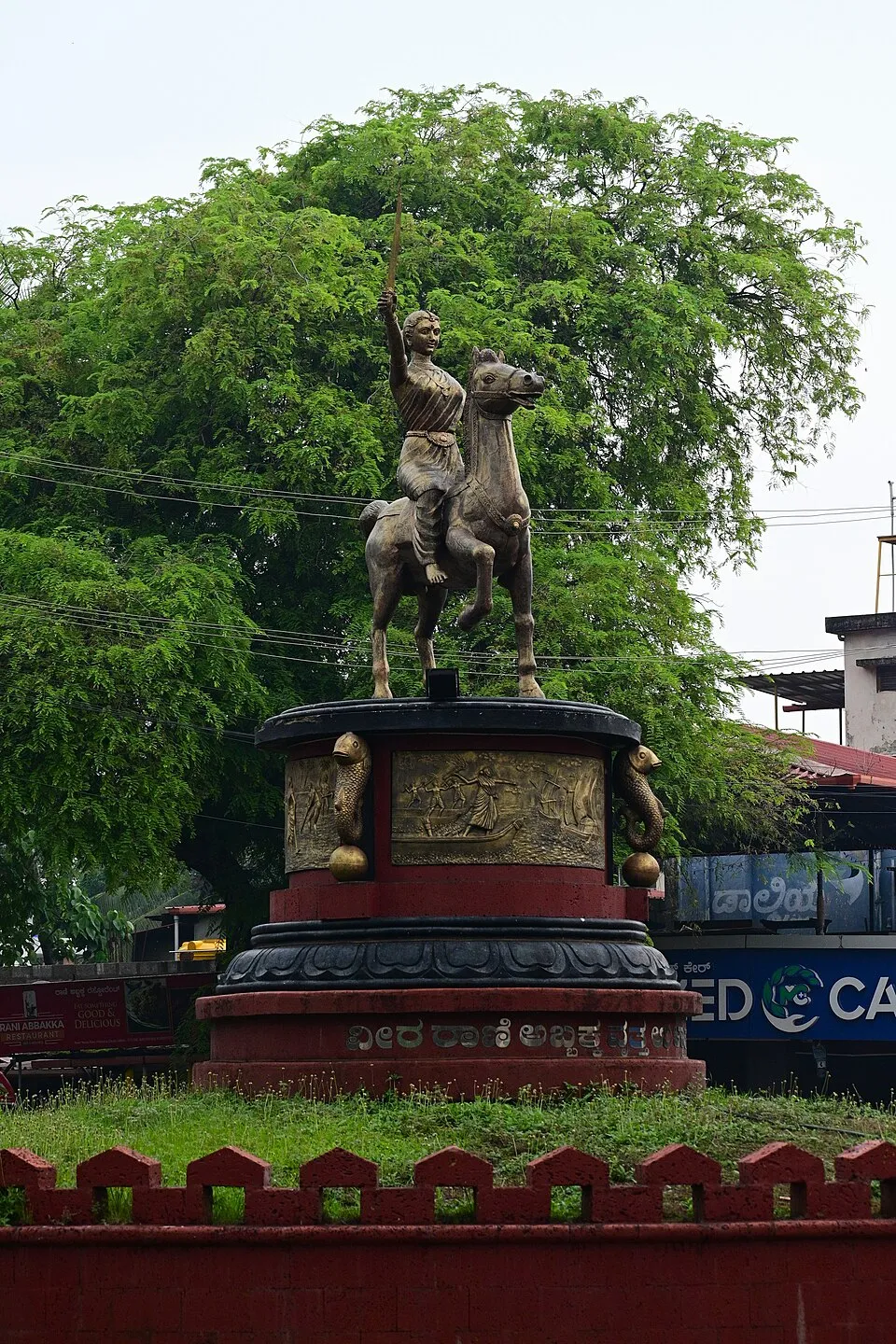
Today she is remembered in Ullal with the annual Veera Rani Abbakka Utsava, at which an award is given to distinguished women. A life-size bronze statue stands in Ullal, and another in Bengaluru. India Post issued a special cover in 2003, and a stamp in 2023, and the Coast Guard ship ICGS Rani Abbakka was commissioned in 2012.¹
What we could not find
- When she lived. Wikipedia says 1525 to 1570, and Kamat about 1540 to 1625. Our notes call the dates traditional and disputed.
- Local or Portuguese sources. Kamat says local sources say little about her victory over the Portuguese, and that Arab and Portuguese sources mention it. We have not read any of them.
- The mosque, the fire-arrow and the prison revolt. Our notes say they come mainly from popular accounts, and not from Portuguese records. We found nothing to check them against.
- The sister’s-daughter detail. Our notes call her Tirumala Raya’s sister’s daughter. Wikipedia calls him her uncle without saying on which side, though under aliyasantana the heir would be a sister’s child.
- A historical play. Our notes mention a Tulu play on Abbakka by M. K. Seetharam Kulal. We could not check it.
- A scholarly biography. The books that our notes list for further reading, by Jyotsna Kamat, S. U. Kamath and Sarojini Shintri, we have not seen.
Related
- The Chowta Dynasty, the house she belonged to
- Empire, Nayakas and Portuguese Guns: Tulunadu from 1345 to 1763, the wider story of the Portuguese on the coast
- Yakshagana: The Coast’s Dusk-to-Dawn Dance-Drama, one of the arts that tell her story
Sources & further reading
The books and articles behind the numbered notes on this page.
- Wikipedia, “Abbakka Chowta” (checked 9 October 2026): the dynasty, the succession, the battles, the legend and the memorials. It cites Kailash Kumar Mishra, “Abbakka Rani: The Unsung Warrior Queen” (IGNCA, 2002), which we did not open.
- Jyotsna Kamat, “Abbakka the Brave Queen (c. 1540–1625 CE)”, Kamat’s Potpourri (read 9 October 2026): the night of fire, Pietro Della Valle’s visit and her family.
The first is a Wikipedia article and the second a historian’s article on a personal website, neither of which gives its sources in detail. For further reading, our notes list Jyotsna Kamat’s Abhaya Rani Abbakka, S. U. Kamath’s Maritime History of Karnataka, and Sarojini Shintri and K. Raghavendra Rao’s Women Freedom Fighters in Karnataka (1983), which we have not seen.
Words on this page
What the Tulu and other Indian-language terms on this page mean.
- aliyasantana
- Inheritance through the mother's line.
Themes
Spotted a mistake, or know more about this? Suggest a correction/addition.