Bhutala Pandya: The Nephew Who Was Spared
Most of the coast’s families passed their houses and land from a man to his sister’s son. This is the story that is said to explain why.
It has a sea-demon, a king, a queen who said no, and a sister who said yes.
The story
Wikipedia gives the popular version, as it was put before the Malabar Marriage Commission by one of its members, Mundappa Bangera.¹ Other tellings differ in places.
The ships and the demon
King Deva Pandya had built a new fleet and loaded it with valuable cargo. As the ships were about to be launched, Kundodara, king of demons, demanded a human sacrifice, one of the king’s own sons.¹
The king asked his wife. She refused.¹
The sister’s son
The king’s sister, Satyavati, offered her own son, Jaya Pandya, in place of the queen’s sons.¹
Kundodara saw in the child the signs of future greatness. He gave up the sacrifice and let the ships sail. He then took the boy, gave him back his father’s kingdom of Jayantika, and named him Bhutala Pandya.¹
The second demand
Some of the ships came back with immense wealth, and the demon appeared again and demanded another human sacrifice. The king asked his wife again, and she refused again. This time she also publicly gave up her own title and her children’s claim to the wealth the ships had brought.¹
Kundodara told Deva Pandya to disinherit his own sons, of the wealth and of the kingdom, and to give everything to his sister’s son, Jaya Pandya, now called Bhutala Pandya. It was done.¹
The law
Because this prince had received his kingdom from his mother’s brother and not his father, he ruled that his subjects must follow the same example, and they did. That is how aliyasantana began, on the third day of the bright half of Magha in the first year of the Shalivahana era, about 77 CE, replacing makkalasantana, inheritance from father to son. Bhutala Pandya is said to have ruled for 75 years, and his nephew Vidyadyumna Pandya for 81.¹
What the story explains
Aliyasantana means “the nephew or niece as heir” in Tulu. Wikipedia describes it as the matrilineal system of the Tuluva community, in which a man’s heir is his sister’s son, and not his brother’s.¹ It lists the Jains, Billavas, Bunts (except the Parivara Bunts), Devadigas, Mogaveeras and Kulalas as matrilineal communities.¹ Our page on the Chowtas shows it at work in a royal house, and the story of Agoli Manjanna shows a nephew running his uncle’s estate.
The story gives the custom a start, and gives the women in it a part. The queen’s refusals and the sister’s offer are what decide who inherits.
A story that historians doubt
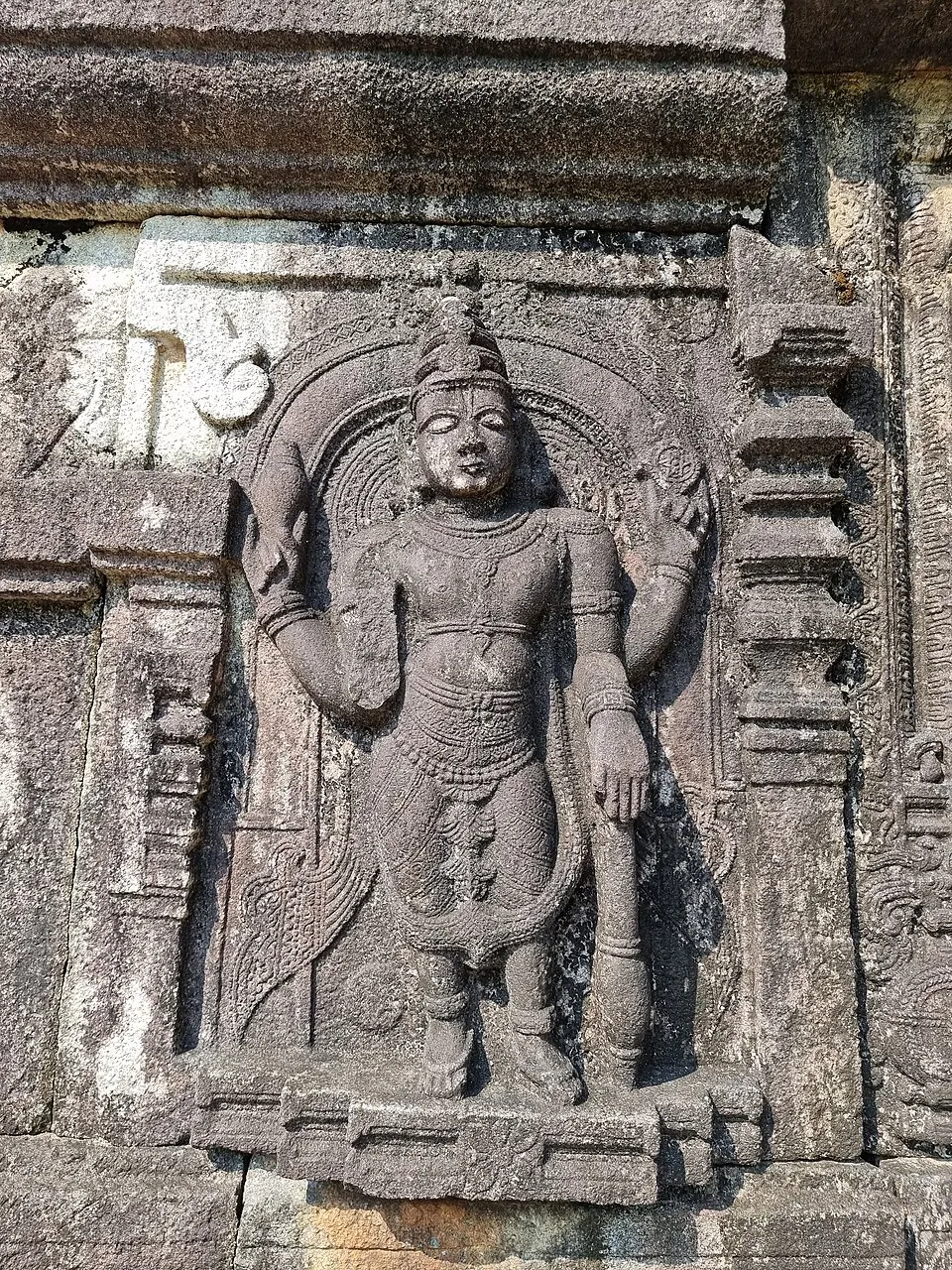

Barkur Online, a local site, carries an article of 2014 by Archie Furtado which says that the legend names Bhutala Pandya as the first ruler of Barkur, around 78 CE. It says that the only source is a Sanskrit book, the Bhutala Pandya Charitam, written in the 14th century by a Brahmin scholar, and that most historians set the claim aside for want of proof. It adds that the monuments at Barkur are from the 9th century on, and that no inscription or structure from earlier has been found. It also says that Jainism reached the coast only around the 12th century, so a Jain king in the 1st century is hard to believe.² The article does not say how it knows the date of the book, and we have not seen the book.
It notes that many scholars do not accept the story as the origin of aliyasantana, and that some date the system itself to about 800 years ago.²
Wikipedia gives a different origin for the custom. According to the Keralolpathi, a text of the Nambudiri Brahmins, a Kshatriya prince from Kerala, Kerala Perumal, came to the Tulu country by boat, married a Jain princess and brought aliyasantana with him.¹ We have not seen that text either.
What we could not find
- The text itself. Our notes call it Bhutala Pandya’s Aliya Santana Kattu, and say it was used as a legal reference in colonial courts, with an English translation printed in Madras in the 1860s. We did not find the translation, and these claims are unchecked.
- The twelve wives. Our notes give a folk explanation of Barkur’s old name, Barahakanyapura, “the city of twelve maidens”. We found no source we could read.
- The variants. Our notes say that the queen’s children number seven in most tellings and sixteen in some, and that one version puts the second demand at Kalyanapura. We found none of these tellings.
- Who Kundodara was. Our notes record a suggestion that he is a memory of Bermer, the first lord of Tulunadu. It is speculation, and we found no source for it. Our page on Bermer tells of him.
- When the system ended. Our notes list laws that ended aliyasantana in the 20th century, and say the exact statutes still need checking. We have left them out.
- A scholarly study. We found none that we could read. Our notes list B. A. Saletore’s Ancient Karnataka, Volume I: History of Tuluva (1936) and the Report of the Malabar Marriage Commission (1891), which we have not seen.
Related
- The Chowtas: A Jain Royal House Ruled Through the Mother’s Line, a royal house that followed the custom
- Rani Abbakka: The Queen of Ullal Who Would Not Pay, a queen who inherited through the mother’s line
- Jumadi, Neither Man nor Woman, a story in which the heir is a nephew
- Bermer: The First Lord of Tulunadu, the first lord of the land
Sources & further reading
The books and articles behind the numbered notes on this page.
- Wikipedia, “Aliyasantana” (checked 9 October 2026): the story, the date, the reigns, the Keralolpathi version and the matrilineal communities.
- Archie Furtado, “The myth of Bhutala Pandya or Apostle Bartholomew associated with the ancient coastal port town of Barkur”, Barkur Online (13 October 2014; read 9 October 2026): the doubts about the text, its date and the evidence at Barkur.
The first is a Wikipedia article and the second a local opinion piece. We found no scholarly source that we could read.
Words on this page
What the Tulu and other Indian-language terms on this page mean.
- aliyasantana
- Inheritance through the mother's line.
Themes
Spotted a mistake, or know more about this? Suggest a correction/addition.