The Land & Its Beginnings · How Tulunadu Began · Also in: Faith & Worship: Daivas, Nagas & Sacred Groves
Bermer: The First Lord of Tulunadu
Step into an old garadi, one of the shrines of Tulunadu’s twin heroes, and look past the figures of Koti and Chennaya. Between them, in many garadis, there is a third figure: a bearded man with a moustache, riding a horse, a lance in his hand.³ The twins are famous across the coast. The rider is not, at least not any more. His name is Bermer, and for a very long time he was the greatest god the Tuluvas knew.
Most people today know him, if at all, by other names. Bermer has been folded into the serpent god, renamed after the Hindu creator Brahma, and posted as a guard at the doors of Jain temples. But in the old songs he is the one who was there first.
The god who made the land

The paddanas, the long oral ballads of Tulunadu, give Bermer a beginning that reaches back to the start of everything. A paddana about him says that when the sun and the earth were born, Bermer was born in the middle of the seven seas, and he made Tulunadu.⁴ He is called the eldest of the daivas, the spirit deities of Tulunadu, and the head of them all.⁴
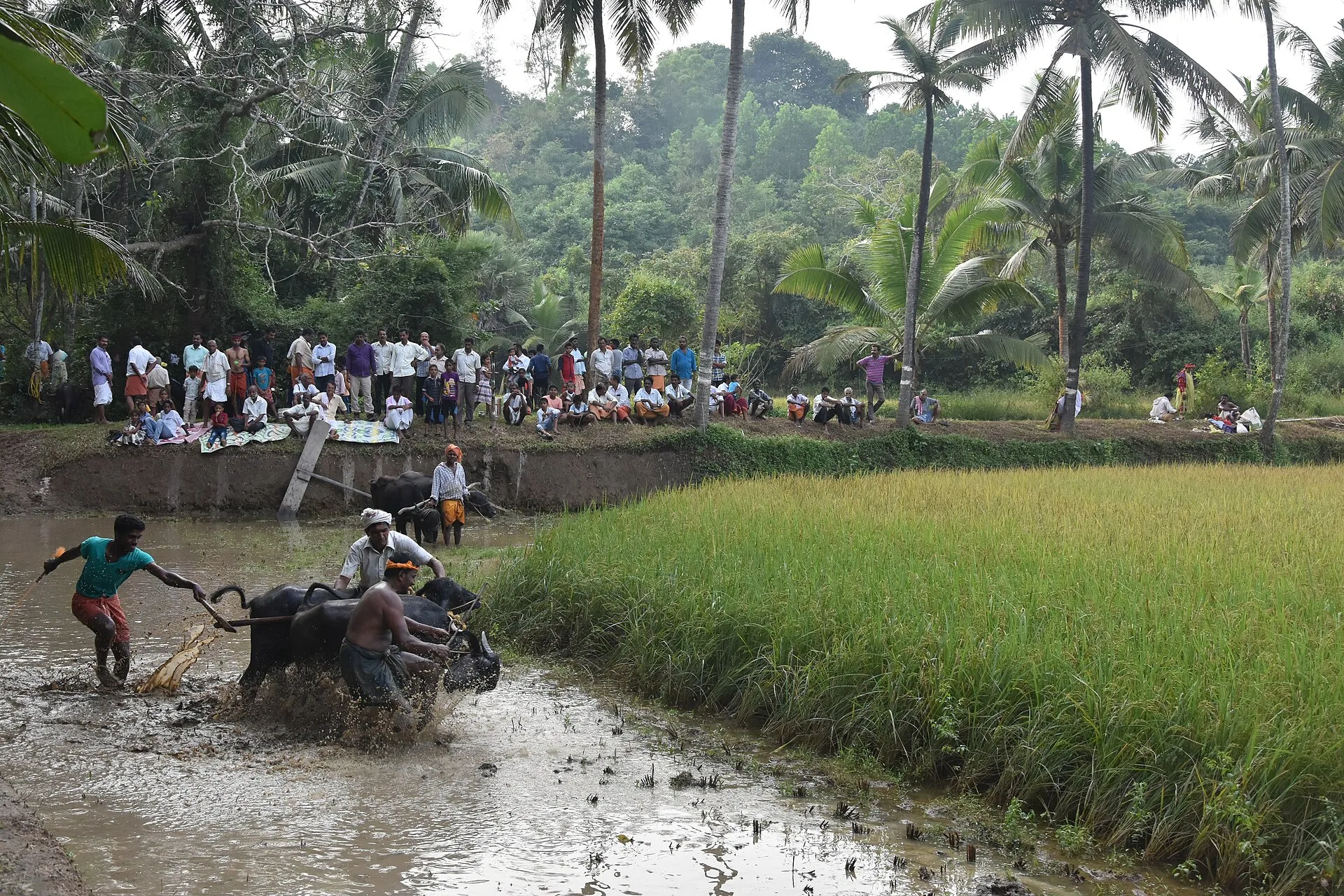
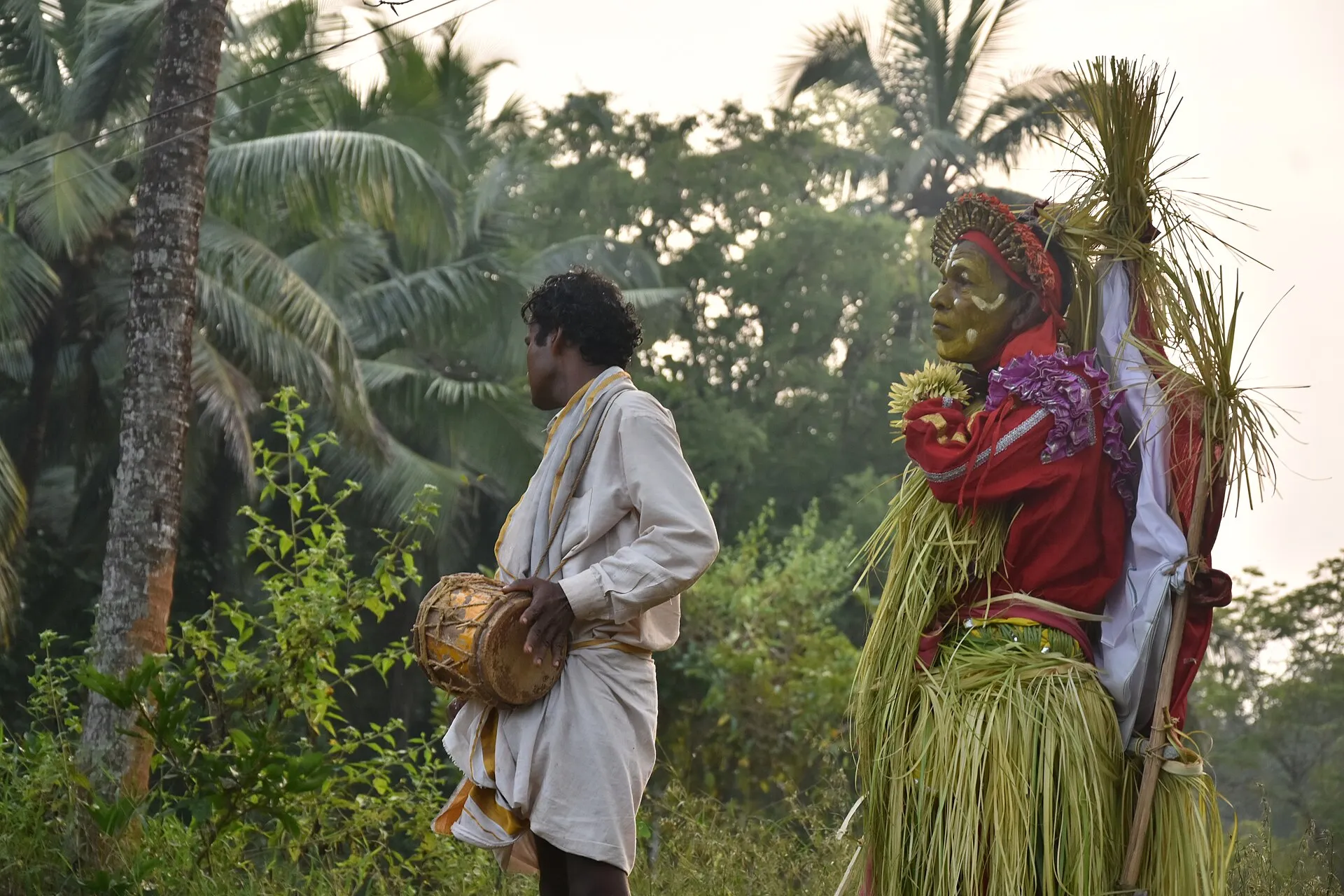
In the Tulu picture of the world, as the anthropologist Peter Claus described it, there are three worlds side by side: the world of people, the wild world of the forest, and the world of the bhutas, the spirits. Just as a king rules the world of people, the world of the spirits has its ruler too, and that ruler is Bermer, “the lord of the forest and of the bhutas”.⁶ So each year at a kola, the night-long ceremony in which a daiva comes to life in a performer, the landlord or village headman stands before the daiva he answers to and has his authority confirmed, much as a vassal reports to his lord.⁶
His name comes in many shapes: Berme, Bermer, Bermeru, and sometimes Birmer. The -er and -eru endings are Tulu marks of respect.¹ ⁴ One writer suggests the name grew from a word meaning “old” or “ancient”, for the oldest of the daivas.⁴
A rider with a lance
In the oldest worship, Bermer seems to have had no image at all. He was honoured under the trees in the forest, as a rough, uncut stone.⁴ In many of the ancient shrines he is still just a small stone, or nothing you could call an idol.¹ In one village, Varapadi near Mundkur, a black four-cornered stone is called Bermer.¹¹
The figure most people picture came later. In the garadis today, Bermer is a masculine warrior with a beard and moustache, sitting astride a horse and holding a lance. Some images give him a many-seeded fruit, perhaps a jackfruit, in his other hand.¹ The Tulu researcher Ravindra Mundkur thinks this kind of image probably arrived after the 5th century, once horses and stone carving had come to the region.¹ The Jains, too, show a Brahma as a warrior, and one writer wonders whether the Tuluvas borrowed the idea of an idol for Bermer from them.⁴
Where Bermer was worshipped

Bermer’s old homes have names of their own. Many Tulu clans trace themselves to an original settlement, a moolasthana, and within it they kept a place of worship beside the water, called an alade. In these ancient shrines Bermer was the chief deity, honoured together with Lekkesiri, the buffalo spirit Maisandaya, the bullock spirit Nandigona, and Naga, the serpent.¹ Mundkur adds that the serpent, the bullock and the buffalo were being worshipped even before Bermer arrived.¹
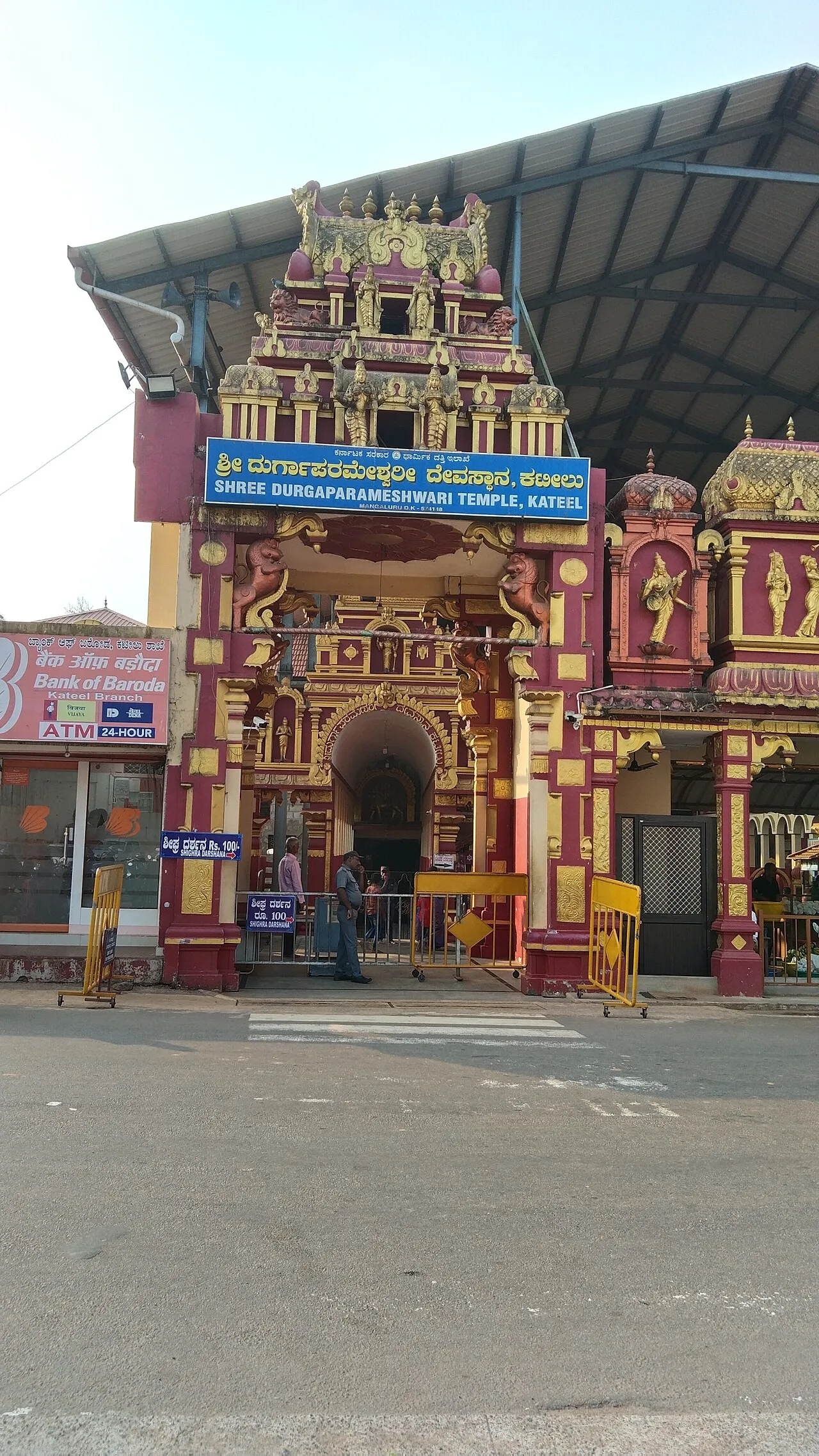
Shrines of Bermer standing on their own were called gunda, roughly round enclosures that held his image. Many fell into ruin, but a few were taken into later temples, as at Kateel.¹ Others were small shrine buildings called chitteri.¹ And the garadis, the old schools of martial arts, kept Bermer as their master deity, which Mundkur takes as a sign of how old the garadis are.¹ ³
Many of these places have simply gone. Mundkur remembers a heavily weathered, overgrown structure about fifty metres behind his family’s ancestral house in Mundkur village, in Udupi district. His grandmother called it the Bermere gunda. By the time he understood what it was, it had been cleared away for new houses.¹ Neglected Bermer shrines like it could still be found in many villages until the 1960s and 70s.¹ ¹¹
A traveller at a queen’s chapel, 1623
One of the few outside eyewitness accounts of this old worship comes from an Italian. In December 1623 the traveller Pietro della Valle was at Manel, a little inland from Mangaluru, waiting to meet the queen of Ullal, who kept her court there.⁵ She was not the famous Rani Abbakka, who had fought the Portuguese decades earlier, but a later queen who bore the same name. Della Valle wrote it down as Abag-devi Ciautru.⁵ ¹⁰
While he waited, he was shown a small square chapel on a hill, walled with wooden stakes and roofed over. The queen had built it, his interpreter said, for a spirit who lived in the place and did people harm. Inside, della Valle found a figure of rough white stone, taller than a man, like a handsome young man with a high round crown and four hands, one of them holding a dagger. It rode, not on a horse, but on the figure of a naked, bearded man going on all fours. Beside it stood the dead stump of a great tree.⁵
The people there told him the figure was “Brimor”, the king of many thousands of spirits, and called him Buto, a bhuta.⁵ Writers on Tulu history read that name as Bermer.² ⁷ Della Valle himself was not a respectful visitor. He took the chapel for a devil’s house and was rude to the idol before he left, but his account is precise enough to show that, in the 1620s, a queen on this coast still built shrines for Bermer.⁵
Bermer in the epics
Bermer is woven into Tulunadu’s two great oral epics. In the Siri paddana he comes to Bermanna Alva, the old ruler of Sathyanapura, disguised as a Brahmin, and tells him to restore a family shrine that has fallen into ruin. The blessed offering from that shrine becomes the baby Siri.⁴ ¹³ Later in the epic, when Siri’s daughter Sonne and her husband forget a vow they made to Bermer, he takes a terrible price.¹³ Mundkur notes that the epic also tells of repairing a dilapidated Bermer shrine near Basrur, the old port in Kundapur taluk.¹
The paddana of the twin heroes Koti and Chennaya, who are usually dated to the later 16th century, describes them worshipping Bermer too.¹ ² That is why the rider still sits between them in their garadis.³
The god behind other names

As the worship of Shiva, Durga and Krishna spread along the coast, Bermer slowly faded.¹ ¹¹ But he did not vanish. He moved into other shrines and under other names.
With the serpent. The serpent cult was already old when Bermer came. Mundkur thinks the two clashed at first and then came together. Today many Tuluvas pray to Naga Bermer, or Nagabrahma, which an archaeologist describes as one of the chief deities of Tulunadu.¹ ⁸ At the Kori Kambla, the ritual ploughing and planting of the fields, spirits such as Urave and Erubanta are worshipped as attendants of Naga Bermer, the leading god of that tradition.¹²
As Brahma. A shrine of Bermer was also called a Brahmasthana, a “place of Brahma”.² At one old serpent shrine in Udupi, for example, a Brahma is worshipped beside the Nagas, Raktheshwari and Nandikona, the same old company Bermer kept at the alades.⁹ Mundkur also traces the god Brahma-Lingeshwara to a meeting of Bermer’s worship with Shiva’s.¹
In Jain temples and great shrines. When Jain rulers built their basadis, their temples, Bermer was given a place at the entrance as a yaksha, a guardian spirit, or as the Kshetrapala, the guardian of the temple grounds. An image of this Yaksha-Brahma can be seen at Dharmasthala.¹ At Kateel, a renovated Bermer shrine stands within the grounds of the Durgaparameshwari temple.¹ And at Kuthar near Mangaluru, a shrine better known for Koragajja and Raktheshwari still honours Bermer, where devotees pray to him for children.⁷
Beyond Tulunadu. In Uttara Kannada, especially around Ankola, a village god called Bommaiah is still worshipped, carved in granite in much the same form. Mundkur sees him as Bermer under a Kannada name.¹
Bermer and Brahma
Are Bermer and the Hindu creator Brahma the same god? Writers do not agree. One Tulu writer insists that Bermer is not the four-faced Brahma who sits on a lotus, even though both are creators.⁴ Mundkur argues that the two grew from one very old source and then developed separately, and he goes further, tracing that source to a hero-cult of ancient Mesopotamia.¹ ² That is one researcher’s theory, not settled history. Both writers agree that, over the centuries, the name Bermer was more and more turned into Brahma.² ⁴
A word on sources: most of what is written about Bermer in English comes from a few heritage writers, who draw on Kannada scholarship and on their own family memories. So some of the older detail rests on just one or two voices.
Related
- Bhuta Kola: When the Spirits Come to the Village, the living worship of the spirits Bermer is said to rule
- Nagaradhane: The Serpent in the Sacred Grove, the serpent cult that became Naga Bermer
- Siri, the Princess Who Walked Away, whose epic Bermer blesses and punishes
- Koti and Chennaya, the Twin Heroes, who worshipped Bermer, and whose garadis still keep him
- Rakteshwari, the Earth-Born Maiden, Lekkesiri, one of Bermer’s companions at the old shrines
- Maisandaya, Guardian of the Herd, another of those companions
- Dharmasthala: The House the Daivas Asked For, where Bermer stands as a Jain guardian
- The Mother Goddess: A Worship Older Than the Temples, another very old idea about the roots of Tulunadu’s faith
- Parashurama and the Coast That Rose from the Sea, the other great story of how Tulunadu began
Sources & further reading
The books and articles behind the numbered notes on this page.
- Ravindra Mundkur and Hosabettu Vishwanatha, “354. Bhuta cult of Bermeru or Bommaiah”, Tulu Research & Studies (blog, 12 January 2016): the names Berme and Bermeru, the alade shrines with Lekkesiri, Mahisandaya, Nandigona and Naga, the older animal spirits, the gunda and chitteri, Bermer in the garadis, the horse-riding image and its likely date, the Bermere gunda at Mundkur, ruined shrines into the 1960s and 70s, Koti and Chennaya’s worship, Bermer fading before Shiva, Durga and Krishna, the Kateel shrine, Yaksha and Kshetrapala in Jain basadis, the Yaksha-Brahma at Dharmasthala, Naga Bermer and Brahma-Lingeshwara, the Siri paddana and Basrur, Bommaiah at Ankola, and the author’s theory of a shared origin with Brahma.
- Ravindra Mundkur, “4. Brahma worship: Brahma and Bermer”, Tulu Research & Studies (blog, 19 February 2007): the Bermere gunda or Brahmasthana, Koti and Chennaya worshipping Bermer, della Valle’s visit in 1623, Naga Bermer, and the author’s view of Bermer and Brahma.
- Ravindra Mundkur, “291. Garodi and Kalari”, Tulu Research & Studies (blog, 18 December 2011): Bermer as the master deity of the garadi, and a horse-mounted Bermer flanked by Koti and Chennaya, after Vamana Nandavara’s Koti Chennaya: Janapadiya Adhyayana (2001).
- Vishal Babu Kadri, “Tulunada Bermer: Tale of Tulunadu’s Divine Guardian” (blog, 1 May 2020): the Bermer paddana’s lines on his birth among the seven seas, the meaning of the name, worship on uncut stone under the trees, Bermer as the eldest and head of the daivas, his kola, not the four-faced Brahma, the warrior on horseback and the Jain Brahma, the Siri paddana, and Bermer’s change into Brahma and Nagabrahma.
- Pietro della Valle, The Travels of Pietro della Valle in India, edited by Edward Grey, vol. 2 (Hakluyt Society, London, 1892), pp. 310–313 and 339–341: the queen “Abag-devi Ciautru” at Manel in December 1623, and the chapel she built, its idol and the name “Brimor”.
- Wikipedia, “Buta Kola”, drawing on the work of Peter J. Claus: the three worlds, and Bermeru as “the lord of the forest and of the būtas”.
- Adisthala Swami Koragajja, Kuthar, “Divine forces” (the shrine’s own account): Bermer and his names, the Bermer shrine at Kuthar, della Valle’s “Brimore” read as Bermer, and prayers to Bermer for children.
- Gururaj A. Paniyadi, “Rare sculpture of Nagabrahma found in Udupi district”, Deccan Chronicle (8 February 2023), quoting the archaeologist T. Murugeshi: “Nagabrahma or Nagabermer is one of the chief deities of Tulunadu”.
- Wikipedia, “Saarvajanika Nagabrahmastana Moodanidambooru, Bannanje”: Brahma worshipped with the Nagas, Raktheshwari, Nandikona, Kshetrapala and Bobbarya.
- Wikipedia, “Abbakka Chowta”: Rani Abbakka’s reign, 1525–1570, and her wars with the Portuguese.
- Ravindra Mundkur, “6. Bermer II”, Tulu Research & Studies (blog, 21 February 2007): Bermer no longer worshipped regularly, neglected Bermer temples until the seventies, and, in a reader’s comment, the black four-cornered stone called Bermer at Varapadi.
- Wikipedia, “Kori Kambla”: Naga Bermer as the leading god of the kambala tradition, and Urava and Erubanta as his attendant spirits.
- Wikipedia, “Epic of Siri”: Bermer’s visit to Bermanna Alva, Siri’s birth from the shrine’s offering, and the broken vow of Sonne and Guru Marla.
Further reading
- Indira Hegde, Tuluvara Mooltāna Adi Alade: Parampare mattu Parivartane (Navakarnataka, Bengaluru, 2012), in Kannada: a study of the ancestral shrines of Tulu communities.
- Vamana Nandavara, Koti Chennaya: Janapadiya Adhyayana (Hemanshu Prakashana, Mangaluru, 2001), in Kannada.
- P. Gururaja Bhat, Studies in Tuluva History and Culture (Udupi, 1975).
Words on this page
What the Tulu and other Indian-language terms on this page mean.
- alade
- A shrine of Siri and her family.
- basadi
- A Jain temple.
- bhuta
- A guardian spirit of a place, family or community; also called a daiva.
- chitteri
- A small shrine building, some of them for Bermer.
- daiva
- A guardian spirit; used interchangeably with bhuta.
- garadi
- A shrine to the twin heroes Koti and Chennaya; the word also means a gymnasium.
- gunda
- A small shrine of Bermer standing on its own.
- kola
- The ceremony in which a daiva is invited to possess a performer.
- Kshetrapala
- The guardian of a sacred place.
- moolasthana
- The ancestral shrine of a clan, its "original seat".
- naga
- The serpent deity, usually pictured as a cobra.
- paddana
- A long oral ballad, sung to tell the story of a daiva or hero.
- yaksha
- A guardian spirit.
Themes
Spotted a mistake, or know more about this? Suggest a correction/addition.