The Land & Its Beginnings · How Tulunadu Began · Also in: Faith & Worship: Daivas, Nagas & Sacred Groves
The Mother Goddess: A Worship Older Than the Temples
Walk through Tulunadu for a week and you will meet the Mother many times. She is the goddess of the temple at Kollur, of the Durga temple at Kateel, of the temple that gave Mangaluru its name. She is the voice that speaks through a dancer at a kola, in the form of Rakteshwari. She is the goddess of the Devi Mahatmya, the old Sanskrit poem in praise of the Goddess.¹
It is tempting to see all of this as one very old thread. Some scholars do. This page asks how much of that thread is really about Tulunadu, and how much is a story about India and the Dravidian south that Tulunadu simply shares.
What “Shakti” means
Shakti means power or energy, and in Hindu tradition it is the female power behind the universe, worshipped as the Goddess, under names such as Durga, Parvati, Kali and Devi.¹ The worship of her is called Shaktism. Some scholars trace it back to prehistoric times; others doubt that.¹ That is where the argument begins.
The deep-time argument
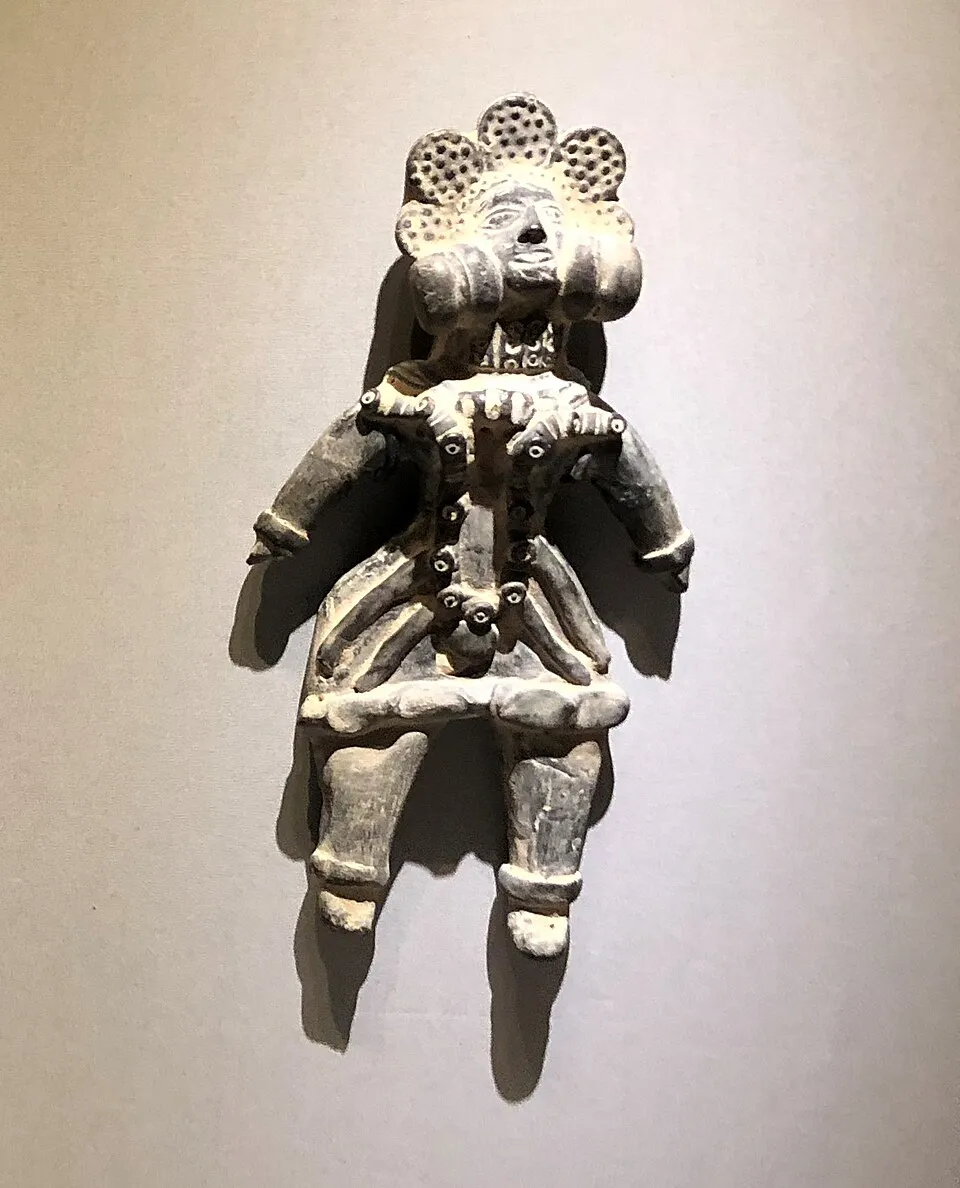

The case for a very ancient Mother rests on archaeology, not on any Tulunadu text. The oldest female figurine found in India, near Prayagraj, is dated to the Upper Palaeolithic, perhaps 17,000 to 25,000 years ago. At Mehrgarh, a Neolithic site in what is now Pakistan, thousands of female clay figures were found, some from about 5500 BCE. At Indus Valley cities such as Harappa and Mohenjo-daro, female figurines turn up in almost every household, which suggests a goddess worshipped at home.¹
Whether these figures lead in a straight line to the Shakti of later temples and texts is disputed. The scholar N. N. Bhattacharyya argues that they do. Others, among them David Kinsley and Lynn Foulston, accept the figurines as signs of some veneration of a goddess, but say the link is unproven: there is a very long, undocumented gap between a Harappan clay figure and a medieval Shakta text.¹
The Dravidian argument
A narrower argument is about the Dravidian south. The scholar N. N. Bhattacharyya writes that the “cult of the Female Principle was a major aspect of Dravidian religion”, and that the Seven Divine Mothers, the Sapta Matrika, may also have Dravidian roots. In his account the old goddesses were gradually identified with Parvati, Durga and Kali.¹
Other writers are more careful. Goddesses such as Mariamman, a form of the goddess called Amman in the Tamil south, grew out of local, temple and devotional traditions meeting one another, and should not be presented as proof of a single prehistoric mother-goddess tradition. Attempts to rebuild a distinct pre-Vedic Dravidian religion from village deities and female deities remain disputed.²
This is the same pattern we see on the Bermer and Parashurama pages, where an older local figure is woven into a pan-Indian story. But these arguments are mostly made from Tamil and general South Indian evidence, so they are the backdrop Tulunadu stands against, not proof about Tulunadu’s own goddesses.
The one truly local clue
Where the evidence turns local is a find near Mudu Konaje, about 8 km from Moodabidri on the Moodabidri-Shirthady road, reported in 2023. The site once had nine megalithic burial chambers called dolmens, of which two survive. Eight clay figures were found there and dated to roughly 800 to 700 BCE: two cattle, two peacocks, a horse, one object nobody could identify, a mother-goddess figure and a separate mother-goddess hand.³
T. Murugeshi, a retired associate professor of ancient history and archaeology at Mulki Sunder Ram Shetty College in Shirva, who took part in the exploration, said that clay figures like these give solid ground for studying the bhuta cult, the worship of the daivas that we see in the kola today.³ That is one expert’s reading, and the gap is about 2,700 years, with eight figures and no record in between. It is a dated, local, expert-attributed clue, which is firmer than the general argument, but it is not a proven line from that clay mother to the daivas.
Goddesses inside the daiva world
Closer to the present, some of the daivas are goddesses already.
Rakteshwari is described in one source as an aspect of Adi Parashakti, the original great goddess, and as the ishta-devata, the chosen family goddess, of Tulu Nadu.⁴ Her name means “goddess of blood”, and sources disagree about what that means. Some treat her as a spirit who demands blood sacrifice, while others say that is a misunderstanding and that she is worshipped with vermilion and whole coconuts.⁴ Her story is told in Rakteshwari.
Jumadi is sometimes called Dhumavati locally, and her origin story is a strange one: Parvati, hungry, swallows Shiva, and the being that results has Shiva’s face and moustache on Parvati’s body.⁵ Scholars warn against confusing this Jumadi with the pan-Indian goddess Dhumavati, one of the Mahavidya goddesses, although the names match. It is a small example of how a local tradition can borrow a name from the Sanskrit goddess world without taking over its whole theology. Her story is told in Jumadi.
The temple goddesses
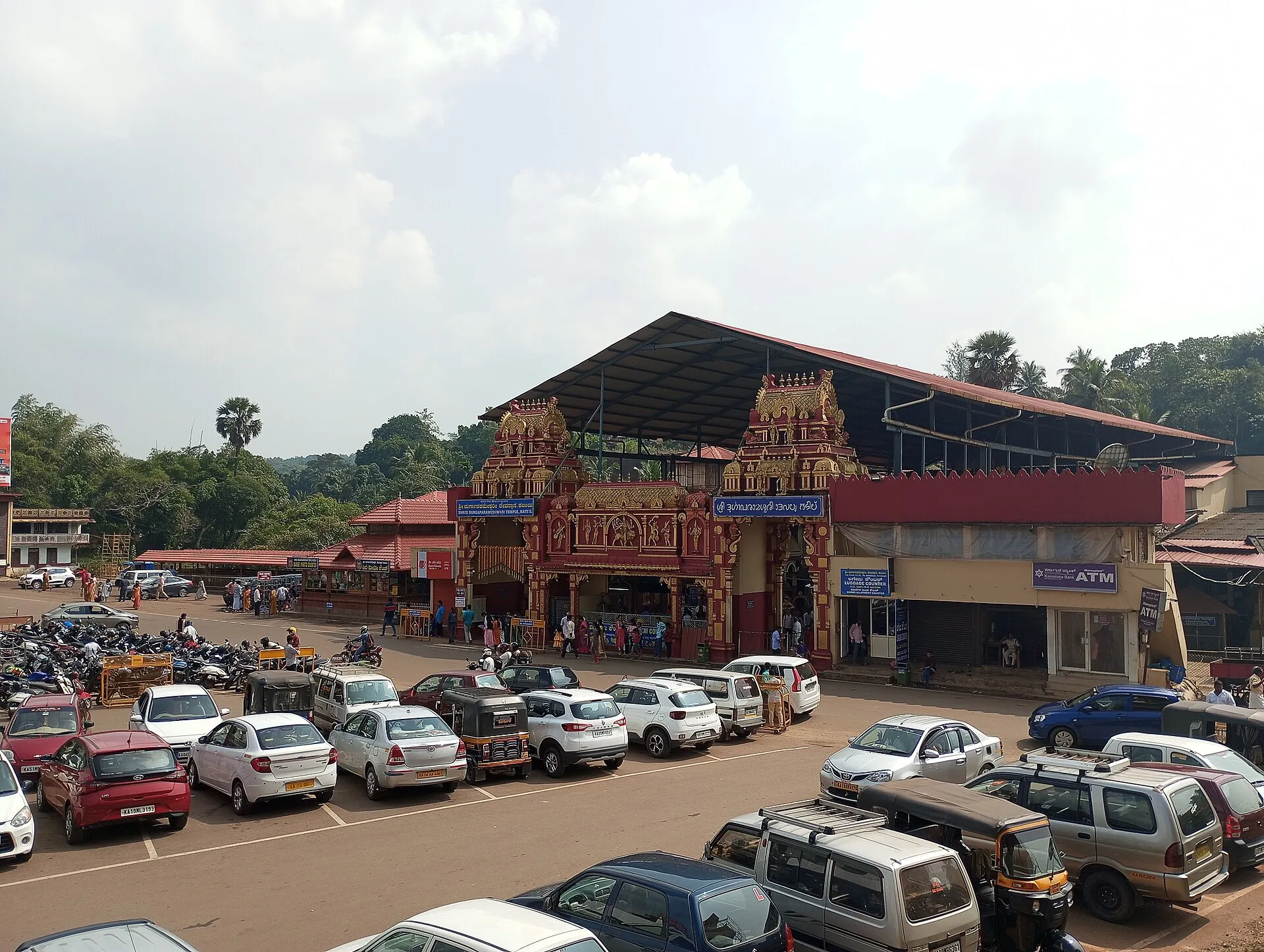

The great temple goddesses are a different kind of evidence. They are documented, institutional and Sanskrit-Puranic, with founding legends and unbroken worship.
- Kollur Mookambika, where the main image is a self-born linga with a golden line across it, said to hold the goddess and her consort together. The four-armed image of the goddess is said to have been installed by Adi Shankara.⁶ The Parashurama page counts it among the seven holy places on his land.
- Kateel Durgaparameshwari, in a town whose name is explained in Tulu: kati, “centre”, and ila, “land”, for its place midway between the river’s source and the sea.⁷
- Mangaladevi and Sharavu: Two Temples, One King, the temple that gave Mangaluru its name.
- The goddess is also at home at Kadri, where she appears alongside the Buddhist and Shaiva layers of that hill.
These temples belong with the temple pages of the site, not with the deep-time argument. We mention them here because they are where most visitors meet the Mother today.
So how old is she?
We do not know. Clay figures show that goddesses were being made in India thousands of years before any surviving temple. Some scholars think the Dravidian south had a goddess-centred religion of its own, though others dispute that. A small find near Moodabidri hints at a mother figure in the villages of this coast about 2,700 years ago. What no one can show is a single, unbroken line from any of these to the Mookambika or Rakteshwari of today. The goddess may be old in Tulunadu, but how old is still an open question.
Related
- Bermer: The First Lord of Tulunadu, another “deep antiquity” theory held with care
- Parashurama and the Coast That Rose from the Sea, where Kollur is one of the seven shrines
- Rakteshwari and Jumadi, the goddess-daivas
- Bhuta Kola, the living worship of the daivas
- Megalithic Tulunadu, the burial stones and clay figures found near Moodabidri
Sources & further reading
The books and articles behind the numbered notes on this page.
- Wikipedia, “History of Shaktism” (accessed 7 October 2026): the Prayagraj, Mehrgarh and Indus Valley figurines, N. N. Bhattacharyya’s link to later Shaktism and the doubts of David Kinsley and Lynn Foulston, Bhattacharyya on the Dravidian “Female Principle” and the Sapta Matrika, and the Devi Mahatmya as the earliest scripture to treat the Goddess as the object of worship.
- Wikipedia, “Dravidian folk religion” (accessed 7 October 2026): Mariamman and regional forms of Amman, the caution against treating them as proof of a single prehistoric mother-goddess tradition, and the disputed reconstructions of a pre-Vedic Dravidian religion.
- National Herald, “Unique terracotta figurines dating back to 700 BCE found in Dakshina Kannada” (12 September 2023, from a PTI report), and The Archaeologist, “Ancient Indian Terracotta Figurines Found at Megalithic Dolmen Shed Light on Karnataka’s Mystical Past”: the eight figures, the date, T. Murugeshi, the dolmen site first reported by Pundikai Ganapayya Bhat in the 1980s, and the link to the Bhoota cult.
- Wikipedia, “Rakteswari” (accessed 7 October 2026): the identification with Adi Parashakti, the ishta-devata of Tulu Nadu, the “misunderstood as a spirit” passage and the vermilion and coconut offerings.
- Wikipedia, “Jumadi” (accessed 7 October 2026): the Dhumavati name, the story of Parvati swallowing Shiva, and the note not to confuse her with the Mahavidya goddess.
- Wikipedia, “Kollur Mookambika Temple” (accessed 7 October 2026): the self-born linga with its golden line, and the devi image installed by Adi Shankara.
- Wikipedia, “Kateel” (accessed 7 October 2026): the Tulu meaning of the town’s name.
Several of these are Wikipedia articles, written from other sources; the Kollur temple’s own site could not be read. The Mudu Konaje finding comes from press reports of an archaeologist’s release.
Words on this page
What the Tulu and other Indian-language terms on this page mean.
- Amman
- A form of the Goddess worshipped in the Tamil south.
- daiva
- A guardian spirit; used interchangeably with bhuta.
- kola
- The ceremony in which a daiva is invited to possess a performer.
- kshetra
- A holy place or pilgrim centre, usually a temple and the town around it.
- nema
- Another name for a kola, the annual ceremony for a daiva.
- Shakti
- The female power behind the universe, worshipped as the Goddess.
Themes
Spotted a mistake, or know more about this? Suggest a correction/addition.