Ullaya and the Ullakulu, the King Daivas
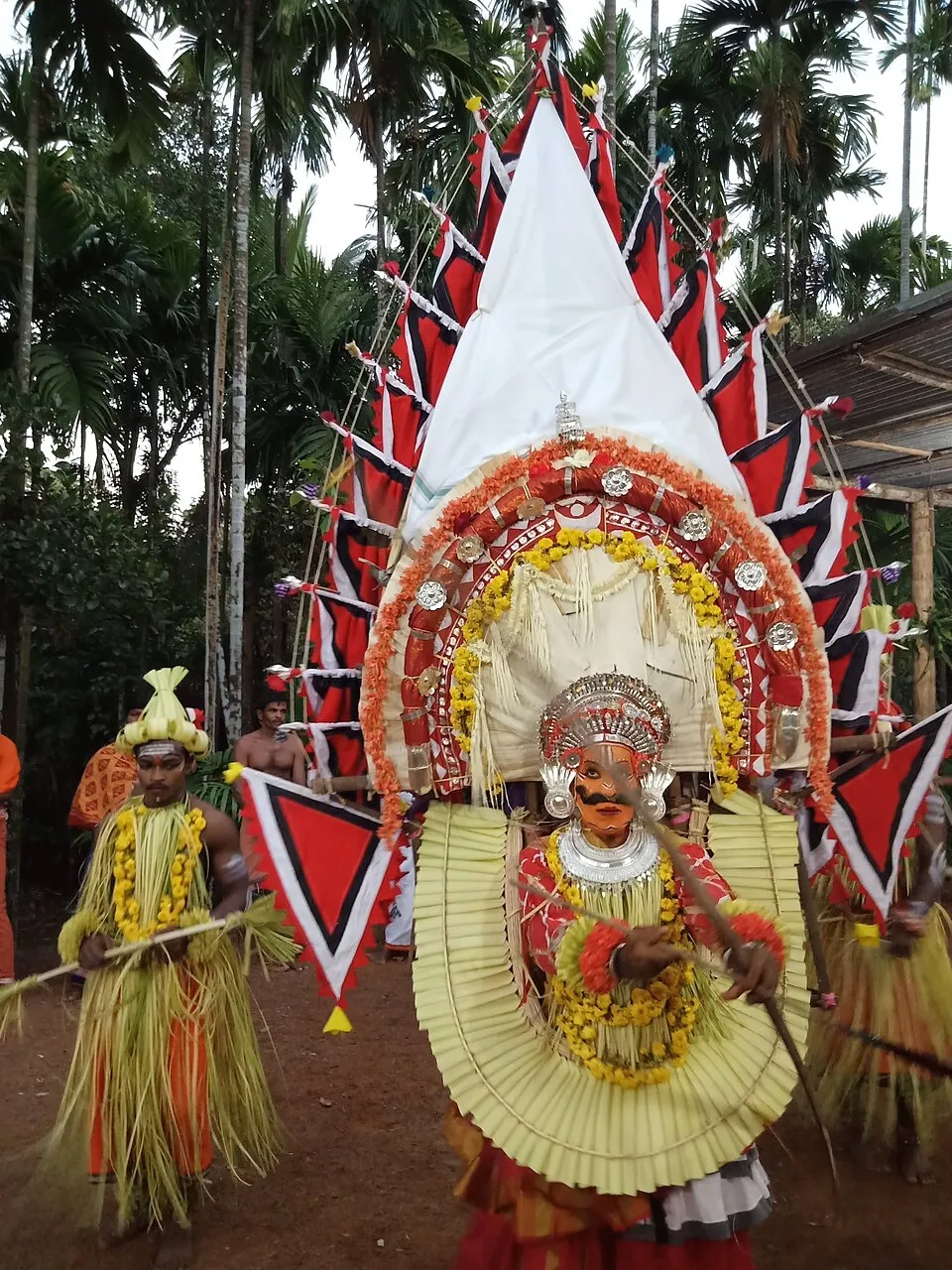
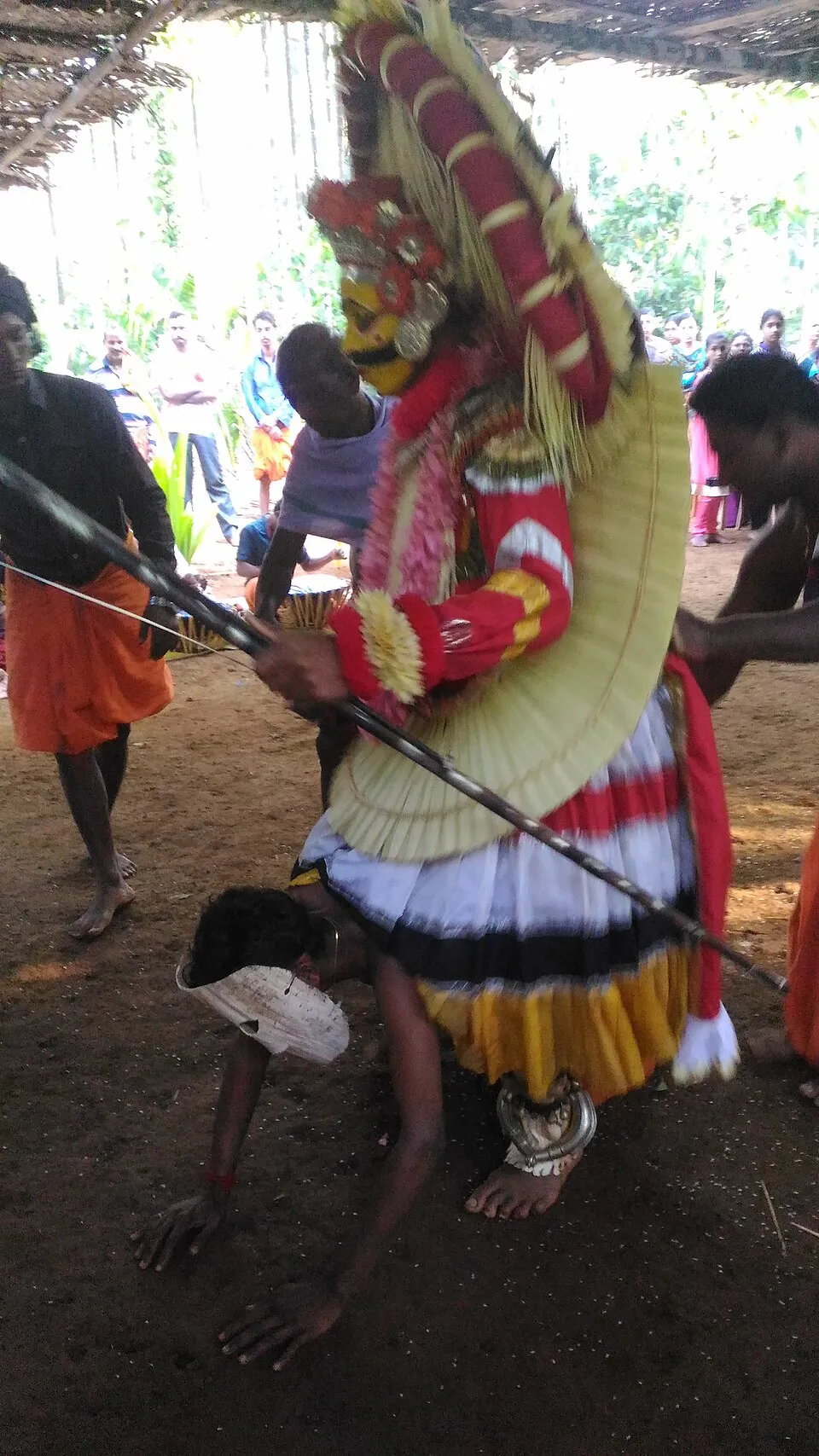
It is midday in a field near the Vishnu Murthy temple at Mandekolu, in Sullia taluk. Men from four Gowda groups of the village, the Kenaje, Mururu, Mavaje and Bolugallu, have dressed as soldiers of old, in dhotis tied at the knee, white turbans, and sandalwood paste on their faces. They carry shields and sticks, and they fight. Each tries not to be hit, because a blow that lands is a flaw in devotion, and blood spilt on the ground would bring bad luck to the village. People crowd round to watch, and no one steps in. Then the daiva comes, dressed as a king, with a huge sirimudi (an ornament tied to the shoulders and back) and a bow and arrow. He speaks his nudi, the words of the daiva, and then he stops the fight. The fighters kneel and bow to him.¹
The ritual is called addanapettu, from addana, a shield, and pettu, to strike, and the daiva who ends it is one of the Ullakulu.¹
The Ullakulu, also called the Arasu daivas (from arasu, a king), are honoured as kings among the daivas (guardian spirits of the land) of Tulunadu.¹ The anthropologist Masataka Suzuki explains the name. In Tulu, ullaya and ullalthi mean people of the highest rank: a royal family, high-born Brahmans, people of good standing, the respected, and the learned. Ullaya is the masculine form, Ullalthi the feminine, and Ullakulu (Ullaklu) the plural for both. The brothers are guardians of the royal family and are treated as kings living in a palace, and Ullalthi, their sister, as a queen.²
The story
The Ullakulu are two brothers, worshipped together though they were not born twins. They go by several pairs of names: the Eruvaru Ullakulu (“the two Ullakulu”), Poomani and Kinnimani, and Mallane and Yelliyanne. Where they came from is told in different ways.¹
A ship of maya
In the folk telling, the brothers came down from the world of the gods to the earth at the bidding of Adinarayana, sailing in a ship of maya, from the unseen world. They came to destroy evil and to protect the earth.¹
The royal children of Barkur

Professor A. Subbanna Rai, in his book on Kukke Subrahmanya, tells another story.¹ Barkur, the old capital of the Tulu land, was ruled by a dynasty whose family deity was called Mantra Rajya. When that deity was not worshipped as it should have been, the palace burned down.
Two brothers and their only sister, children of the royal family, set out for Kashi to ask Kashi Vishwanatha what to do. Vishwanatha gave the brothers a pair of horses and a pair of kodambu, bows and arrows. To the younger sister he gave power as their main strength, and he declared that the three of them would be gods of energy.
From Kashi they went to Talakaveri and bathed in its sacred water. Then they came down the Western Ghats, and at last reached Kukke Subrahmanya.¹ A writer named Amrita Someshwar, the Daijiworld essay adds, tells of the brothers having to overcome challenges involving Subrahmanya before they could enter Tulunadu.¹
The golden palace of Ganganadu
The paddana (sung oral epic) of Ullalthi, as a Tulu website retells it, begins somewhere else. In the golden palace of Ganganadu, in the Konga country, Ullaya and Ullalthi, an elder brother and his younger sister, appeared in a swinging cradle.³
While the two were spreading the message of truth in that land, seven women spoke against them. So they left that land of wrongdoing, came down the Ghats through Urkinadu, Dambe Angadi, Kadathikallu and Jangamakere, and reached the land of the Banga kings, where the first light of right could be seen. They visited Kolli Durge at Killur, then Shravanagunda, where Jain monks did penance, and passed Mastikallu.³
Near the palace at Bangavadi, Ullalthi made her presence known by driving the palace elephant mad. The Banga king, it is said, then built her a shrine near the Shanteshwara basadi (Jain temple), and at her bidding a madu, a shrine house, at Kuttottu in Indabettu. Her madu still stands there between the shrines of the Ullakulu and of Mudtillaya.³ From Bangavadi, the paddana says, she settled in place after place, choosing worthy people and showing her power to those who did not believe.³
Scholars have noticed the same road. Suzuki cites the scholars Upadhyaya and Upadhyaya, who wrote that Ullalthi “is believed to be the family deity of Banga king of this area”, and Chinnappa Gowda, who traced her shrines and found that she seems to have begun at Bangavadi and spread from there to the coast. Her journey, Suzuki writes, probably follows the path of the royal family and its descendants.²
How the Ullakulu are worshipped
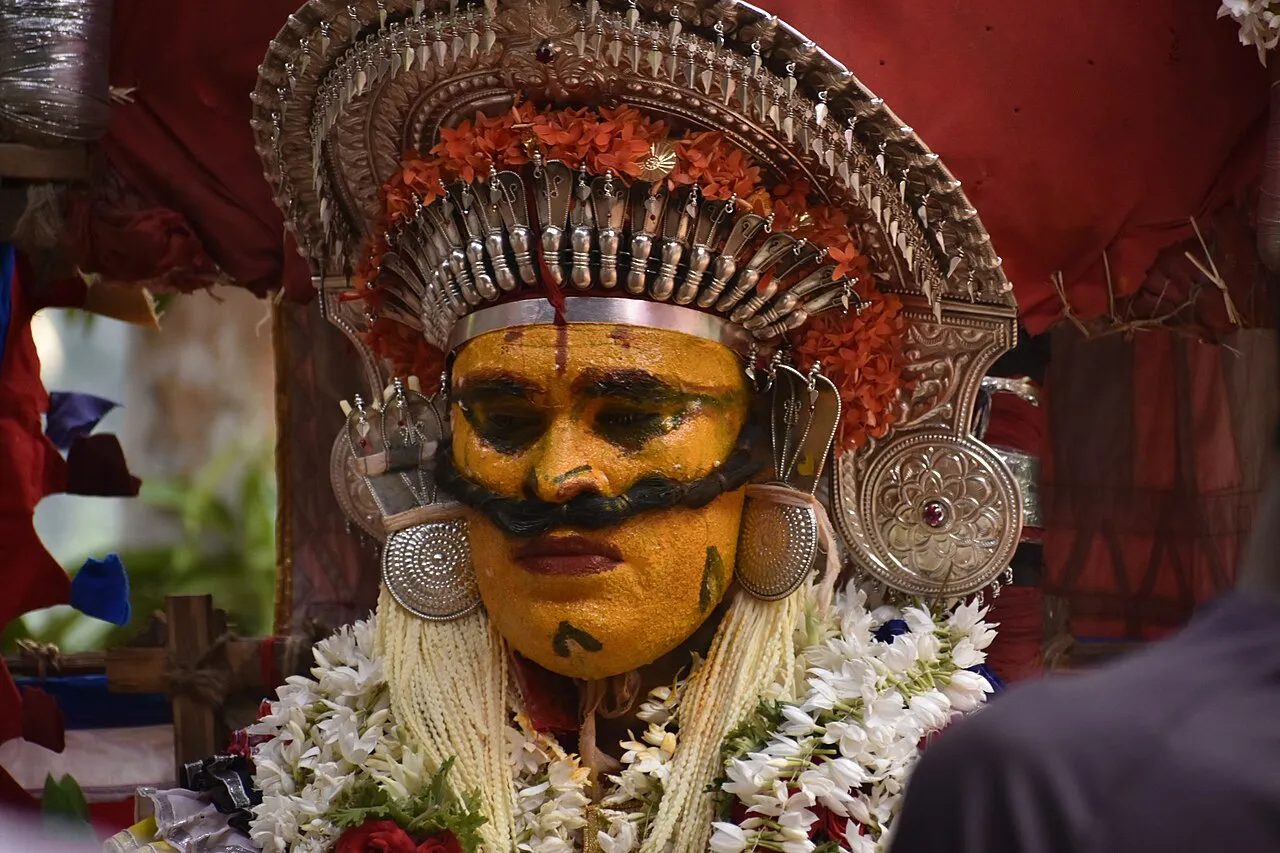

Like kings. The Ullakulu are worshipped the way kings are honoured.² They wear the kiruvala, royal ornaments that stand for the old kingship and are kept in the daiva’s madu between festivals.² At Mandekolu the daiva’s ornaments are carried from his shrine at Mavanje to the field before the nema begins.¹ Mandekolu also has a shrine of the Ullakulu at Kaleri,⁵ and at Peralu Ambroti in the same village a shrine of the Muchchiradi Iruver Ullakulu was consecrated anew in February 2026.⁶
The guardians of the old kingdoms. Suzuki writes that in each sime, an old territory governed by Jain warrior families until Independence, Ullalthi and her brothers were set up as guardian deities of the kingship. The best-known places are Balnadu in the Puttur sime, Kepu in Vittal, Paivalige in Kumbla, Uliya in Someshwar, and Balthila in Mogranadu. Their festivals fall on different days, starting at Kepu and ending at Uliya. Each sime also has a royal Hindu temple, such as the Mahalingeshwara temple at Puttur, and the Ullalthis, guardians of the Jain rulers, were paired with those temple gods as the highest deities of the land.²

Ullalthi at Balthila. At Balthila, Suzuki found, Ullalthi is the main deity, with her two brothers beside her. Her festival is called mecci, a word used for the rites of gods, and the whole is called a mecci nema, part god’s rite, part daiva’s. Her performer wears no coconut leaves, the mark of the wilder spirits, and a Brahman performs the puja. Today she is often identified with Lakshmi, Saraswati or Durga Parameshwari, though she began as a goddess of the local people.²
There are two festivals at Balthila each year. In December the rites at her madu reach their peak on a full-moon day. In March they move between three madus, set by the Tulu calendar, and the holiest of the three, the Puncheti madu, may not be entered by women. At the Mular madu a flag of Nandi, the bull of Shiva, is raised; Ullalthi’s ornaments are carried round the shrine in a palanquin; and after midnight the nema of the elder brother is danced, then that of the younger brother, then Ullalthi’s. At the nearby temple at Kadeshvaliya the order is reversed from the usual: the day before the temple festival the royal ornaments are carried there in procession, and Ullalthi’s nema is danced at dawn, before the temple car moves.²
Ullalthi at Balnadu. At Balnadu, near Puttur, she is worshipped as Dandanayaka Ullalthi. At her nema in April 2025 a golden mallige (jasmine flower), brought every year from the Shyara house, was placed in the daiva’s hair. Devotees came with jasmine, kumkum, silk saris and tender coconuts, because jasmine is the flower she loves. That year they also offered a necklace of golden jasmine buds and a silver gaggara, the anklet of bells a daiva wears.⁴
Dressing Ullalthi. As her name suggests, Ullalthi’s face is painted in the style of the female daivas. Her performer wears red shorts and a red shirt, a silver or bronze breastplate to show she is a woman, and an ani, a tall frame on the back, with a second, half-round one at the waist. The Tulu website counts about five styles of ani for her in different places. At Sajipa no ani is tied at all; she is dressed in a sari instead.³
Across the land. At Ichlampadi-Beedu the yearly festival of the Ullaklu and their family daivas ran from 9 to 17 April 2026, with the Ullaklu’s own nema on the afternoon of 16 April.⁷ At Padumale near Puttur the Ullakulu share a nema with Pilichamundi, as her page tells. And the performer Dayanand Kathalsar, who appears as the Arasu Ullaya daiva, learned the kola by watching his father, Guruvappa Bangera, perform as Kantheri Jumadi.⁹
Versions and open questions
Two brothers, or three siblings. In the ship of maya the Ullakulu are two brothers.¹ In the Barkur story there is a sister too, and in the paddana of Ullalthi a brother and a sister.¹ ³ At Balthila Ullalthi is the main deity and her brothers stand beside her.² None of the sources we have read says that the sister of the Barkur story is Ullalthi.
Goddess or daiva. Suzuki describes Ullalthi as “floating” between a temple goddess and a spirit of the land: worshipped with Sanskrit rites and named Lakshmi or Durga, yet with a Tulu name and a nema of her own.² The Tulu writer K. Mahendranath Salethoor, writing against daivas being turned into temple gods, mentions the three Ullakulu being made into Balarama, Krishna and Subhadra.⁸
What the fight remembers. The researcher Dr Sundar Kenaje reads addanapettu as a memory of the brothers’ struggles against oppression and discrimination, perhaps by the ruling Ballas or because of caste.¹ It also shows the daiva as a peacemaker, who ends a fight before blood is shed.¹
Rivals in other stories. In Koragajja’s story, the Arasu daivas, royal spirits of Udyavara, try to take over the land of Panjandaya and Banta at Kuthar. Whether these are the Ullakulu, that story does not say.
Other spellings. Ullaklu, Ullakulu, Ullākulu; Ullalthi, Ullalti; Arasu daiva; Iruver or Eruvaru Ullakulu for the two brothers.
Related
- Bhuta Kola: When the Spirits Come to the Village
- Jumadi, Neither Man nor Woman, the royal daiva, and the Kantheri Jumadi danced by Kathalsar’s father
- Pilichamundi, the Tiger Goddess, who shares a nema with the Ullakulu at Padumale
- Koragajja, the Boy Who Was Turned Away, and the Arasu daivas of Udyavara
- Kodamanithaya, the Daiva Who Followed His Devotees, who came to Shibaroor with Ullaya
Sources & further reading
The articles behind the numbered notes on this page.
- Bhavya Shetty, “Guardians of Peace: Addanapettu as a Symbol of Conflict Resolution”, Daijiworld (6 May 2024; the author teaches at St Aloysius, Mangaluru): the Ullakulu or Arasu daivas and their names, the ship of maya, A. Subbanna Rai’s story of the royal siblings of Barkur, addanapettu at Mandekolu, and the readings of Sundar Kenaje and Amrita Someshwar.
- Masataka Suzuki, “Bhūta and Daiva: Changing Cosmology of Rituals and Narratives in Karnataka”, Senri Ethnological Studies 71 (National Museum of Ethnology, Osaka, 2008), pp. 51–85: the meaning of Ullaya, Ullalthi and Ullaklu, Ullalthi and her brothers at Balthila, the kiruvala, the five sime, and the views of Upadhyaya and Upadhyaya and of Chinnappa Gowda.
- “Tulunadige ‘Ullalthi daiva’ hige bandalu” (“How the Ullalthi daiva came to Tulunadu”), Tuluworld (in Kannada, June 2019): the paddana of Ullalthi, from Ganganadu to Bangavadi, her shrines, and how she is dressed. The English renderings on this page are our own.
- “Balnadu Shri Dandanayaka Ullalthi nemotsava”, News Puttur (in Kannada, 28 April 2025): the nema at Balnadu, the golden jasmine and the offerings.
- Wikipedia, “Mandekolu”: the Kaleri Sri Ullakulu shrine.
- “Mandekolu: re-consecration of the Sri Muchchiradi Iruver Ullakulu shrine at Peralu Ambroti”, V4 News (in Kannada, 20 February 2026).
- “Ichlampadi-Beedu: yearly festival of Sri Ullaklu and the family daivas”, Nesara News World (in Kannada, 12 April 2026).
- K. Mahendranath Salethoor, “Daivaradhane”, Thulu Oripuga (blog, in Tulu, 31 August 2021): an essay against daivas being turned into temple gods, which mentions the three Ullakulu as Balarama, Krishna and Subhadra.
- “Daivas, dance and divine intervention”, People’s Archive of Rural India (30 July 2020): a photograph of Dayanand Kathalsar as Arasu Ullaya daiva and his father as Kantheri Jumadi.
Only one of these sources is published research. The stories of the Ullakulu, and the way they are worshipped, differ from place to place.
Words on this page
What the Tulu and other Indian-language terms on this page mean.
- ani
- The tall, decorated frame worn on the performer's back.
- basadi
- A Jain temple.
- daiva
- A guardian spirit; used interchangeably with bhuta.
- kiruvala
- Royal ornaments of the king daivas, kept at their shrine.
- madu
- A shrine house of a royal daiva.
- maya
- The unseen world where the spirits live.
- nema
- Another name for a kola, the annual ceremony for a daiva.
- nudi
- The part of the kola when the daiva speaks with the village.
- paddana
- A long oral ballad, sung to tell the story of a daiva or hero.
- rajan daiva
- A daiva of high, royal standing, the chief daiva of a place.
- sirimudi
- A great ornament tied to a daiva performer's shoulders and back.
Themes
Spotted a mistake, or know more about this? Suggest a correction/addition.