Kodamanithaya, the Daiva Who Followed His Devotees
Two travellers stop for the night at Neralakatte, near Thodar, on the road from Karkala to Moodbidri. Around them is thick forest full of thorny bushes. All day they have walked under a burning sun, and they still carry a few tender coconuts they picked along the way. Just as they are about to drink them, a spirit seizes one of the men. The other, terrified, tries to run, and the thorn bushes around him burst into flame. On a hill called Gaali Gudde a light appears, with a torch, a weapon and a pair of tender coconuts. The spirit speaks: it has followed them all the way from home, and it means to stay here.¹
The spirit was Kodamanithaya, and this is how the shrine at Thodar says he came to the village.¹
Kodamanithaya is a daiva (a guardian spirit of the land) of royal standing, a rajan daiva.⁴ ⁵ He is worshipped as the ruling power of whole villages, and is called a dharma daiva, a daiva of justice.³ ⁴ What makes him unusual is that he has no single story of his beginning. Instead, place after place tells how he followed someone home.
The story
The new daiva
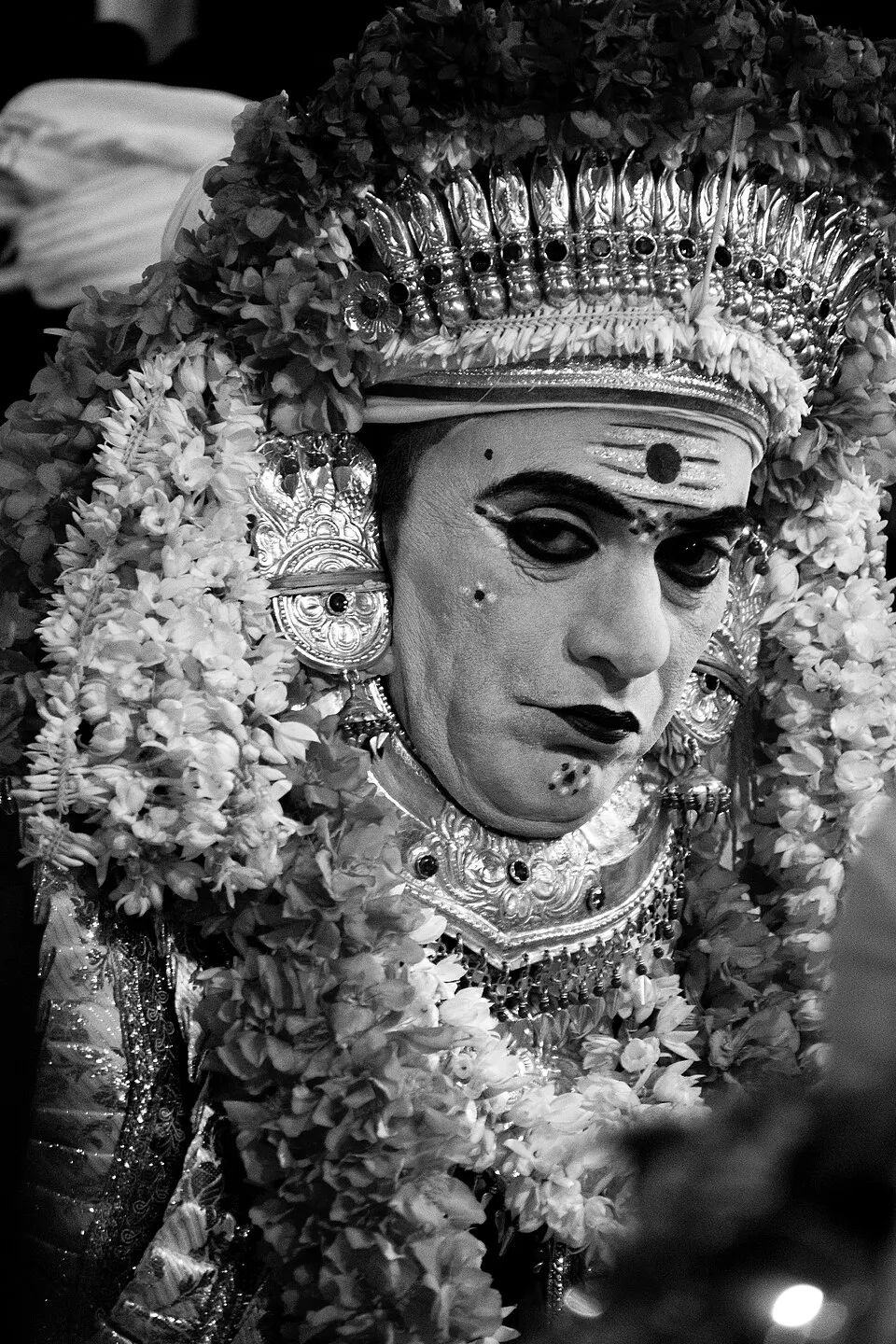

The paddana (sung oral epic) of Kodamanithaya, as a Mangaluru website retells it, starts with Kunjanalva, the lord of Kodamani Barke, the house of a well-known Jain family of Tulunadu. One year, at the time of Tula Sankramana, he went to the Ganga festival at Gangamula, the source of the Ganga. After the festival he turned for home, and on the way a daiva appeared to him and said it would come to Kodamani Barke too.⁴
When Kunjanalva asked its name, it said it was Posa Bhuta Kumara, “the new spirit prince”, and it followed him. On the way it drank milk and water at the Kodange Gavasale Barke. Once it was settled at Kodamani Barke it named itself Kodamanithaya, after the house, and it protected Kunjanalva. From there, the retelling says, it spread to Perinje, Kateel, Kukke, Iruvail and many other places.⁴
Another telling, in a temple blog and on the Tulu Wikipedia, goes back further. While Shiva and the goddess Durga were wandering in the forest, an unseen power came out of Durga. The local people, with the help of a sorcerer, trapped it in a kumbha, a pot, and set it afloat on the river. A Jain family of Perinje found the pot, and when they opened it the daiva appeared. It was named Kumbha Kantini.⁵ ⁶
A third tradition, recorded on the Tulu Research & Studies blog, ties Kodamanithaya to the goddess Chamundeshwari of Mysuru. Kenjanna Alva, lord of Kodaman Guttu in Belthangady around the seventeenth century, went to Mysuru every year for the Dasara festival. One year he was too ill to go, so the goddess came to him instead.⁷
The light on Gaali Gudde
The Thodar story begins at Karkala, when a large Jain family split apart. Devu Balipa of the Balipaguttu house chose to give up his family name and leave. Ugga Adupa, the man who looked after the household’s daiva worship, went with him.¹
They walked towards Moodbidri, known as the Jaina Kashi, a place of pilgrimage for Jains, and by evening reached Neralakatte. There, as they rested, Kodamanithaya took hold of Ugga Adupa, set the thorn bushes alight around the fleeing Devu Balipa, and showed himself as a light on Gaali Gudde. Speaking through Ugga Adupa, he said he had come with Devu Balipa all the way from Balipaguttu, and must be set up here, where he had shown his light.¹
The next day Devu Balipa told the villagers what had happened, and built the Thodaru Guttu on that spot. Gaali Gudde became the place where the daiva was installed. Later he was given a proper shrine at Nadyodi, on land owned by the Marakada Jains. Kodamanithaya, the shrine says, became the ruling deity of a village that had known neither god nor daiva before.¹
The ox and the rooster
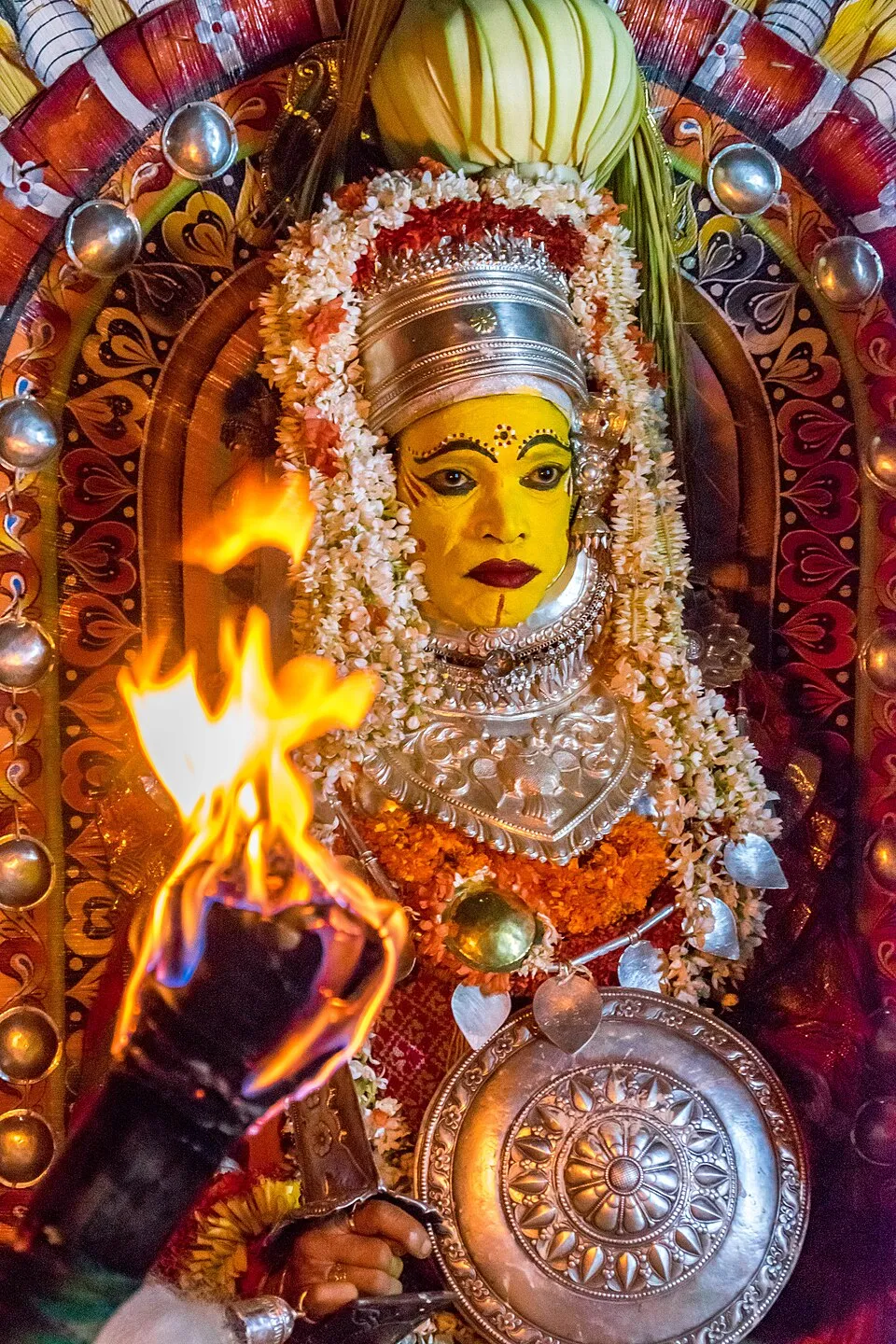

Shibaroor, called Tibar in Tulu, tells the story most fully. About seven hundred years ago, two devotees, Timmathi Karival of the Tibar Guttu and Dugganna Kava of Yekkar, went on a pilgrimage. At Iruvail, after praying to the goddess Durgaparameshwari, they went to offer their vows to Kodamanithaya, “the new daiva”, and received sandal paste as his blessing. The Barke house there gave them an ox and a rooster to take home.⁴ ⁶
On the way the two men grew thirsty. They tied the ox and the rooster to a peepal tree and went to the Naddodi Guttu nearby for water. When they came back, the animals had been seized by a spirit and were behaving strangely.⁴ ⁶
Dugganna Kava asked an astrologer what it meant. Two royal daivas, he was told, had come with them: Ullaya and Kodamanithaya, the dharma daiva. They had to be given a shrine, and so they were worshipped at Derinjagiri, at Yekkar.⁴ ⁶ Timmathi Karival took his gifts home to Tibar. That night he heard his cattle lowing in their shed, and the next day he too asked the astrologer, and decided to build the daivas a shrine.⁴ ⁶ In a shorter version of the story, Ullaya and Kodamanithaya simply followed Timmathi Karival home from Iruvail, and he built them a shrine on the bank of the river Nandini.⁵
The stone in the well
For the founding of the shrine, the Tibar family asked Tyampa Shetty of the Surinje Guttu to lay the first stone. Tyampa Shetty was known for curing poison, and he had no one to carry on his work. So he took from his bag a stone that drew out poison, prayed to the daiva, and dropped it into the well of the Tibar Guttu. “From now on,” he said, “let the water of this well and the daiva’s sandal paste be the medicine for poison.“⁴ ⁶
That is why Kodamanithaya of Shibaroor is called Vaidyanatha, the lord of healing, and, in one blog, “the doctor of poison”.⁴ ⁵ People take the well water for snakebite, skin disease and asthma, and in hope of children.⁴ ⁵ ⁶
How Kodamanithaya is worshipped
At Shibaroor. The jatre (yearly festival) at Shibaroor, known as the Tibar Jatre, begins with the raising of the flag at Dhanu Sankramana in mid-December. The next morning comes the nema of Ullaya, with offerings such as weighing devotees against goods and rolling around the shrine, and a great meal for all. That night come Kodamanithaya’s own nema and the bandi utsava, the cart festival. In the days after come the nemas of the Jumadis, Jarandaya and Pilichamundi, and the festival ends with the lowering of the flag.⁴ ¹⁰ The water is still lifted from the well with a wooden counterpoise lift, as it has been for centuries, and given to the devotees without any vessel.⁹ More than fifty thousand people take it at the yearly nema.⁴
Going to Kateel. Shibaroor is about two kilometres from the great Durgaparameshwari temple at Kateel, and the two are bound together. During the festival, Kodamanithaya’s bhandara, his sacred objects, goes to Kateel.⁴ ⁶ A temple blog describes the Kateel festival opening with the flag raised in the daiva’s presence, and the daiva arriving from Shibaroor in a great procession on the last night, to meet the goddess face to face.⁵
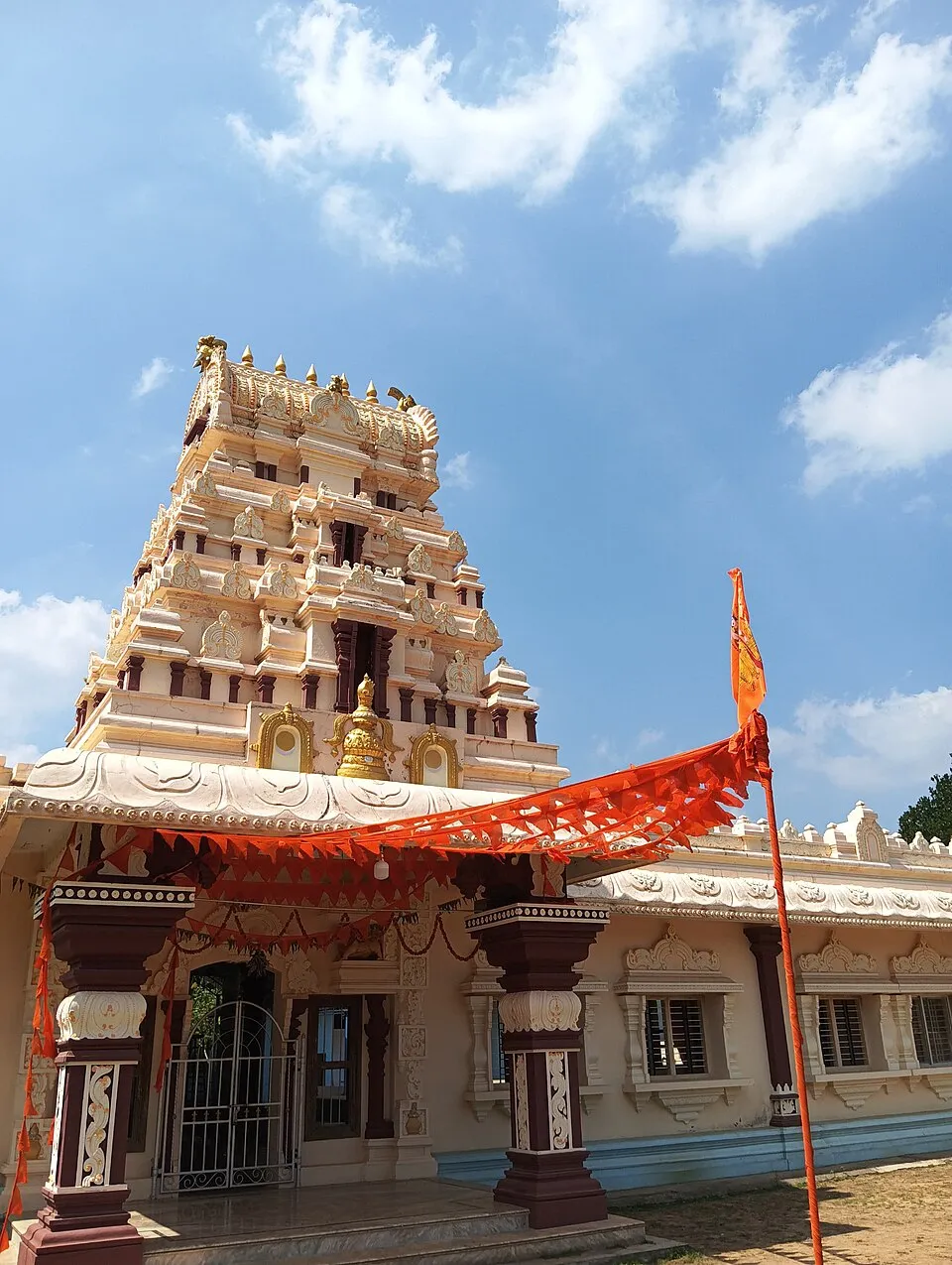

At Thodar. The shrine at Nadu Nadyodi, near Moodbidri, faces east under a tall tower. A Nandi faces the sanctum, as in a temple, and beside the daiva’s own shrine stands a garadi of Brahma and the Baidarkala, the twin heroes Koti and Chennaya.² The shrine explains why. In his nudi (the words the daiva speaks), Kodamanithaya says, “I am the god, and I am the daiva too.” So his festival keeps the rites of both: temple rites by the Agamas, the god’s procession, worship at the katte, a chariot festival and an offering of torches, alongside the daiva’s own nema.³
The yearly festival falls in the Tulu month of Perarde, from mid-December to mid-January. First, offerings are sent to the Kodamanithaya shrines at Marur and at Padyarabettu, which the shrine calls his original seat, and the date is fixed with the Hosangadi palace, which once held Thodar and eight other villages. Once the village elders have met to prepare, no other celebration may be held in the village until the festival is over.² ³
On the eve of the festival the elders go up Gaali Gudde and light the old lamp that was found there, now covered in silver. That night comes the first nema, below the hill. The next day the daiva’s treasure is carried from the Thodaru Guttu to the shrine, the flag is raised, and the Balipa family receives the honours due to kings.³
Across Tulunadu. The paddana’s retelling names many more of his places, among them old family houses and palaces.⁴ In Puttur, a forgotten platform of the Ullaklu daivas, wrecked by treasure hunters, was said to be linked to the Chakravarthi Kodamanithaya shrine at Haleneranki.¹¹ A list drawn from Koteshwara Suryanarayana Rao’s book Degula Darpana names Babbarya, the daiva of the sea, among the attendant daivas of the Kodamanithaya shrine at Tibar.¹²
Versions and open questions
Many arrivals. The stories of Thodar, Shibaroor, Kodamani Barke, Perinje and Kodaman Guttu belong to different places and are not meant to be fitted together. Each explains how the daiva came to one village or house.
Where his name comes from. In the paddana the daiva names himself after Kodamani Barke, the house he followed home.⁴ In the story on the Tulu Research & Studies blog, the house is Kodaman Guttu in Belthangady.⁷
God or goddess. Kodamanithaya is spoken of as “he”. Yet one telling has him born from the goddess Durga, and another calls him Chamundeshwari of Mysuru.⁵ ⁶ ⁷
Dates. “Seven hundred years ago” at Shibaroor and “the seventeenth century” at Kodaman Guttu are traditional dates.⁴ ⁷
Other spellings. Kodamanittaya, Kodamanitthaya, Kodamandaya, Kodamanitaye.
Related
- Ullaya and the Ullakulu, the King Daivas, who came to Shibaroor with Kodamanithaya
- Jumadi, Neither Man nor Woman, whose nemas follow his at Shibaroor
- Pilichamundi, the Tiger Goddess, also danced at the Tibar Jatre
- Koti and Chennaya, the Twin Heroes, whose garadi stands beside his shrine at Thodar
- Bhuta Kola: When the Spirits Come to the Village
- Babbarya, the Daiva of the Sea, worshipped at his Tibar shrine
- Jarandaya, the Prince Who Could Not Swallow an Insult
Sources & further reading
The articles behind the numbered notes on this page.
- Shri Kshetra Thodar, “Legend” (the shrine’s own account): Devu Balipa and Ugga Adupa, the night at Neralakatte, the light on Gaali Gudde, the Thodaru Guttu and the shrine at Nadyodi.
- Shri Kshetra Thodar, “Shri Kshetra Thodar” (the shrine’s own account): the Hosangadi palace and its nine villages, the shrine, its Nandi and the Brahma Baidarkala garadi.
- Shri Kshetra Thodar, “Rituals at the Kshetra” (the shrine’s own account, in Kannada and English): the yearly festival, the lamp on Gaali Gudde, the honours of the Balipa family, and the daiva’s words “I am the god, and I am the daiva too”. The English renderings from the Kannada are our own.
- “Sri Kodamanittaya Kshetra, Shibaruru (Tibar)”, Namma Mangaluru (December 2024): the paddana of Kunjanalva and Posa Bhuta Kumara, the ox and the rooster, Tyampa Shetty’s stone, the Tibar Jatre and the link with Kateel.
- “Shree Kodamanitthaya Kshetra”, Ancient Temples (blog, August 2020): Kumbha Kantini, the pilgrims of Tibar, the “doctor of poison”, the stone in the well, and the meeting at Kateel.
- Tulu Wikipedia, “Tibar Kodamanithaya daivasthana” (in Tulu): Kumbha Kantini, the ox and the rooster, Vaidyanatha, and the bhandara going to Kateel.
- “306. Mayandaal Spirit”, Tulu Research & Studies (Ravindra Mundkur and Hosabettu Vishwanatha’s blog, December 2012): Kodamanithaya as Chamundeshwari, who came from Mysore to Kenjanna Alva of Kodaman Guttu.
- Ravindra Mundkur, “245. Shibarur”, Tulu Research & Studies (blog, June 2010): Shibarur, known as Tibaar in Tulu, and its Kodamanithaya shrine.
- “Udupi: ‘Tibar Jaatre’ Begins at Sri Kshetra Kodamanittaya”, Daijiworld (17 December 2009): the festival, the sandal-paste prasadam, and the holy water drawn from the well.
- “Annual Festival of Shibaroor Kodamanithaya Daivastana begins”, The Coastal Times (17 December 2011): the order of the festival.
- “Puttur: Hunt for hidden treasure - Platform dedicated to Daiva demolished”, Daijiworld: the Ullaklu platform and its link to the Kodamanithaya shrine at Haleneranki.
- “Babbarya Daiva”, Mogaveera Community (the community’s own website): Babbarya among the attendant daivas at Tibar, from Koteshwara Suryanarayana Rao’s Degula Darpana.
Most of these sources are the shrines’ own accounts, blogs and news reports rather than published research. Each place tells Kodamanithaya’s story its own way.
Words on this page
What the Tulu and other Indian-language terms on this page mean.
- bhandara
- The daiva's sacred objects: swords, shields and ornaments.
- daiva
- A guardian spirit; used interchangeably with bhuta.
- garadi
- A shrine to the twin heroes Koti and Chennaya; the word also means a gymnasium.
- guttu
- The ancestral headquarters house of a landed family.
- jatre
- A yearly temple festival or fair.
- katte
- A raised platform shrine.
- nema
- Another name for a kola, the annual ceremony for a daiva.
- nudi
- The part of the kola when the daiva speaks with the village.
- paddana
- A long oral ballad, sung to tell the story of a daiva or hero.
- rajan daiva
- A daiva of high, royal standing, the chief daiva of a place.
Themes
Spotted a mistake, or know more about this? Suggest a correction/addition.