Babbarya, the Daiva of the Sea
A ship drifts towards the shore at Mooluru, near Kaup. Thousands of people gather on the beach, sure that it must be the ship their ancestors once sent out full of gold and silver, now come home to them. “Vayya Thayya! Vayya Thayya!” they shout, and wade into the water in a long line to haul it in. Then a current catches it, and it floats away, just out of reach.¹
The next day they come back with a thousand more people from Kaup. The ship drifts near the old fort of Kaup, and there it disappears. The man who steered it, Bobba, leaves his body and becomes a daiva (a guardian spirit of the land): Bobbarya, or Babbarya.¹
Babbarya is the daiva of the sea and the patron of the Mogaveeras, the fishing community of the coast. They take his blessing before they set out to fish.¹ His paddana (sung oral epic) tells a story that brings together the sea, a Muslim trader, a Jain family, fishermen and a toddy tapper. Not everyone tells it the same way.
The story
This is the paddana as it was sung for Paddana Poomale, a collection of recordings made by the scholars U. P. Upadhyaya and Susheela P. Upadhyaya, and retold on the Bhutas of Memory blog.¹
A shop swept away
Sulikalla Murava Beary had a little shop by the sea, made of coconut palm fronds, where he sold chilli, salt and jaggery. But misfortune would not leave him alone. It turned Kadala Gangamma, the goddess of the sea, against him, and she sent the wind and the waves to destroy his shop.¹
Beary did not give up. He became a sea-going merchant and sailed to Mecca and Malaya to trade. In Malaya he met seven Jain brothers who dealt in gemstones. They wanted none of his salt, chilli or jaggery. They had troubles enough, they said. Beary turned to leave, then stopped. “Can you tell me your troubles?” he asked. “Maybe I can help.“¹
Muthu Shetty and the white snake
The brothers had one sister, Muthu Shetty, who had been married twenty-four times. None of her marriages lasted a day: if she married in the morning, her husband was dead by evening. They offered Beary half their property if he could help. He wanted something else. “I would like your sister’s hand in marriage,” he said. The brothers agreed, though unwillingly.¹
Beary went to Mecca and prayed. If his wish came true, he promised, he would bring his bride there, name her Bolyabibi Fathima, and feed a thousand hungry people with ghee and rice. Back in Malaya, he shaped a human figure out of rice flour, dressed it in white cloth, and had Muthu Shetty lie down beside it. Then he hid in a dark corner with a sickle in his hand.¹
In the middle of the night a white snake, a boldu shankhamala, slid out of Muthu Shetty’s forehead. Beary sprang on it and killed it. He had the brothers give the snake its funeral rites by Tulu custom, and they kept their promise. Their one condition was that the marriage should not be consummated for a year and a half.¹
A child born as a golden pillow
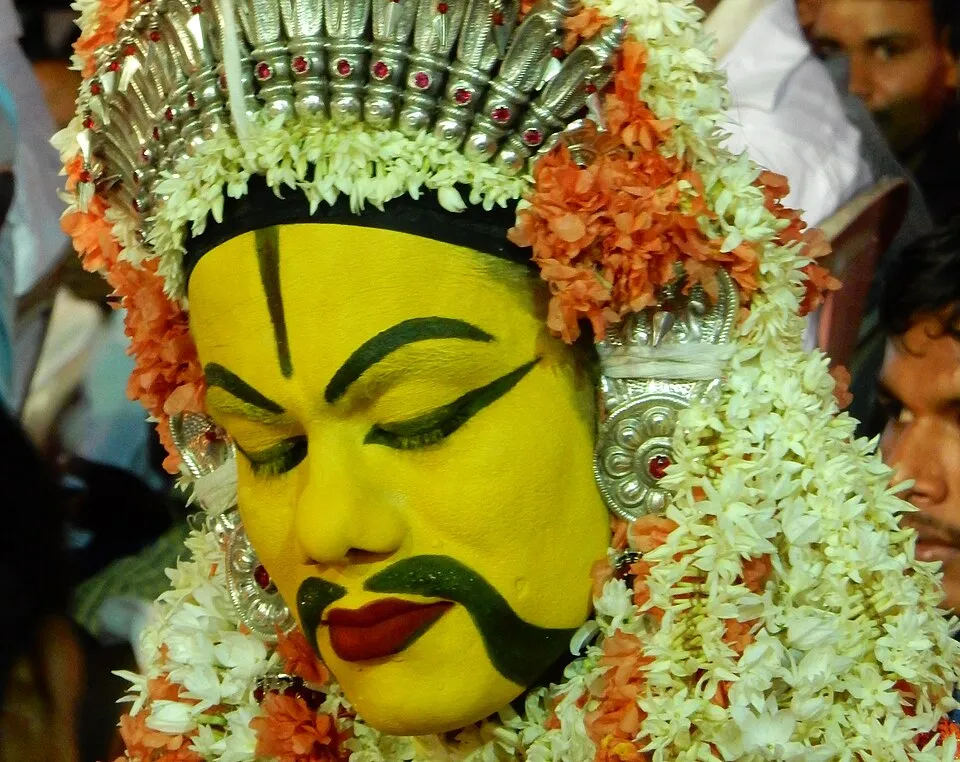

When the couple came home from Mecca, Fathima was already seven months pregnant. Before the birth, the baby asked Beary how he should come into the world. “The god-given way,” said Beary. The baby refused. He turned into a golden pillow and came out of his mother’s right breast, already the size of a one-year-old and marked with the sacred signs of many gods. His father named him Bobba at the mosque in Mecca, and his parents kept the secret of his birth.¹
As he grew up, other boys taunted Bobba because no one knew where he came from. Hurt, he begged his parents for the truth. When he learned of his powers, he went to Mecca and tested them, raising a fort out of maya, the unseen world of the spirits, and making it vanish again.¹
The ship from the dead santi tree
In Malaya, Bobba found a dead white santi tree. Its branches, he reckoned, had been dead a thousand years and its roots three thousand. It would make a perfect ship. He called ten carpenters from the hills and ten smiths from Tulunadu, and the tree was cut down at an auspicious hour. The planks were cut the size of horses, then grew by magic to the size of elephants.¹
On an auspicious Tuesday the ship was launched, with people from the fishing families there to see it. When all the rites were done, Bobba called his mother. Until now, he told her, he had lived as her son. Now the time had come to follow his calling in the world of maya.¹
The ship that would not come ashore
They set out across the seven seas with the cry “Allahu Akbar”. The goddess of the sea grew jealous of Bobba’s strength and sent squalls that cut like scissors and rain the colour of vermilion. The ship’s stern broke. Angry, Bobba made his crew vanish into maya and steered the ship alone.¹
So the ship came to Mooluru, where the crowds tried and failed to pull it ashore, and then to Kaup, where it disappeared near the old fort, Kargalla Kote, and Bobba became a daiva. That night he settled at the ayangala katte, the village square, to the sound of drums and trumpets he made out of maya.¹
The toddy tapper’s secret
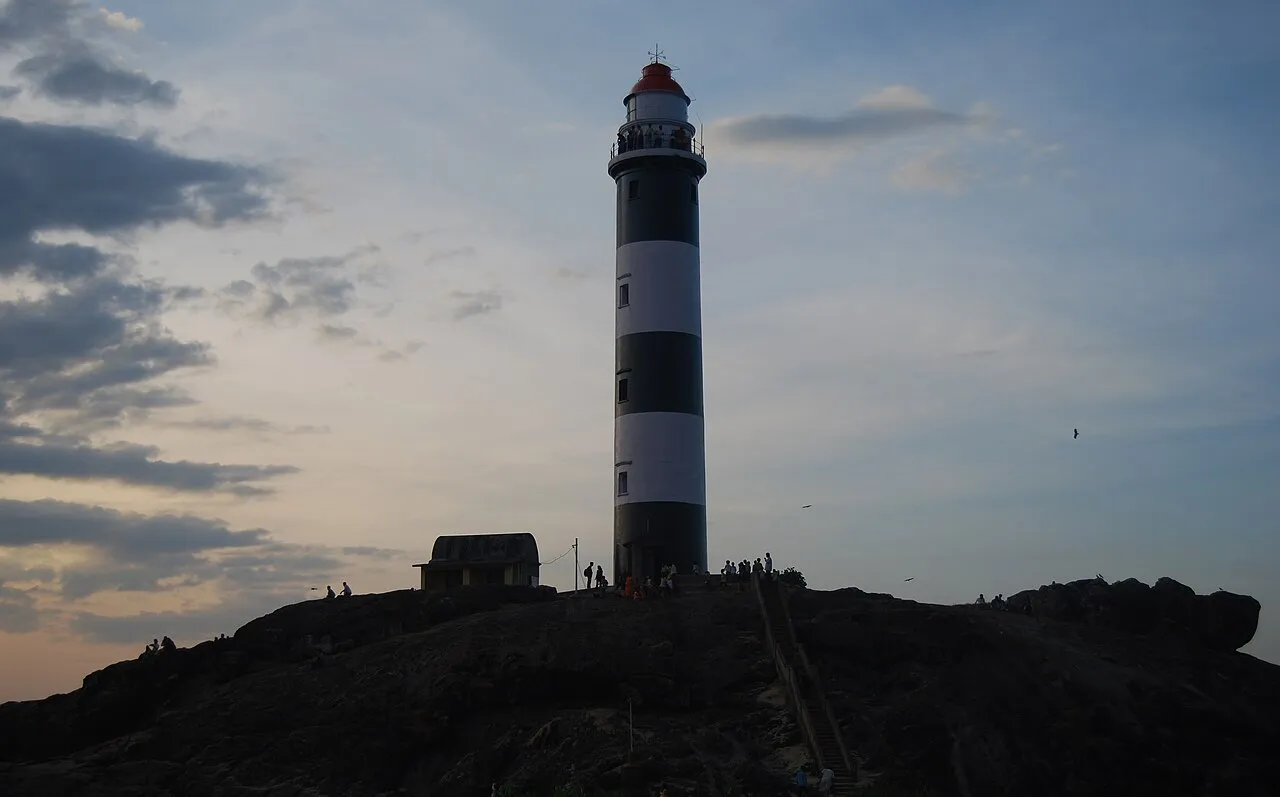

The next morning a toddy tapper, Angadara Pongadara, came by with eggs and vegetables in his bundle. He saw the signs of a daiva and bowed, thinking that one of the landlord’s daivas had come to the square. Then Bobba showed him who he really was. Tell no one I am here, he said, not even your wife, Kunhi Baidyethi, and the toddy from your palms, which usually comes drop by drop, will pour out in a rush.¹
So it did. His wife grew tired of selling so much toddy, and suspicious. “If you don’t tell me the secret by tomorrow morning,” she said, “I am not your wife and you are not my husband.” He told her. The next day not one drop came from the palms. When he went into the lotus pond by the square to wash before his meal, Bobba seized him and dragged him under.¹
That evening Kunhi Baidyethi went looking for him. By the pond she found his footprints going into the water, and none coming out. A thousand people from Kaup and three hundred from Mooluru searched, and found only the piece of banana stem he wore as a cap. In despair she prayed, promising a temple and a shrine for the spirit. Before the words had left her throat, her husband rose out of the water. An astrologer said that a new daiva had come to the village. A shrine was built for him, and regular nemas (rituals for a daiva) began.¹
Finding his places
From Mooluru, Bobba looked east and saw the Janardana temple at Yermal. He asked Janardana for a place there and was given a small shrine. He would have liked to live at Kadupattana and Nadupattana too, but the god Brahma there told him, “I don’t have a place here myself. How can I give you one?” So he looked to Hejamadi and asked Mahalinga for a place, and Mahalinga gave him one.¹
How Babbarya is worshipped
Guardian at sea. For the Mogaveeras, Babbarya is the guardian of the community and its chief protector when they go out to fish. Jarandaya is their protector on land, and both are worshipped as village daivas.² The Bhutas of Memory blog sees in him the courage of fishermen facing danger, death and the sea.¹ A study of the daiva traditions published in 1971 by the Directorate of Census Operations, Karnataka, put it simply: “Bobbarya controls marine fishing.“³
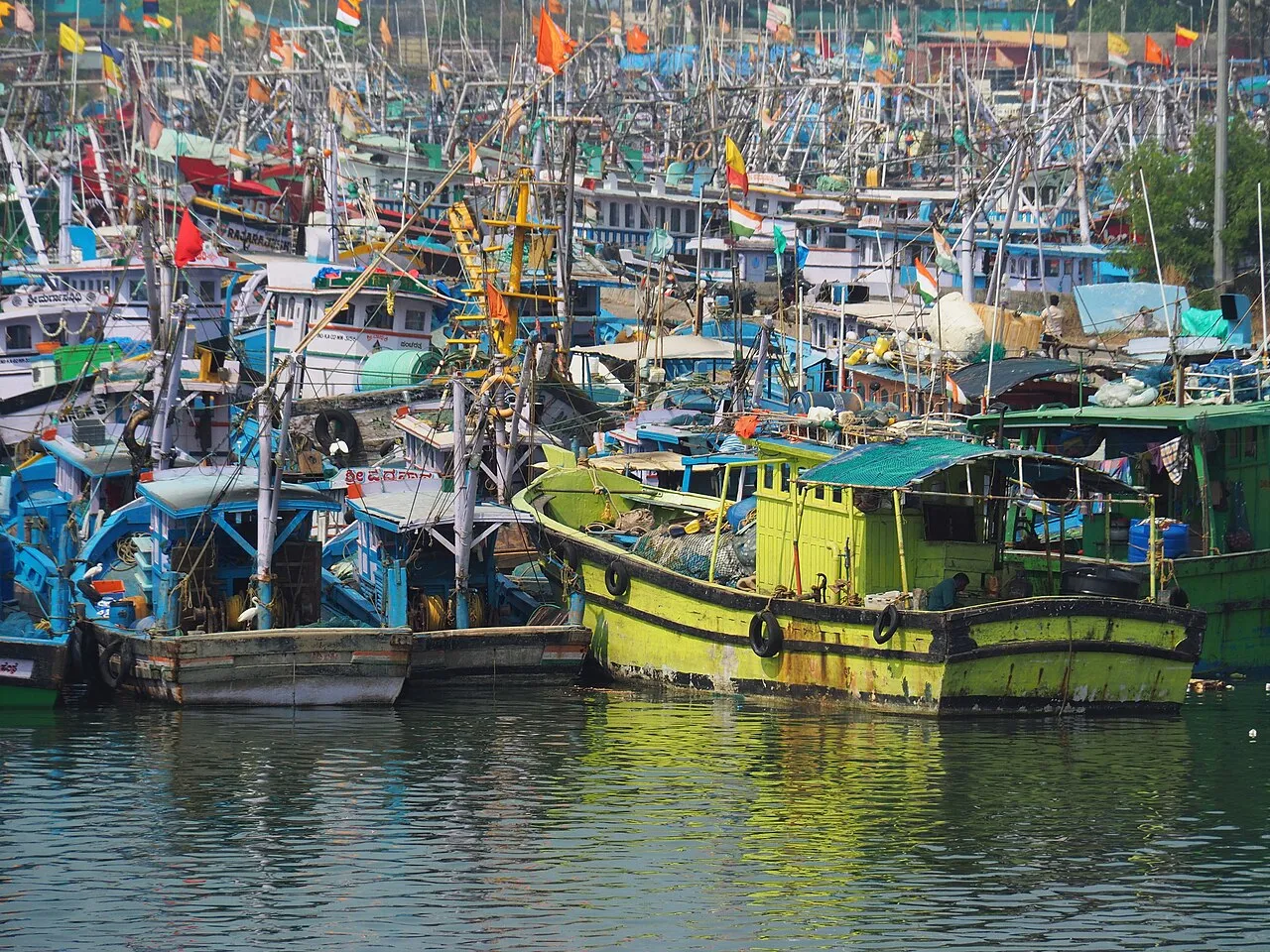

Babbaryasthanas. Each Mogaveera village assembly, or grama sabha, has its own shrine for him, a Babbaryasthana. The Mogaveera Community website lists thirty-seven of them along the coast, from Uppala in the south through Bolar, Mulki, Hejamadi, Yermal, Kaup and Malpe to Kodi Kanyana in the north. Some belong to family clans’ ancestral shrines.⁴ In many places Babbarya, Rakteshwari and the guardian Kshetrapala are worshipped together, each as a single stone set in the ground.²
Worshipped by all. Babbarya is not only the fishermen’s daiva. The same website says that all the Tulu communities worship him, inland in Karkala and Sullia taluks too, and as far north as Uttara Kannada. Drawing on Kariyappa A. Kanchan’s book Babbarya Charithre mattu Karnikagalu, it lists shrines where every community worships him. At Mooluru, it notes, there is an Iyangala Katte, and Babbarya has his own sacred well and lotus pond there. Near the lighthouse at Kapu, a wooden horse that washed ashore was set up beside the Podikal garadi, and it is said to belong to him.⁴ From Koteshwara Suryanarayana Rao’s Degula Darpana, it lists temples where he is one of the attendant daivas: the Lakshmi Janardana temple at Kapu, the Mahalingeshwara temple at Udupi, the Kodamanithaya shrine at Tibar (Shibaroor), and others.⁴
A daiva who takes no blood. Babbarya is counted among the vegetarian daivas, so no blood offering of chickens is made to him, unlike Panjurli, Varthe or Kalkuda.² Families hold a tambila (a night offering) for their daivas each year, and at the Kulamahasthri temple at Bennekuduru, near Barkur, a Mogaveera temple, Babbarya is one of only two daivas given a full kola.²
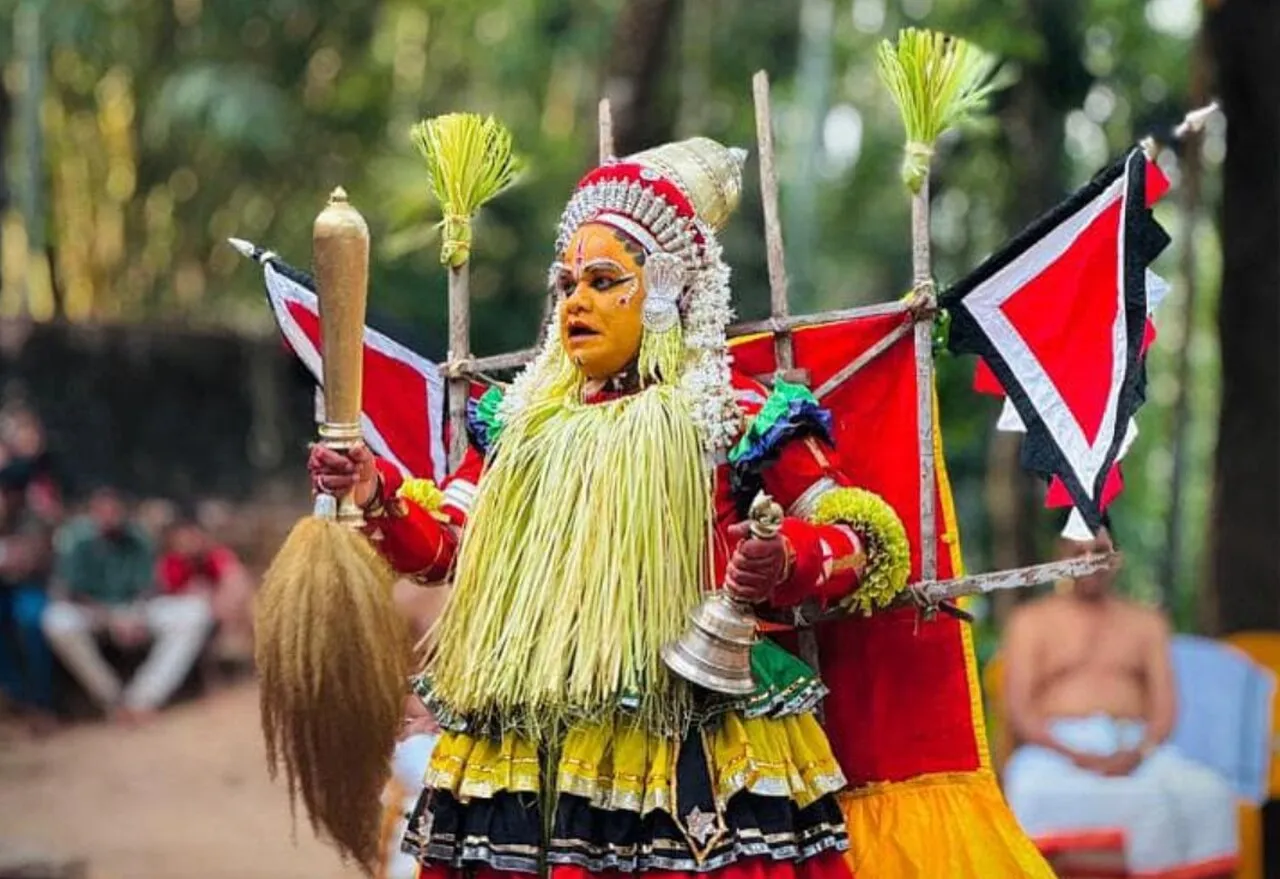

The horn seat at Mitrapatna. Before the yearly Babbarya nema at Mitrapatna in 2012, N. A. Bangera explained to his son-in-law the meaning of the singadana, the decorated tiered seat on which a daiva’s masks and objects are set. Mahishasura, he said, sent his horned sister Ajamukhi to tempt Sachi, the wife of Indra. God came to save her in the form of Dharma Shasta, the stern upholder of justice, and broke Ajamukhi’s horns, where her life was hidden. Then he sat on a seat made of her horns. Bangera’s story is told on the Tulu Research & Studies blog, which adds that Babbarya is this Dharma Shasta.⁵
Who was Babbarya?
Son of a Muslim father. In the paddana sung for Paddana Poomale, Babbarya’s father is a Beary, a Muslim trader, and his mother a Jain woman.¹ The Bhutas of Memory blog reads the story as a memory of how the Bearys, who began as Arab traders marrying local women, became part of Tulu society while Jainism flourished on the coast.¹ The scholar Purushottama Bilimale calls Babbarya “a symbol of the brotherhood between Mogaveeras, Billavas and Beary Muslims in Tulunadu”.³ The same article gives a shorter version of the story, in which Bobbarya survives a shipwreck and swims to Kapu by his powers, and a Billava toddy tapper builds him a shrine.³
A story many Mogaveeras reject. The Mogaveera Community website says that the stories of a Muslim sailor, or of a Muslim father and a Jain or Shetty mother, are misleading, and were planted to belittle the communities who worship him.⁴ Mogaveeras, it says, believe that Babbarya is Babbruvahana, the son of the Pandava prince Arjuna by his wife Pramila, a fisherwoman, a divinity their ancestors brought with them when they came to the coast.⁴
Bappa and Arya. Another reading, from N. A. Bangera of Mitrapatna, takes the name as Bappa plus Arya, “not Bobbarya”, and makes him the Dharma Shasta of Tulunadu, equal to Dharma Shasta of Kerala.⁵ The Tulu Research & Studies blog also counts him among the great rajan daivas, the royal daivas: an incarnation of Shasta, born as Babbana to a Mogaveera woman at Mulki. It notes the other version too, in which his mother is a Bunt woman and his father a Muslim trader.⁶
Other spellings. Bobbarya, Bobbariya, Bobbari, Bobbaraya Swami.
Related
- Kodamanithaya, the Daiva Who Followed His Devotees, at whose Tibar shrine Babbarya is also worshipped
- Jumadi, Neither Man nor Woman, whose shrine stands beside his at Udupi
- Maisandaya, Guardian of the Herd, another vegetarian daiva of the Mogaveera shrines
- Rakteshwari, the Earth-Born Maiden, worshipped beside him in many Mogaveera shrines
- Bhuta Kola: When the Spirits Come to the Village
- Jarandaya, the Prince Who Could Not Swallow an Insult, the Mogaveeras’ protector on land, whose story makes Babbarya his rival
- Kalkuda and Kallurti, the Sculptor and His Sister, daivas who, unlike Babbarya, take blood offerings
- Kordabbu and Tannimaniga, the Healer and the Sister Who Saved Him, who cuts the sea daiva’s foot in one telling
Sources & further reading
The articles behind the numbered notes on this page.
- “Memories within the Pāḍdanas”, Bhutas of Memory (blog): the Bobbarya paddana, retold after Susheela P. Upadhyaya’s recording in Paddana Poomale (U. P. Upadhyaya and Susheela P. Upadhyaya, 2010), with a reading of it as social history.
- “Mogaveera Religious Practices”, Mogaveera Community (the community’s own website): Babbarya as guardian at sea and Jarandaya on land, vegetarian daivas, tambila, and the Bennekuduru temple.
- Prajwal Bhat, “Maari to Maariamma: Brahminising local deities threatens religious ties in coastal Karnataka”, The News Minute (6 April 2022): Purushottama Bilimale on Bobbarya, and the 1971 Census study.
- “Babbarya Daiva”, Mogaveera Community: the Mogaveera view of Babbarya as Babbruvahana, the list of Babbaryasthanas, and the shrines and temples listed from Kariyappa A. Kanchan and Koteshwara Suryanarayana Rao.
- Hosabettu Vishwanath, “308. Singadana – A Sacred Seat”, Tulu Research & Studies (blog of Ravindra Mundkur and Hosabettu Vishwanatha), collected in TuLu Studies: N. A. Bangera’s story of the singadana, and Babbarya as Bappa + Arya and Dharma Shasta.
- “233. Panjurli”, Tulu Research & Studies (blog, posted by Ravindra Mundkur, March 2010), collected in TuLu Studies: Babbarya among the rajan daivas, born as Babbana at Mulki.
Further reading
- U. P. Upadhyaya and Susheela P. Upadhyaya, Paddana Poomale (audio collection, 2010).
- Kariyappa A. Kanchan, Babbarya Charithre mattu Karnikagalu (Baidyashree Prakashana, Malpe).
- A. Männer, Paad-donulu (1886; reprinted by the Karnataka Tulu Sahitya Academy, 2008).
Most of these sources are blogs, a community website and a news report rather than published research. The paddana itself was recorded by scholars; the other views come from the communities who worship him.
Words on this page
What the Tulu and other Indian-language terms on this page mean.
- daiva
- A guardian spirit; used interchangeably with bhuta.
- katte
- A raised platform shrine.
- kola
- The ceremony in which a daiva is invited to possess a performer.
- maya
- The unseen world where the spirits live.
- nema
- Another name for a kola, the annual ceremony for a daiva.
- paddana
- A long oral ballad, sung to tell the story of a daiva or hero.
- rajan daiva
- A daiva of high, royal standing, the chief daiva of a place.
- tambila
- A night ceremony for a daiva.
Themes
Spotted a mistake, or know more about this? Suggest a correction/addition.