Kordabbu and Tannimaniga, the Healer and the Sister Who Saved Him
A small boy is told to chase the hens off the drying grain. He throws a stick at one of them, and it falls dead. He throws a stick at the rest, and by the time his foster mother comes back, every hen is dead in the yard. He picks up another stick, throws it, and all of them stand up again.
That, the story says, is how the boy came to be called Kordabbu. Along the coast he is better known as Babbu Swami, and he is honoured as one of the daivas (guardian spirits of the land).
The story
The story below follows the version printed in an excerpt from K. Hari Kumar’s book Daiva: Discovering the Extraordinary World of Spirit Worship, which is the fullest account we could open.¹
An orphan in a flash of light

A woman named Kachur Maldi gives birth to a son. Soon after, she and her husband both die, and the baby is left alone. His cries reach a neighbour, Kodange Bannar. As Bannar goes towards the child, a bright light flashes in front of him, and he hears the mother’s spirit say, “You must look after my son!” When Bannar puts the baby in his lap, it smiles at him.¹
Bannar takes the baby to his sister, who has longed for a child. They raise him with great care, and call him Babbu.¹
The hens, the cow and the crocodile
Babbu is no ordinary child. After the hens, the story says, his gifts for prophecy and divination grow. He can tell people where to dig a well so that they strike water. His name spreads, and with it the envy of others.¹
Some of them take his beloved cow and throw it into a river, hoping to end his influence. When Babbu arrives, a crocodile is eating the animal. He uses his powers to bring the cow back to life. From then on he is called Vaidyanatha, which the book glosses as the master of medicines.¹
The well
A powerful king of Katpadi watches the boy with suspicion and envy. He invites Babbu to his court to produce water from a well that has long been dry. Babbu goes down. The king’s men cover the well with a heavy stone slab and leave him there. His calls for help are not answered.¹
The sister
A young woman, Tannimaniga, comes through the forest and hears a voice calling from the well. “Who are you?” she asks. Babbu tells her who he is, and says: if you are a man, I will call you my brother, and if you are a woman, my sister.¹
She pushes the slab aside, but there is no rope. So she says she will take off her sari and throw it down for him to climb, and he must promise not to look at her body as he comes up. He gives his word, and calls her sister.¹
When Babbu climbs out, his eyes fall on her. Tannimaniga is angry, and Babbu is full of remorse. To make up for it he takes a sword and strikes his forehead sixteen times, until it bleeds, then falls at her feet and asks for forgiveness. She forgives him and blesses him.¹
The giant on the road
The last episode is about another spirit, the sea spirit Babbarya, who is also written Bobbarya. He wants the land’s people and spirits to honour him. One day the royal daivas, the Rajan Daivas, are on their way to bathe in a river when they find him in the road. He has grown so large that he stands with one foot on the Ghats and the other in the sea. The Rajan Daivas would be shamed if they had to pass beneath him, and none of their powers moves him.¹
They ask Babbu Swami to help, and promise to raise his rank if he does. He tries to reason with Babbarya, who will not give way. In the end Babbu Swami becomes fierce, and with one stroke cuts Babbarya’s foot. The road is clear, and the Rajan Daivas give him the title Daivaraja, the king of the daivas.¹
Babbarya is sorry for what he has done, and asks forgiveness. Babbu Swami forgives him and heals the leg with his powers, as Vaidyanatha should.¹
How he is worshipped
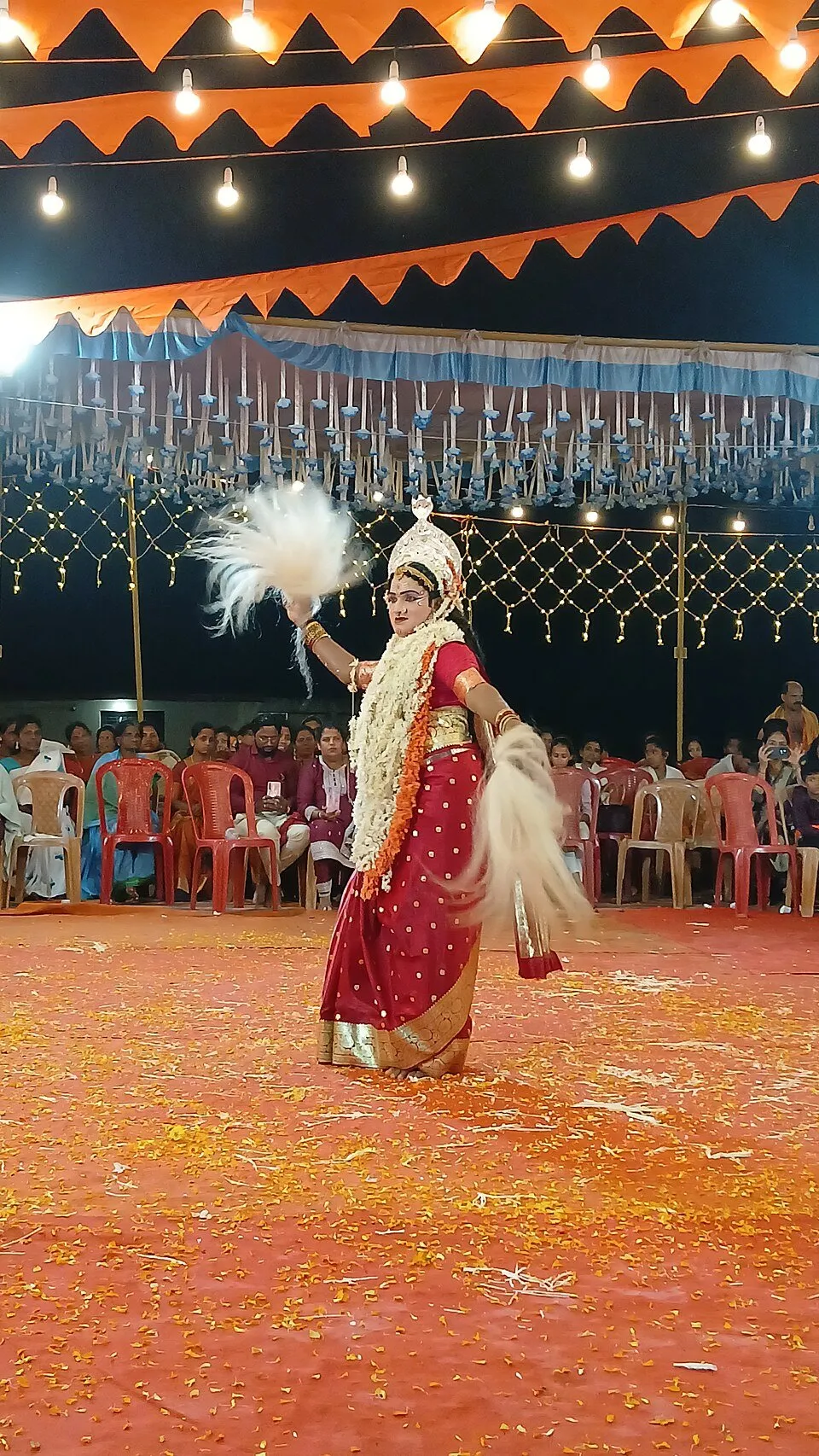

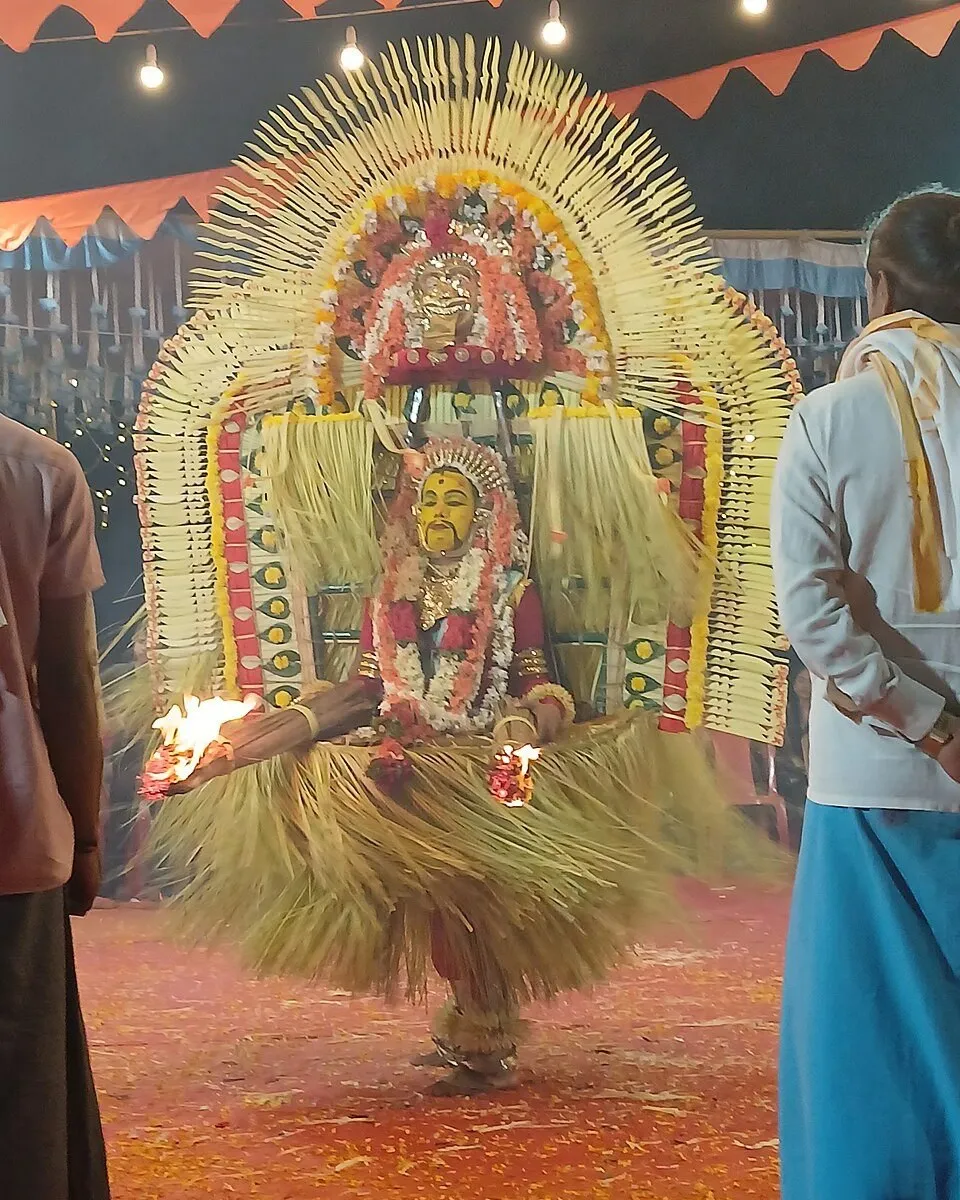
At a kola, the night when a performer becomes the daiva, one artist takes the part of Kordabbu, in male dress, and another plays Tannimaniga, in female dress. The one who plays Kordabbu taps his head with a sword, and the two are honoured as brother and sister spirits.¹
A community website that honours Babbu Swami adds more.² It says that Jumadi and Guliga are held to be the protectors of the premises of his shrines, and quotes a saying that if Kordabbu is the king, Guliga is the commander of his army. People who believe in him, it says, bring him problems of every kind, social, financial, educational and health. It also says that those who are possessed by him at the annual nema or festival draw blood from the head to feed the bhuta ganas, spirit attendants. These are the words of a devotee community, and we have no independent account of the practice.²
Versions and questions
The story is not told the same way everywhere.
- How he ends. In the book excerpt Babbu is rescued, but the author’s note sets a darker reading beside it. It says Kordabbu’s story reflects the harsh realities of social discrimination, that he is shown as a boy from an erstwhile lower community who met an untimely death through social injustice, and that his transformation into a spirit after death shows his significance.¹ The two do not quite fit together. We have not found a telling in which he dies in the well.
- His mother. In the book he is born to a married woman whose husband dies. The community website says he was born to an unwed mother, Kachuru Maldi, and calls her Mahalakshmi.¹ ²
- Who tried to free him. The community website says that the other daivas, even the Rajan Daivas, came to get him out of the well and failed, and that Tannimaniga finally saved him. In the book only she appears.¹ ²
- What he is. The community website says he is an incarnation of Shiva who took a human form to protect poor people who had been cursed. The book makes him a human child with a miraculous gift.¹ ²
- A different well. A blog collection of spirit legends tells the rescue of Koteda Babbu, as it calls him, at a well at Kanchinadka, near Padubidri, with the rescuer a woman of the Mugera community called Tanni Managa. There he is the assistant of the Jain prince Jarandaya, and the rival soothsayers who trap him are upper-caste.³ It is told on Jarandaya, the Prince Who Could Not Swallow an Insult.
- Tannimaniga. The author says that some believe she is the goddess Parvati herself.¹
- The giant. In some variations, he writes, it is Koraga Taniya or Pilichandi, and not Babbu alone, who confronts Babbarya.¹ Our notes read these as Koragajja and Pilichamundi, but the excerpt does not say so.
What we could not find
- A second full telling. The excerpt is the only complete account we could open. The paddana itself, the sung oral epic, we have not seen.
- The community behind him. Our notes link Babbu Swami with the Mundala community and a temple at Barkur, and say there are many shrines from Barkur to Nileshwar. They also say he is identified with Muthappan in Kerala. These come from a wiki and a community site we could not read, so we have left them out.
- Which other daivas serve him. Beyond Jumadi and Guliga, we cannot say who is counted among his attendants.
- A scholarly study. We found none.
Related
- Babbarya, the Daiva of the Sea, the giant of the road
- Jarandaya, the Prince Who Could Not Swallow an Insult, whose assistant, Koteda Babbu, is the same figure in another telling
- Koragajja, the Boy Who Was Turned Away, who may be the Koraga Taniya of one variant
- Guliga, the Hunger That Became a Guardian, said to command his army
- Jumadi, Neither Man nor Woman, said to guard his shrines
- Bhuta Kola: When the Spirits Come to the Village, the night ritual in which he appears
Sources & further reading
The books and articles behind the numbered notes on this page.
- K. Hari Kumar, “Faith and spirituality: How Kordabbu, or Daivaraja Babbu Swami, became a revered spirit in Tulu Nadu”, Scroll.in (15 May 2024; read on 9 October 2026), an excerpt from his book Daiva: Discovering the Extraordinary World of Spirit Worship (HarperCollins India): the whole story, the kola, and the author’s note and variants.
- Daivaraja Bhagavan Shree Babbuswami, community website (read on 9 October 2026): the well, the other daivas, Jumadi and Guliga, and the saying about the king and the commander.
Further reading
- K. Hari Kumar, Daiva: Discovering the Extraordinary World of Spirit Worship (HarperCollins India, 2024).
- Ravindra Mundkur, “62. Characterization of Spirits of Tulunadu (1)”, Tulu Research & Studies (blog, December 2007): Koteda Babbu as Jarandaya’s assistant and the rescue at Kanchinadka.
All the sources are informal: a book excerpt in a newspaper, a devotee community’s own website and a blog. We found no scholarly source.
Words on this page
What the Tulu and other Indian-language terms on this page mean.
- daiva
- A guardian spirit; used interchangeably with bhuta.
- kola
- The ceremony in which a daiva is invited to possess a performer.
- nema
- Another name for a kola, the annual ceremony for a daiva.
- paddana
- A long oral ballad, sung to tell the story of a daiva or hero.
- rajan daiva
- A daiva of high, royal standing, the chief daiva of a place.
Themes
Spotted a mistake, or know more about this? Suggest a correction/addition.