Kalkuda and Kallurti, the Sculptor and His Sister
The sculptor has finished. The great statue stands on the hill at Karkala, and he comes to the king to ask for his wages. Come back tomorrow morning, the king tells him. The next morning the king calls his servants. They put a golden bangle on the sculptor’s right hand, and cut off his left. They put a golden ornament on his left leg, and cut off his right.¹
“Thus,” says the scholar who retells this story, “the king of Karkala respected the great sculptor called Beera!“¹
Beera Kalkuda and his twin sister Kalamma are worshipped today as Kalkuda and Kallurti, two of the best-known daivas (guardian spirits of the land) of Tulunadu. Their paddana (sung oral epic) is about a family of stone carvers, the great Jain statues of Bahubali at Karkala and Venur, and what a jealous king did to the man who made them.
The story
This is the paddana as the folklorist Amrutha Someshwara recorded it in 1975 from Kutty Nalike, a 68-year-old singer of the Nalike community at Polya, near Puttur, and published in his collection Tulu Paddana Samputa (1997). It is summarised by the scholar Balakrishna Hosangadi.¹ Other tellings add or change things, and a few of them are noted along the way.
The land of sculptors
The paddana begins: Acchavara puttina naadu, Kellatta Marnadu. Kellatta Marnadu is the land where sculptors are born.¹
There lived Shambhu Kalkuda and his wife Iravadi, who had five children, each with a trade of their own.¹ One telling says Shambhu taught his sons to be a coppersmith, a carpenter, a potter and a goldsmith.²
While Iravadi was pregnant, a call came for Shambhu from Shravanabelagola. The king there had no temple for his god and no basadi (a Jain temple). He wanted a great statue of Gommata, which is Bahubali, and seven gods set in seven small temples. Shambhu made arrangements for his wife and left the next day with all his tools. Waking in the morning, he called on his guru, the goddess Kaalamma, or Kali, and so he finished the work. The king honoured him with gifts of land, milking cows, shawls, betel leaves, a golden bangle and a golden chain.¹
A son finds his father

At home Iravadi had given birth to twins, a boy, Beera, and a girl, Kalamma. As they grew up, other children teased them for having no father. When Beera asked his mother, she told him: your father went to Belagola for work. The very next day, Beera set out to find him and see what he had made.¹ In one telling, father and son meet by a lake without knowing each other, and only work out who they are when they start to talk.³
Beera begged to see the statue, and looked at it, and found a flaw in it. His father was horrified. “You were born just yesterday, and you point out the defect in my work? If the king came to know this, he will throw me to the foot of an elephant and beat me with a horse stick.” With those words Shambhu took out his knife and stabbed himself.¹
The statue at Karkala
Beera came home to Tulunadu with his father’s tools, and his fame grew greater than his father’s.³ Bhairavarasa, the king of Karkala, sent for him to build temples and a statue of Gommata.¹
He did it. And when he asked for his wages, the king told him to come back the next morning, and had his hand and his leg cut off.¹ The king did not want such a statue made anywhere else.¹ Beera vowed not to drink a single drop of water in such a kingdom, and left.¹
One hand at Venur
Thimmanna Ajila, the king of Venur, invited Beera to build a Jain temple and a statue of Gommata for him too. With one hand and one leg, Beera did it.¹
Kalamma’s journey
At home, Kalamma told her mother that she wanted to go and see her brother. She cooked him delicious food and set out with it.¹ One telling says she packed a bag with food for her journey, and the rest for her brother,² and another that on the road a drunken man tried to attack her, and Naga, the serpent god, saved her.⁴
On the way she heard the terrible news. She reached Venur and found her brother. “What happened to your hands and legs?” she asked him.¹
“It is not for theft, not for lying,” Beera replied, “but for my hard work.“¹
From joga to maya
Up to here, says Hosangadi, the paddana is about joga, the world that can be seen. From here on it is about maya, the unseen world of the spirits.¹
Kalamma made a vow. “We are suppressed in this world, and we will take revenge from the next.” The brother and sister vanished, and came to Karkala in their unseen forms. They lit a torch and set fire to the king’s castle, and the fire took the whole town. In the end a black magician named Balyaya caught the two spirits by promising them every kind of nema, a ritual for a daiva.¹
In other tellings, brother and sister bathe in the river at Venur, pray at the Mahalingeshwara temple, and jump into its well. With the god’s blessing they come out of the well as daivas.² ³ Then they torment the king of Karkala in body and mind and take his kingdom from him, until he begs their forgiveness and promises to worship them.³
The poisoned offering
Years went by, and the king grew tired of worshipping the two daivas. He decided to mix poison into their offering. The daivas knew, and they made the king’s own family eat it. The king begged them again to forgive him and spare his family, and they forgave him, once he had promised never to do it again.² ³
How Kalkuda and Kallurti are worshipped
The children who eat first. The poisoned offering is remembered at every kola. Before food is offered to Kallurti, three or four children eat some of it first, to show that nothing has been mixed into it.² ³
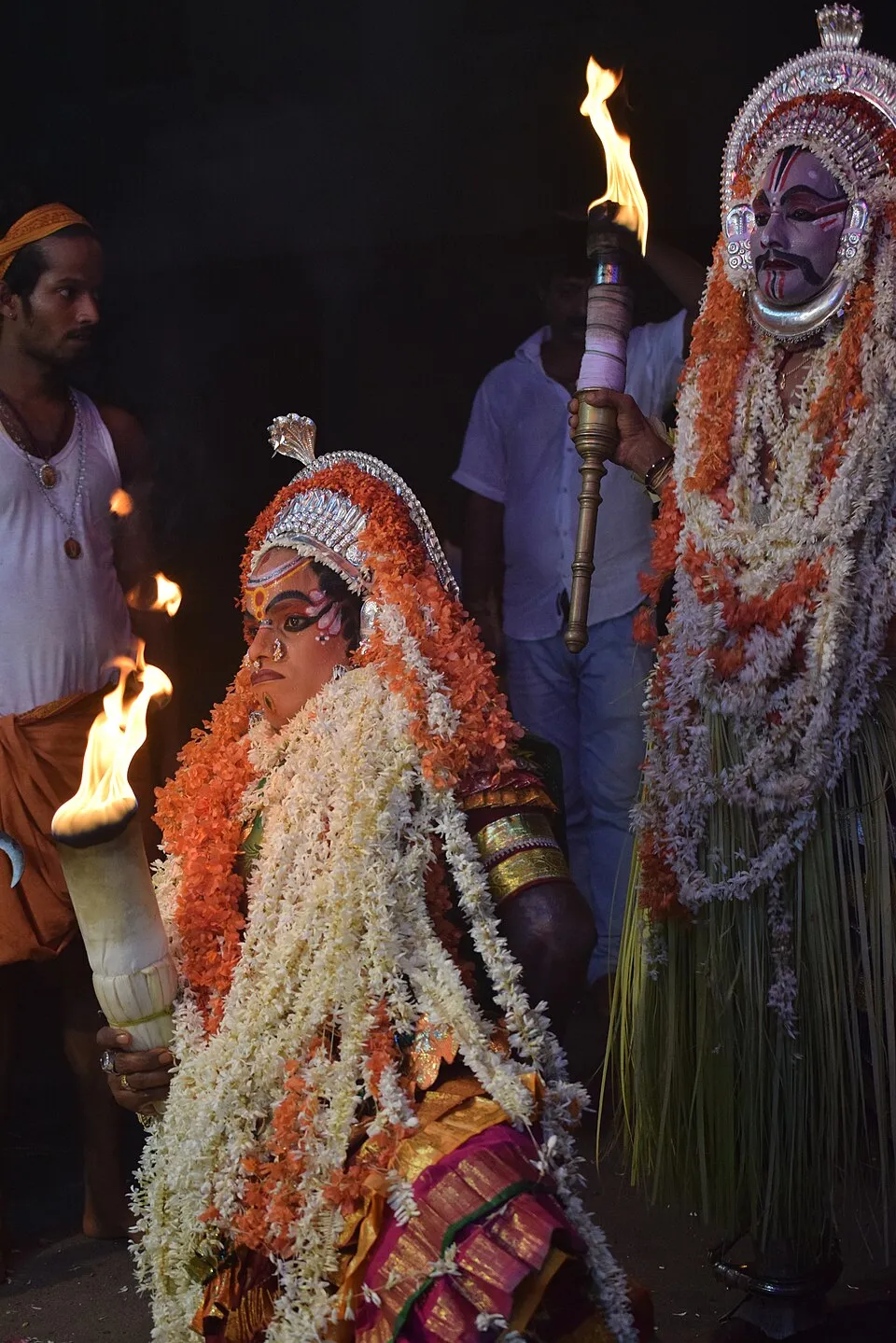

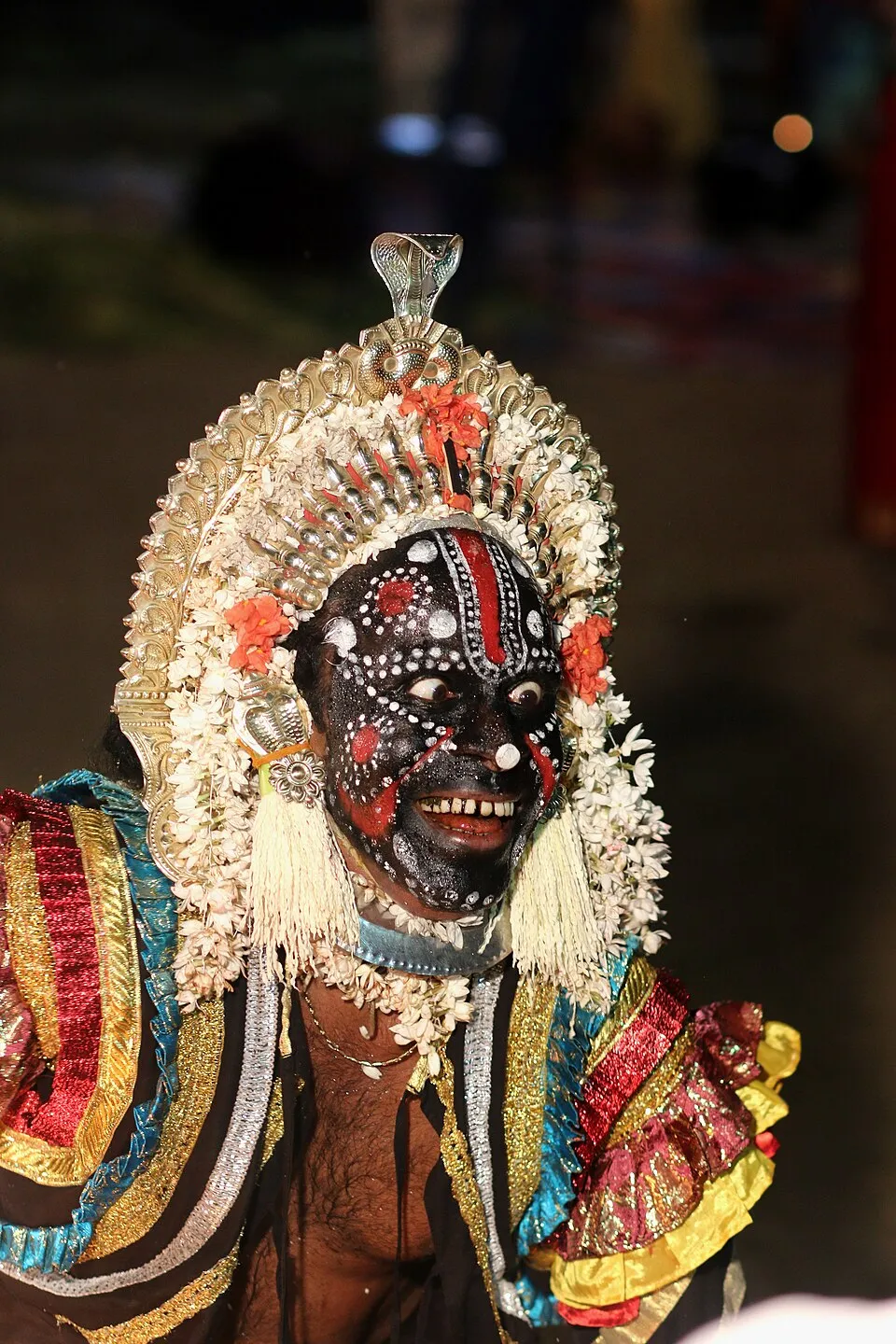
Painted faces. When you strike black stone, the mark it leaves is white. So, at a kola, Kalkuda and Kallurti were painted with black faces and white dots, a reminder of the family’s craft. In recent times Kallurti’s face is often painted pink and Kalkuda’s blue.² ³
Across Tulunadu. Kalkuda and Kallurti are worshipped in many shrines across Dakshina Kannada, Udupi and Kasaragod. Bunts, Billavas, Mogaveeras, Paravas and Pambadas are among the communities who worship them.⁵ Kalkuda is counted among the karanika daivas, whose words, or nudi, at a nema are taken as divine messages. Among his best-known shrines are those at Annara, Adur, Sullia, Puttur, Kadaba and Kallega.⁵ In some places the pair are the main daivas, and in others they attend on a greater one. At Mandarthi, Neelavara and other temples, Kalkuda guards the temple as the son of the goddess Durga. At Shankaranarayana he is Veera Kallukutika, who hears devotees’ complaints and puts them right. Kallurti is also called Varte, Mantradevate and Satyadevate.⁶
Agelu at Panolibail. The Kallurti shrine at Panolibail, in Bantwal taluk, is one of the best known. Thousands come there to make their vows. Kallurti’s favourite offering is the agelu: a hen that has not yet laid an egg, a kilo of parboiled rice, three tender banana leaves, two coconuts and red kepula flowers from the hills. It is offered three days a week, on Sundays, Tuesdays and Fridays.³
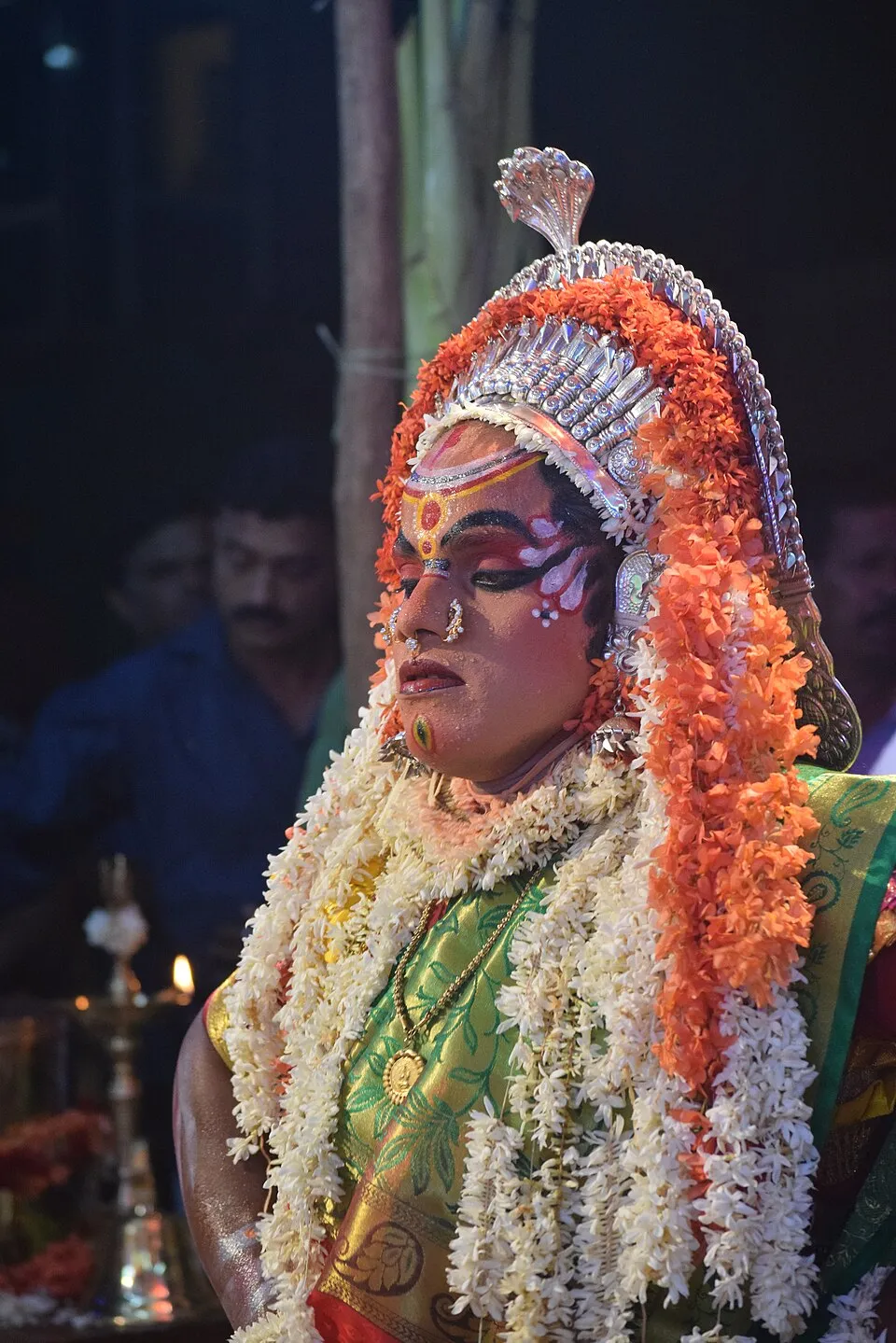

The talking Kalkuda. Beeru Panara of Nire, on the road from Udupi to Karkala, has served the daivas for about fifty years, since he was fifteen. He learned from his father, Kalu Panara, who served Kalkuda so faithfully that people called him “Kalkuda Kalu”. Every Saturday, Beeru is the one they want to speak as Kalkuda at the Kalkuda shrine of the Vishwanatha temple at Katapadi. For the way he talks with devotees, they call him the talking, walking Kalkuda. Beera and Beeru, his admirers like to say, are one and the same.⁷
The sculptor history forgot
The Bahubali at Karkala is real, and so is the one at Venur. Their stone tells a different story from the paddana.
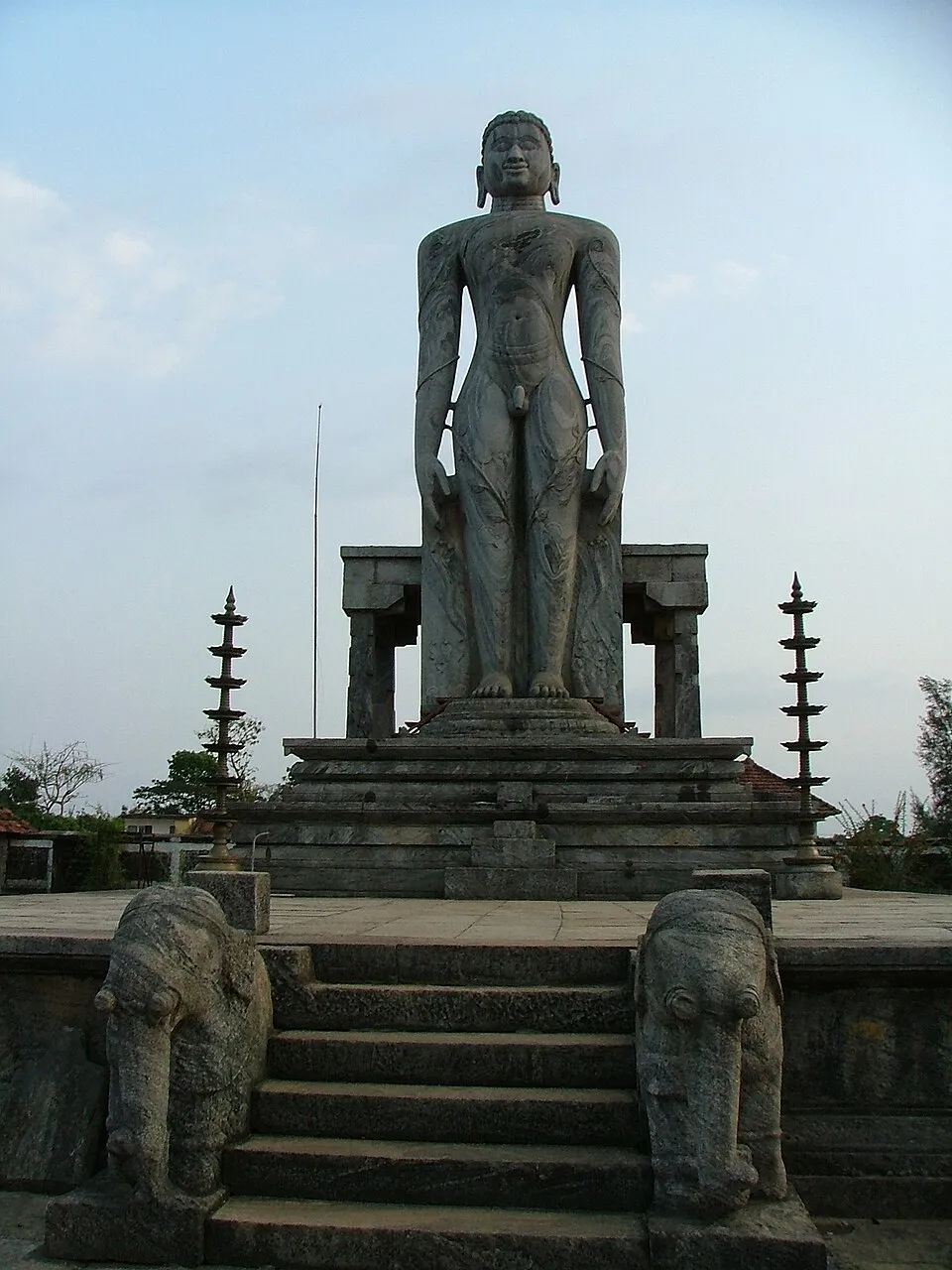

At Karkala. The Karkala statue was set up by Veera Pandya Bhairarasa Wodeyar and consecrated on 13 February 1432. An inscription at the statue says that Vira Pandya, son of Bhairava, made it at the prompting of his Jain teacher, Lalitakirti. It names no sculptor.⁸ A poem about the statue written in 1646, the Karkala Gommateshwara Charite by the poet Chandrama, tells how King Bhairavarasa honoured the sculptors, but it does not name the chief sculptor either.¹
A sculptor called Chikkanna. One record does come close to the paddana. The Karkala Arasara Kaifiyattu, a chronicle of the Karkala kings, tells of the statue being set up, and mentions that the right hand of the sculptor Chikkanna was cut off. The chronicle of the Ajila kings of Venur repeats it.¹
At Venur. The Venur statue is about 38 feet tall and was set up by Thimmanna Ajila in 1604. It is said to have been carved by Beeru Kalkuda.⁹
Too long for one life. There are long gaps between the three statues. Venur’s came about 170 years after Karkala’s, so no one man could have worked on all three. Scholars, Hosangadi writes, have concluded that the story grew over generations. Someshwara thought that different sculptors of Kellatta Marnadu may have worked on them at different times.¹ And the classical works credit Shravanabelagola’s statue to another sculptor altogether, Aristanemi.¹
To Someshwara, that is the point. People who admire the great statues forget the man who made them, he wrote. The people of Tulunadu do remember him: not as a sculptor, but as a daiva, and they worship him.¹
Other tellings
Which hand, which leg. In the paddana Someshwara recorded, the left hand and right leg are cut off, after the right hand and left leg are adorned.¹ English Wikipedia also says the left arm and right leg.¹⁰ Other tellings say the right hand and left leg.³ ⁶
The king’s name. He is Bhairavarasa in the paddana,¹ King Bhaira in another telling,³ and Balisuda in others.² ⁴
The princess. In some versions the king has a reason, or an excuse. Someshwara’s own Yakshagana play adds Padmaji, the king’s daughter, who falls in love with Beera. When he turns her down, she tells her father that he tried to molest her.¹ A retelling on Bunts Now names her Yashomati, and has her lie because Beera, lost in his work, does not stop work to come down and greet her.⁶
A curse from heaven. Some tellings say the twins were heavenly beings born on earth as a punishment. In one, a divine voice tells them that they once beheaded their guru Vishwakarma for a mistake in a ritual.⁴ In another, Beera reminds his sister that they were cursed for insulting Brihaspati, the guru of the gods.⁶ Someshwara’s play adds the myth of Vishwarupa, the guru of the gods killed by Indra, reborn on earth as the sculptors.¹
The battle for Venur. The Bunts Now retelling adds a war: the king of Karkala marches on Venur to destroy the new statue, and Venur’s army, led by the Bunt warrior Kantanna Adhikari of Kadekala Guttu, drives him back.⁶
A sister who leads. Scholars have noticed that in the paddana the brother does not fight back until his sister arrives. Once they pass into the spirit world, it is she who gives the orders. As Hosangadi puts it, the one who is suppressed is the man, and the one who rebels is the woman.¹
On stage
Someshwara turned the paddana into a Kannada Yakshagana play, Amara Shilpi Beera Kalkuda (1979), and later into a Tulu play, Tulunada Kalkude (1989). He wrote that his play should be watched as drama, not as history.¹
Related
- Panjurli, the Boar Daiva, with whom Kallurti is worshipped as Kallurti-Panjurli
- Moodabidri: Eighteen Basadis and the Thousand Pillars, the Jain temple town between Karkala and Venur
- Koragajja, the Boy Who Was Turned Away, another human who became a daiva
- Siri, the Princess Who Walked Away, another woman who left home and became a spirit
- Bhuta Kola: When the Spirits Come to the Village
- Kallurti and Panjurli, the Sister and Brother Daivas, what happens next, when Kallurti meets the boar daiva
Sources & further reading
The articles behind the numbered notes on this page.
- Balakrishna B. M. Hosangadi, “Folktales, Myths and Legends on Sculptors of South India”, The Asian Conference on Literature 2017: Official Conference Proceedings (IAFOR): a summary of the “Beera Kalkuda” paddana in Amrutha Someshwara’s Tulu Paddana Samputa, the Karkala and Ajila chronicles, Chandrama’s poem, and Someshwara’s plays.
- Vishal Babu Kadri, “Kalkuda Kallurti: A Living Legend of the Divine Realm” (blog, 4 April 2020): the four brothers, King Balisuda, Kalamma’s bag of food, the well, the poisoned offering, and the painted faces.
- Kannada Wikipedia, “Kallurti”: the story with King Bhaira, the well at Venur, the poisoned offering and the children who eat first, Panolibail and its agelu, and the painted faces.
- Nitin Poojari Hiriadka, “Story of Kalkuda and Kallurti - English Version”, Tulunadu Tales (blog, 26 March 2014): King Balisuda, Naga’s rescue, and the curse of the beheaded guru.
- Tulu Wikipedia, “Kalkude”: the communities who worship him, his shrines, and Kalkuda as a karanika daiva.
- Chandrakanth Shetty Karinja, “Kallurti mattu Kalkuda kathe”, Bunts Now (7 November 2023, in Kannada): a literary retelling with the princess Yashomati, the battle for Venur, and Kalkuda and Kallurti’s shrines and names.
- Avinash Kamath, “Ivaru ‘Maatanaduva Kalkuda’! Beeru Panara” (in Kannada): the daiva performer Beeru Panara and the Saturday darshana at Katapadi.
- Wikipedia, “Gommateshwara statue, Karkala”: Veera Pandya Bhairarasa Wodeyar, the consecration in 1432, and the inscription that names no sculptor.
- Wikipedia, “Venur”: Thimmanna Ajila’s statue of 1604, said to be the work of Beeru Kalkuda.
- Wikipedia, “Buta Kola”: Kalkuda’s left arm and right leg.
Further reading
- Amrutha Someshwara, Tulu Paddana Samputa (Kannada University, Hampi, 1997).
- Amrutha Someshwara, Amara Shilpi Beera Kalkuda (Yakshagana play, 1979) and Tulunada Kalkude (Tulu play, 1989).
- A. Männer, Paad-donulu (1886), which has the ballads “Kallurti” and “Kalkude”.
- K. Kushalappa Gowda and K. Chinnappa Gowda (eds.), Dakshina Kannadada Kaifiyattugalu (1983), the chronicles of the Karkala and Venur kings.
Apart from the scholar’s paper, most of these sources are blogs, Wikipedia and a community website. The paddana itself was recorded by a folklorist, from a traditional singer.
Words on this page
What the Tulu and other Indian-language terms on this page mean.
- agelu
- A food offering made to a daiva.
- daiva
- A guardian spirit; used interchangeably with bhuta.
- joga
- The world that can be seen: the world of the living.
- kola
- The ceremony in which a daiva is invited to possess a performer.
- maya
- The unseen world where the spirits live.
- nema
- Another name for a kola, the annual ceremony for a daiva.
- nudi
- The part of the kola when the daiva speaks with the village.
- paddana
- A long oral ballad, sung to tell the story of a daiva or hero.
Themes
Spotted a mistake, or know more about this? Suggest a correction/addition.